A novel endoscopic approach for efficient and safe resection of tumors at the appendiceal orifice
Shuhei Fukunaga, Shinpei Minami, Tomonori Cho, Daiki Ohzono, Hiroshi Tanaka, Tomoyuki Nakane, Michita Mukasa

Abstract
Genes, proteins, chemicals, diseases, species, mutations and cell lines named across the full text — each resolved to its canonical identifier and authoritative record.
Click any figure to enlarge with its caption.
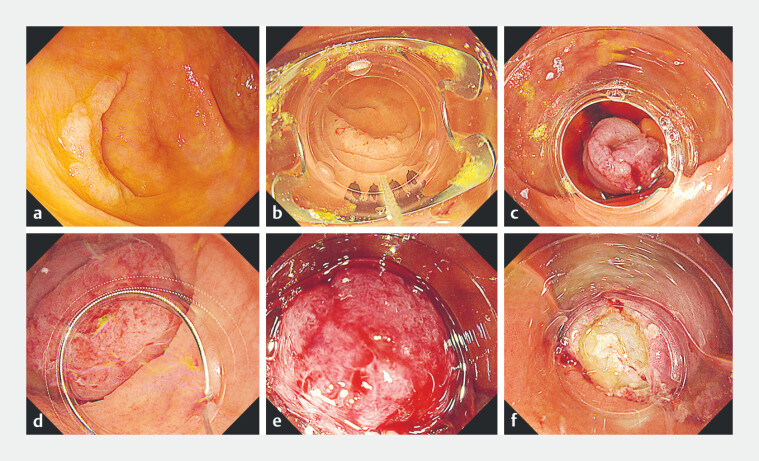 Fig. 1
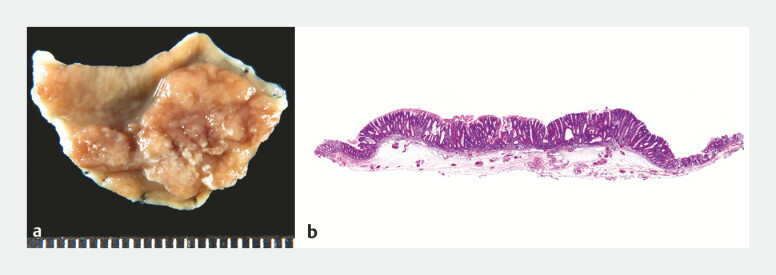 Fig. 2
Peer Reviews
No public reviews on file for this paper yet. If you reviewed it on a platform where reviews are public (OpenReview, ICLR, NeurIPS, ICML), you can paste yours below so the community can read it here.
Videos
No videos yet. Explain this paper in a talk, walkthrough, or lecture? Add one.
Taxonomy
TopicsNeuroendocrine Tumor Research Advances · Gastrointestinal Tumor Research and Treatment · Intraperitoneal and Appendiceal Malignancies
Endoscopic resection of colorectal tumors at the appendiceal orifice remains challenging due to its anatomical complexity. Conventional endoscopic mucosal resection (EMR) often fails to achieve en-bloc resection, while endoscopic submucosal dissection (ESD) carries a high risk of perforation. Although full-thickness resection is effective, it is not always available or necessary. We report a cap-assisted endoscopic mucosal resection with an over-the-scope clip (EMRO-C) technique, facilitating efficient en-bloc resection at the appendiceal orifice ( Video 1 ). A 70-year-old male patient had a Paris type 0-IIa, 20-mm tumor at the appendiceal orifice ( Fig. 1 a ). Initially, a PCF-H290 endoscope (Olympus), equipped with an over-the-scope (OTS) clip system (Ovesco Endoscopy GmbH, Tübingen) was utilized ( Fig. 1 b ). The clip was deployed directly beneath the lesion, creating a pseudo-polypoid elevation ( Fig. 1 c ). The endoscope was then withdrawn, and the MAJ-290 distal attachment (Olympus) was placed. The SD221-L25 snare (Olympus) was positioned ( Fig. 1 d ). The elevated lesion was completely resected using full suction into the attachment ( Fig. 1 e ). Endoscopic resection was successfully performed, and the OTS clip effectively prevented perforation ( Fig. 1 f ). No adverse events, including perforation or bleeding, occurred during or after the procedure. Histopathological examination confirmed tubular adenoma, with negative margins ( Fig. 2 a, b ). EMR using the OTS clip technique, termed EMRO, has been reported as a promising method for treating duodenal neuroendocrine tumors 1 . Despite its high efficacy, achieving successful snaring can be challenging. We previously reported that EMRO-C is useful for lesions that are difficult to resect using a snare 2 . Our findings highlight that EMRO-C is also an efficient technique for en-bloc resection of colorectal tumors at the appendiceal orifice.
Endoscopic images of the EMRO-C procedure at the appendiceal orifice. a A Paris type 0-IIa tumor at the appendiceal orifice. b Initial endoscopic view of the lesion with the OTS clip system. c OTS clip deployed beneath the lesion. d The snare is positioned with a distal attachment on the endoscope. e Complete resection of the lesion using suction. f Image after resection. Abbreviation: EMRO-C, endoscopic mucosal resection with an over-the-scope clip; OTS, over-the-scope.
Histopathological images. a Resected specimen. b Hematoxylin-eosin staining, low magnification.
Step-by-step demonstration of the EMRO-C technique for colorectal tumor resection at the appendiceal orifice.Video 1
Endoscopy_UCTN_Code_TTT_1AQ_2AD_3AC
The reference list from the paper itself. Each links out to its DOI / PubMed record.
- 1Tashima T Ryozawa S Tanisaka Y Endoscopic resection using an over-the-scope clip for duodenal neuroendocrine tumors Endosc Int Open 20219 E 659E 66610.1055/a-1374-614133937505 PMC 8062228 · doi ↗ · pubmed ↗
- 2Minami S Fukunaga S Mukasa M Novel endoscopic approach for safe and effective resection of duodenal neuroendocrine tumor Endoscopy 202456 E 961E 96210.1055/a-2440-636239515771 PMC 11549000 · doi ↗ · pubmed ↗