Hepatic flexure breakdown strategy with adaptive traction for endoscopic submucosal dissection
Jean Grimaldi, Louis-Jean Masgnaux, Elena De Cristofaro, Timothée Wallenhorst, Jérôme Rivory, Jérémie Jacques, Mathieu Pioche

Abstract
Genes, proteins, chemicals, diseases, species, mutations and cell lines named across the full text — each resolved to its canonical identifier and authoritative record.
Click any figure to enlarge with its caption.
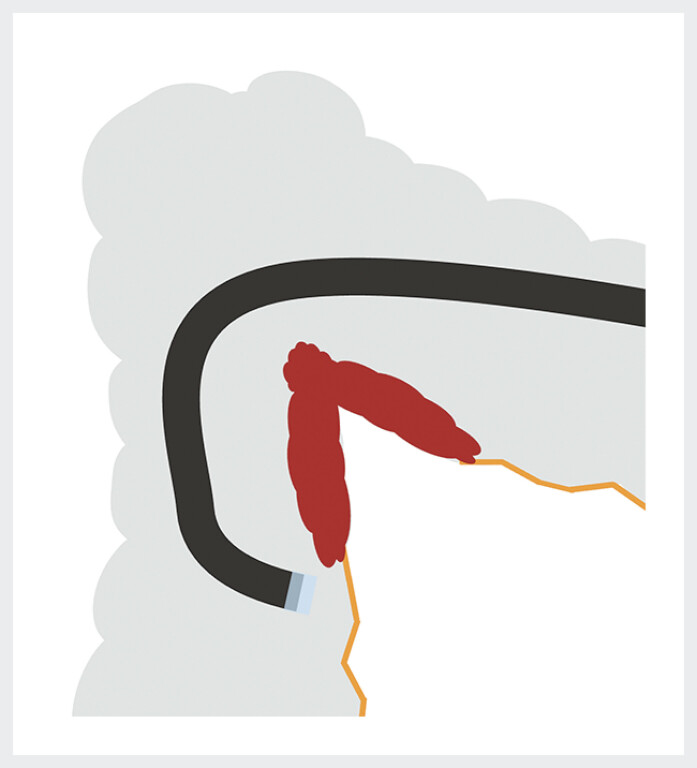 Fig. 1
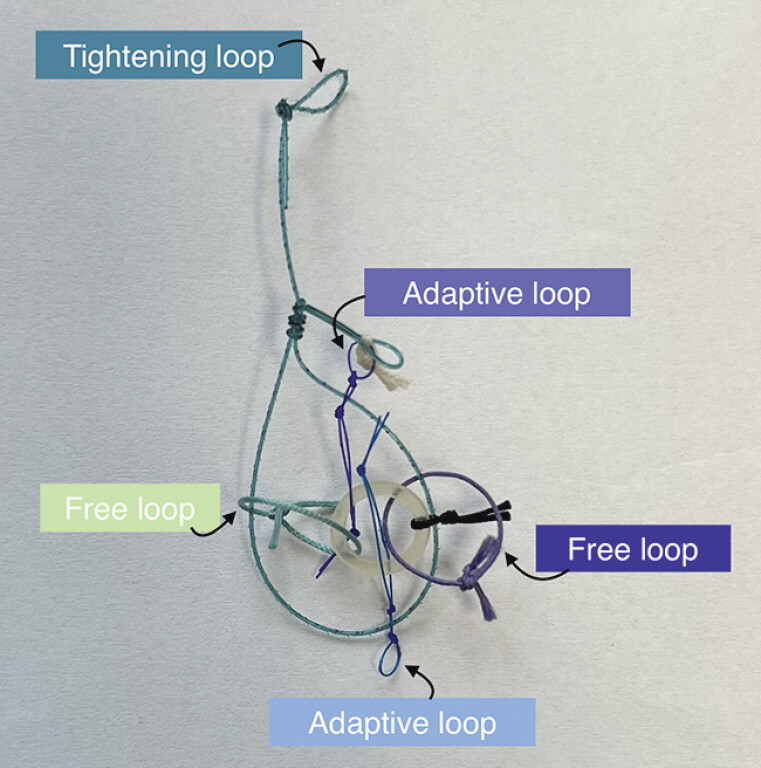 Fig. 2
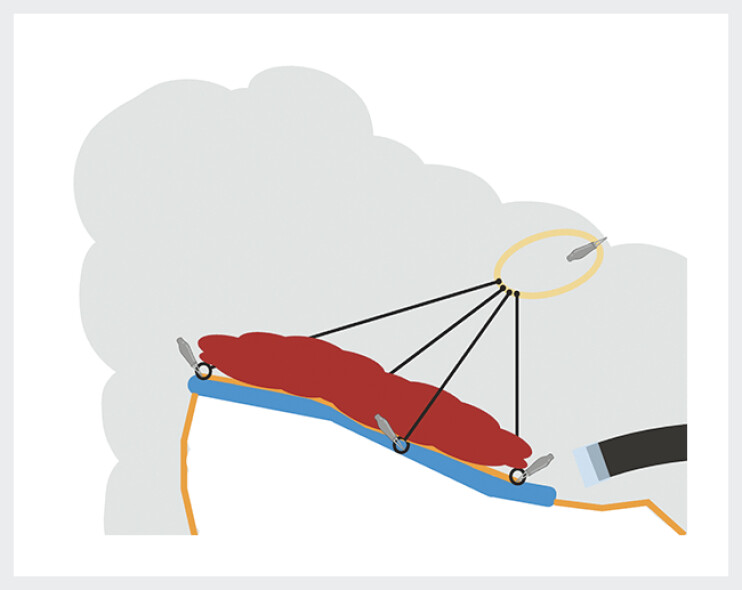 Fig. 3
Peer Reviews
No public reviews on file for this paper yet. If you reviewed it on a platform where reviews are public (OpenReview, ICLR, NeurIPS, ICML), you can paste yours below so the community can read it here.
Videos
No videos yet. Explain this paper in a talk, walkthrough, or lecture? Add one.
Taxonomy
TopicsGastric Cancer Management and Outcomes · Esophageal and GI Pathology · Dysphagia Assessment and Management
Adaptive traction-assisted endoscopic submucosal dissection (ESD) has been shown to be effective in the treatment of difficult colonic lesions 1 2 3 4 . The hepatic flexure is one of the most challenging sites for colonic ESD, associated with longer resection times and more technical failures 5 .
We report here the case of a 68-year-old patient referred for ESD resection of a nongranular LST located on the mesenteric side of the hepatic flexure ( Video 1 ). The resection of this lesion was complicated by the access to the oral part of the lesion, which was very difficult due to the poor maneuverability of the endoscope ( Fig. 1 ). After making a circumferential incision, we positioned the adaptive multitraction device (ATRACT, Lyon, France) at the four cardinal points of the lesion ( Fig. 2 ). We then chose to attach the rubber band to the opposite colonic wall, not over the center of the lesion as it is usually done, but in the transverse colon downstream of the lesion. This allowed the hepatic flexure to be aligned with the transverse colon so that ESD was performed in a straight colon rather than an angled colon ( Fig. 3 ). The resection was R0 and without complications. The total procedure time was 40 minutes. The lesion was a high-grade dysplastic adenoma.
Hepatic flexure breakdown strategy for ESD.Video 1
The lesion was located on the mesenteric side of the hepatic flexure with very difficult access to its cecal part due to poor maneuverability of the endoscope in the hepatic flexure.
Adaptive multitraction device (ATRACT).
The rubber band of the ATRACT traction device was placed in the transverse colon downstream of the lesion, to align the hepatic flexure with the transverse colon to facilitate ESD.
This case illustrates the great interest of traction in difficult colonic lesions, not only to open the submucosal plane but also to modify the conformation of the colon when this makes resection more difficult. The development of computational modeling tools could help define optimal traction strategies for these difficult and unique lesions, whose resection strategy is still determined empirically today.
Endoscopy_UCTN_Code_TTT_1AQ_2AD_3AD
The reference list from the paper itself. Each links out to its DOI / PubMed record.
- 1Grimaldi J Masgnaux LJ Lafeuille P Endoscopic submucosal dissection with adaptive traction strategy: first prospective multicenter study (with video)Gastrointest Endosc 202410051752338458261 10.1016/j.gie.2024.02.032 · doi ↗ · pubmed ↗
- 2Masgnaux LJ Grimaldi J Rivory J Endoscopic submucosal dissection assisted by adaptive traction: results of the first 54 procedures Endoscopy 20245620521110.1055/a-2109-435037311544 · doi ↗ · pubmed ↗
- 3Grimaldi J Masgnaux LJ Rivory J Multipolar traction with adjustable force increases procedure speed during endoscopic submucosal dissection: the A-TRACT-4 traction device Endoscopy 202254 E 1013 E 101436002007 10.1055/a-1904-7666 PMC 9736797 · doi ↗ · pubmed ↗
- 4Masgnaux LJ Grimaldi J Rostain F Endoscopic submucosal dissection of appendiceal lesions by using a novel adjustable traction device: A-TRACT-2Video GIE 20228818310.1016/j.vgie.2022.09.00836820254 PMC 9938289 · doi ↗ · pubmed ↗
- 5Li B Shi Q Xu EP Prediction of technically difficult endoscopic submucosal dissection for large superficial colorectal tumors: a novel clinical score model Gastrointest Endosc 20219413314410.1016/j.gie.2020.11.01233221323 · doi ↗ · pubmed ↗