The complete chloroplast genome sequence of Paris nitida G.W.Hu, Z.Wang & Q.F.Wang 2017 (Melanthiaceae), an endemic herb in China
Jinghan Wang, Jiwu Cao, Junsheng Liang, Wei Guo

TL;DR
This paper reports the complete chloroplast genome of Paris nitida, a rare herb in China, and its evolutionary relationships with other species in the genus Paris.
Contribution
The study provides the first complete chloroplast genome sequence for Paris nitida and its phylogenetic placement within the genus Paris.
Findings
The chloroplast genome of Paris nitida is 164,734 bp with an AT content of 62.89%.
Phylogenetic analysis shows Paris nitida is closely related to Paris fargesii and Paris dunniana.
The genome includes 131 annotated genes, including 87 protein-coding genes.
Abstract
Paris nitida G.W.Hu, Z.Wang & Q.F.Wang 2017 (Melanthiaceae) is a perennial herb that was first identified in China in 2017. In this study, we determined the circular chloroplast genome of P. nitida through de novo assembly. The 164,734 bp genome exhibits an AT content of 62.89%. We annotated 131 genes, including 36 tRNA genes, eight rRNA genes, and 87 protein-coding genes. Phylogenetic analysis revealed that P. nitida is closely related to Paris fargesii and forms a cluster with Paris dunniana. These findings provide significant genomic information for further research on the evolutionary, taxonomic, and phylogenetic aspects of the genus Paris.
Genes, proteins, chemicals, diseases, species, mutations and cell lines named across the full text — each resolved to its canonical identifier and authoritative record.
Click any figure to enlarge with its caption.
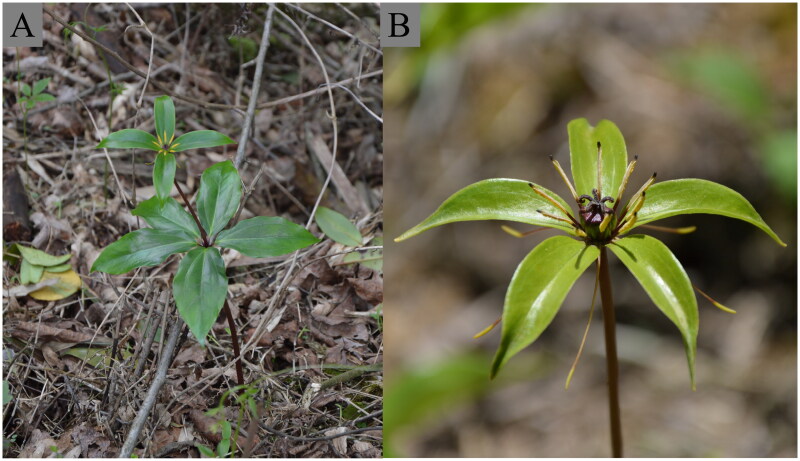 Figure 1
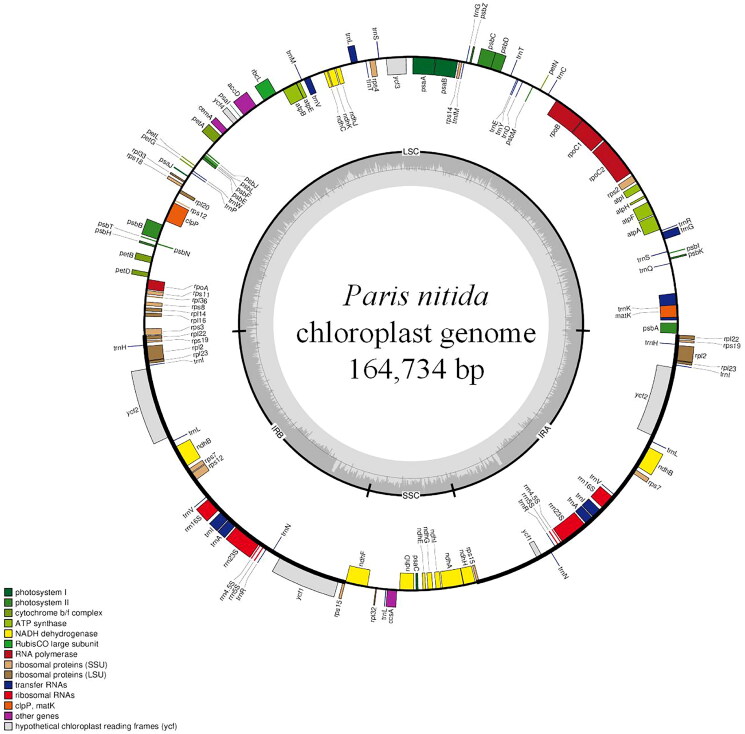 Figure 2
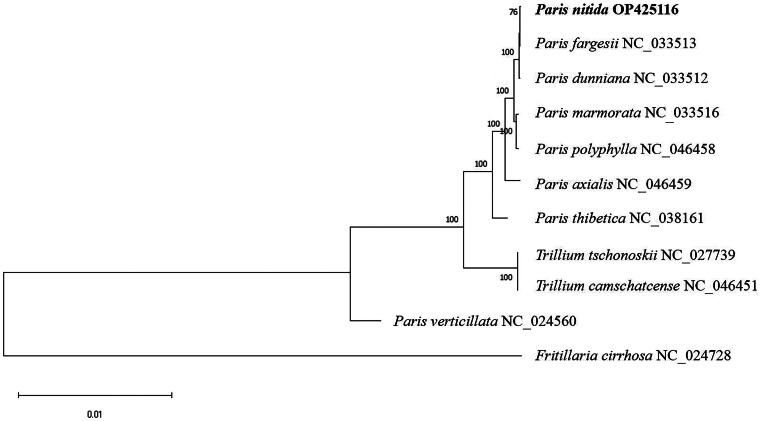 Figure 3
- —Forest Quality Improvement and Efficiency Enhancement Demonstration Project of Hunan Province with Loan from European Investment Bank
Peer Reviews
No public reviews on file for this paper yet. If you reviewed it on a platform where reviews are public (OpenReview, ICLR, NeurIPS, ICML), you can paste yours below so the community can read it here.
Videos
No videos yet. Explain this paper in a talk, walkthrough, or lecture? Add one.
Taxonomy
TopicsGenomics and Phylogenetic Studies · Plant Pathogens and Fungal Diseases · Identification and Quantification in Food
Introduction
Species within the genus Paris (Melanthiaceae) are perennial herbs widely distributed across temperate and subtropical regions of Asia, particularly in China, where they hold significant medicinal value (Zhang et al. 2015; Liu et al. 2016; Xie et al. 2017). Due to habitat fragmentation, overharvesting, and limited natural regeneration, all species within the Paris genus are classified as critically endangered because of their restricted wild populations (National Forestry and Grassland Administration, 2021). Paris nitida G.W.Hu, Z.Wang & Q.F.Wang 2017, a newly discovered species in 2017 (Wang et al. 2017), is found in subtropical evergreen forests in the Hunan and Hubei provinces of China. The plants exhibit subcoriaceous, lustrous leaves and solitary flowers consisting of two whorls of tepals. The outer whorl comprises leaf-like sepals, while the inner whorls consist of linear petals. Notably, the wild populations of P. nitida are particularly small and are designated as grade II in the Information System of Chinese Rare and Endangered Plants (ISCREP) (http://www.iplant.cn/rep). In recent years, genetic information derived from chloroplast genomes has been extensively utilized to explore plant phylogenetic relationships due to its maternal inheritance and relatively compact size. The chloroplast genomes of various Paris species have been sequenced for phylogenetic analysis prompting a reevaluation of the genus’s classification and resolving phylogenetic ambiguities (Song et al. 2017; Song et al. 2019; Wang et al. 2019; Zhao et al. 2019; Fan et al. 2020; Jiang et al. 2021; Ling and Zhang 2020; Zhang et al. 2021). However, the complete chloroplast genome of P. nitida has yet to be sequenced. In this study, we employed the Illumina high-throughput sequencing technique to obtain the chloroplast genome of P. nitida and conducted a comparative analysis with other species within the Paris genus. This research represents the first investigation into the features of the chloroplast genome sequence of P. nitida and aims to ascertain its phylogenetic position. Our primary objective is to provide a valuable genomic resource for P. nitida.
Materials and methods
Plants of P. nitida were found to grow in Liulin, Dujiaping, Yuanling, Huaihua, Hunan, P. R. China (28°27′33.58″ N, 110°53′23.95″ E; altitude: 581 m) (Figure 1). The harvested leaves were rinsed three times with sterile deionized water, wrapped in tinfoil, and then snap-frozen in a dry ice-ethanol bath. A voucher specimen was retained in a freezer at −70 °C with the voucher specimen number YHH_2023_LiDu_HAF at Hunan Academy of Forestry (Contact person: Prof. Xujun Wang, [email protected]).
Pictures of P. nitida (voucher specimen number YHH_2023_LiDu_HAF). (A) Habit, (B) Flower. All photos were taken by Prof. Xujun Wang from Liulin, Dujiaping, Yuanling, Huaihua, Hunan, P. R. China (28°27′33.58″ N, 110°53′23.95″ E).
We purified total genomic DNA from 200 to 300 mg of leaf tissue using the CTAB protocol (Doyle and Doyle, 1987). The quality and purity of the isolated genomic DNA were evaluated through 1.2% agarose gel electrophoresis and spectrophotometry using a NanoDrop 8000 spectrometer (Thermo Scientific, Waltham, MA, USA),. For library construction, 200 ng of the qualified genomic DNA was randomly fragmented to an average size of 350 bp by an ultrasonicator Covaris S-series (Covaris, Woburn, MA, USA). A final paired-end DNA sequencing library was prepared following a series of steps, including DNA purification, end repair, A-tailing, adapter ligation and PCR amplification. Subsequently, the sequencing was performed using an Illumina HiSeq X platform (Illumina, San Diego, CA, USA) at Changsha Aoji Biotechnology Co., Ltd., Changsha, China.
In total, we obtained 76,790,170 raw reads and 76,203,160 clean paired-end reads. We performed a de novo assembly of the chloroplast genome of P. nitida using SPAdes software version 3.11.1 (Bankevich et al. 2012), in comparison to the reference chloroplast genome of Paris polyphylla var. Chinensis (GenBank: MN528722). The assembly was annotated using the CPGAVAS2 (Shi et al. 2019) and DOGMA (Wyman et al. 2004) software with default parameters. We retrieved ten complete chloroplast genome sequences from the NCBI GenBank database, aligned these sequences along with the chloroplast genome of P. nitida using the MAFFT v7.313 (Katoh and Standley, 2013) plugin integrated into PhyloSuite v1.2.1(Zhang D et al. 2020). A maximum likelihood phylogenetic tree was reconstructed utilizing IQ-TREE v1.6.8 (Nguyen et al. 2015), employing the GTR + F + I + G4 nucleotide substitution model and 5000 ultrafast bootstraps. Finally, FigTree v1.4.4 was used for the visualization of the resulting phylogenetic tree.
Results
The average, maximal and minimal depths of read coverage for the assembly of the P. nitida chloroplast genome were found to be 1,661×, 3,328× and 17×, respectively (Figure S1). The final chloroplast genome obtained (GenBank: OP425116) consists of 164,734 bp, with a total AT content of 63.12% (Figure 2). Its structure is characterized by a typical quadripartite arrangement, which includes a large single-copy region of 93,593 bp and a small single-copy region of 18,429 bp, exhibiting AT contents of 62.89% and 59.70%, respectively. Two inverted repeat segments, each measuring 26,356 bp and having an AT content of 64.83%, separate the aforementioned single-copy regions into the small and large single-copy regions.
Circular representation of the chloroplast genome of P. nitida. The genes depicted both inside and outside the circle are transcribed in a counterclockwise and clockwise direction, respectively. Various colors illustrate genes categorized by their functions. The dashed area in the inner circle displays the GC and AT content, represented by dark and light grey, respectively. Abbreviations: LSC refers to the large single-copy region; IR denotes the inverted repeat; and SSC indicates the small single-copy region.
A total of 131 genes have been annotated, which includes 36 genes for tRNA, 87 coding for proteins, and eight for rRNA. Notably, 20 of these genes contain introns, comprising 16 genes (trnA-UGC, trnI-GAU, ndhB, rpl2, trnK-UUU, trnG-GCC, atpF, rpoC1, trnL-UAA, trnV-GAC, accD, rpl2, ndhB, trnI-GAU_copy2, trnA-UGC_copy2, ndhA), each harboring a single intron; two genes (ycf3 and clpP), each harboring two introns, and two genes (ycf2 and ycf2_copy2), each harboring three introns (Figure S2). Interestingly, among the annotated genes, the rps12 gene is characterized as a trans-spliced gene, featuring a single exon at the 5′-end located in the large single-copy region, while the duplicated exons at the 3′-end are situated in the inverted repeat regions (Figure S3).
To further evaluate the phylogenetic placement of P. nitida, complete chloroplast genome sequences of eight Paris, two Trillium and one Fritillaria species were subjected to phylogenetic analysis. The two Trillium and one Fritillaria species were chosen as outgroups. The results revealed that P. nitida is sister to P. fargesii, and together, they are sister to Paris dunniana. This clade as a whole is sister to Paris marmorata and Paris polyphylla (Figure 3).
Phylogenetic tree based on complete chloroplast genome sequences of 11 species. The following sequences were used: P. nitida OP425116 (this study), P. fargesii NC_033513 (unpublished), P. dunniana NC_033512 (unpublished), P. marmorata NC_033516 (Gao et al. 2018), P. polyphylla NC_046458, P. axialis NC_046459 (unpublished), P. thibetica NC_038161, trillium tschonoskii NC_027739 (unpublished), T. camschatcense NC_046451 (Guan et al. 2021), P. verticillata NC_024560 (Gao et al. 2018), Fritillaria cirrhosa NC_024728 (Li et al. 2015). Supports for nodes were calculated via 1000 standard bootstrap replicates. Scale bar = 0.01.
Discussion and conclusion
This investigation presents the first complete chloroplast genome sequences with gene annotations for P. nitida, a new species identified during field surveys. Our analysis revealed that the chloroplast genome of P. nitida exhibits high similarities with other species within the genus regarding genome structure, size, AT content, gene number and gene diversity (Song et al. 2017; Song et al. 2019; Wang et al. 2019; Zhao et al. 2019; Fan et al. 2020; Jiang et al. 2022; Ling and Zhang 2020; Zhang et al. 2021). Phylogenetic reconstruction indicated that both P. nitida and P. fargesii are phylogenetically closer to P. dunniana than to other species within the genus Paris. In summary, our findings provide essential genetic data that enhance the phylogenetic classification and evolutionary analysis of the genus Paris.
Supplementary Material
Figure S3.jpg
Figure S2.jpg
Figure S1.jpg
The reference list from the paper itself. Each links out to its DOI / PubMed record.
- 1Bankevich A, Nurk S, Antipov D, Gurevich AA, Dvorkin M, Kulikov AS, Lesin VM, Nikolenko SI, Pham S, Prjibelski AD, et al. 2012. SP Ades: a new genome assembly algorithm and its applications to single-cell sequencing. J Comput Biol. 19(5):455–477. doi:10.1089/cmb.2012.0021.22506599 PMC 3342519 · doi ↗ · pubmed ↗
- 2Doyle JJ, Doyle JD. 1987. A rapid DNA isolation procedure for small quantities of fresh leaf tissue. Phytochem Bull. 19(1):11–15.
- 3Fan M, Liu J, Wang J, Qian J, Xia C, Duan B. 2020. The first complete chloroplast genome sequence of Paris polyphylla var. emeiensis, a rare and endangered species. Mitochondrial DNA B Resour. 5(3):2172–2173. doi:10.1080/23802359.2020.1768942.33366957 PMC 7510578 · doi ↗ · pubmed ↗
- 4Gao X, Zhang X, Meng H, Li J, Zhang D, Liu C. 2018. Comparative chloroplast genomes of Paris Sect. Marmorata: insights into repeat regions and evolutionary implications. BMC Genomics. 19(Suppl 10):878. doi:10.1186/s 12864-018-5281-x.30598104 PMC 6311911 · doi ↗ · pubmed ↗
- 5Guan X, Yang Q, Wang S, Zhang H, Xia C. 2021. Chloroplast phylogenomic analysis provides insights into the evolution of Paris liiana sp. nov. Mitochondrial DNA B Resour. 6(2):346–348. doi:10.1080/23802359.2020.1867016.33659673 PMC 7872569 · doi ↗ · pubmed ↗
- 6Jiang Y, Miao Y, Qian J, Zheng Y, Xia C, Yang Q, Liu C, Huang L, Duan B. 2022. Comparative analysis of complete chloroplast genome sequences of five endangered species and new insights into phylogenetic relationships of Paris. Gene. 833:146572. doi:10.1016/j.gene.2022.146572.35609799 · doi ↗ · pubmed ↗
- 7Jiang Y, Yang Q, Wang J, Qian J, Duan B. 2021. The complete chloroplast genome sequence of Paris polyphylla var. alba H.Li & R.J.Mitchell and its phylogenetic analysis. Mitochondrial DNA B Resour. 6(9):2503–2504. doi:10.1080/23802359.2021.1959450.34377807 PMC 8330706 · doi ↗ · pubmed ↗
- 8Katoh K, Standley DM. 2013. MAFFT multiple sequence alignment software version 7: improvements in performance and usability. Mol Biol Evol. 30(4):772–780. doi:10.1093/molbev/mst 010.23329690 PMC 3603318 · doi ↗ · pubmed ↗