Cerebellar Micro Complex Model Using Histologic Boolean Mapping Simulates Adaptive Motor Control
Gregoris A. Orphanides, Christoforos Demosthenous, Ariadni Georgianakis, Vasilis Stylianides, Konstantinos Antoniou, Petros Kyriacou, Andreas A. Ioannides, Alberto Capurro

TL;DR
This paper introduces a new model of cerebellar micro complexes that simulates adaptive motor control and predicts effects of alcohol and disease on movement.
Contribution
The novel HBM-VNR framework models cerebellar micro complexes using Boolean logic and probabilistic firing to simulate adaptive motor control.
Findings
The HBM-VNR model reproduced adaptive compensation to external forces and predicted intention tremor with reduced CmC populations.
The model simulated ethanol-induced motor impairments and showed DCN and Purkinje cell firing patterns similar to real recordings.
The Shifting Central Frequency Hypothesis explains CmC comparator functionality and aligns with cerebellar internal model theories.
Abstract
Despite extensive cerebellar research, the functional role of individual cerebellar micro complexes (CmCs) in motor coordination remains debated. This study aimed to utilise a reductionist approach to model the CmC function in motor control using the Histologic Boolean Mapping (HBM-VNR) framework and validate it through replication of features observed in the literature. HBM-VNR modelled each neuron within the CmC as a Boolean expression derived from its architectural connectivity. The model incorporates the Variable Neuronal Response (VNR) synaptic model, introducing probabilistic post-synaptic firing to reflect physiological variability. Motor control dynamics follow the cerebellar brain inhibition phenomenon, where Deep Cerebellar Nucleus (DCN) firing activates the antagonist muscles. The model performed the task of feedback-control in an idealised joint following a desired…
Genes, proteins, chemicals, diseases, species, mutations and cell lines named across the full text — each resolved to its canonical identifier and authoritative record.
Click any figure to enlarge with its caption.
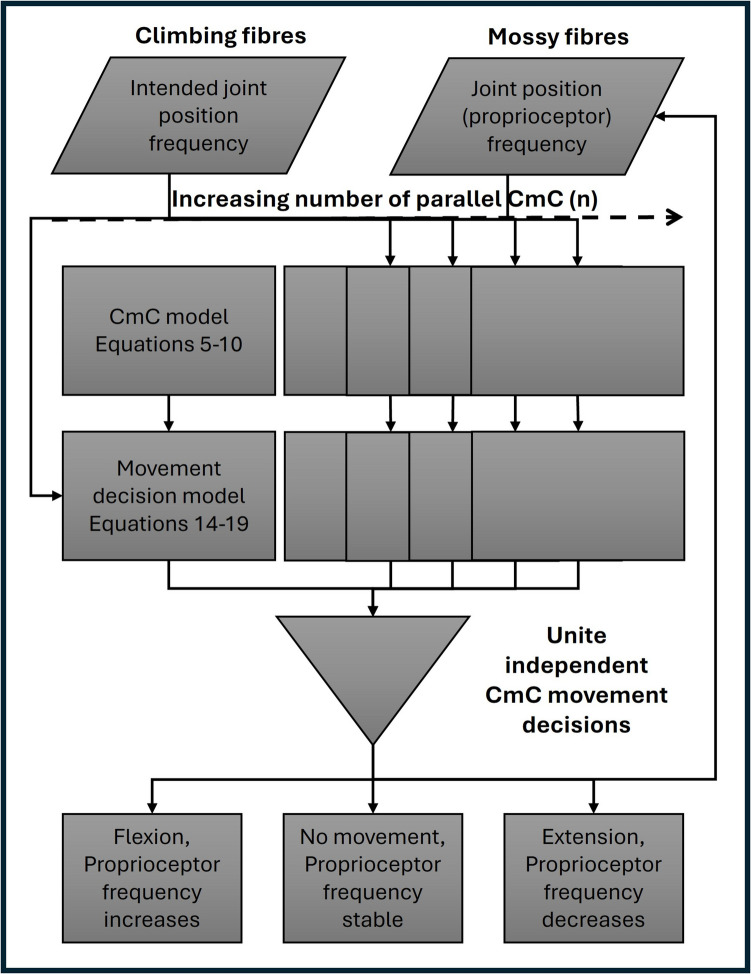 Figure 1
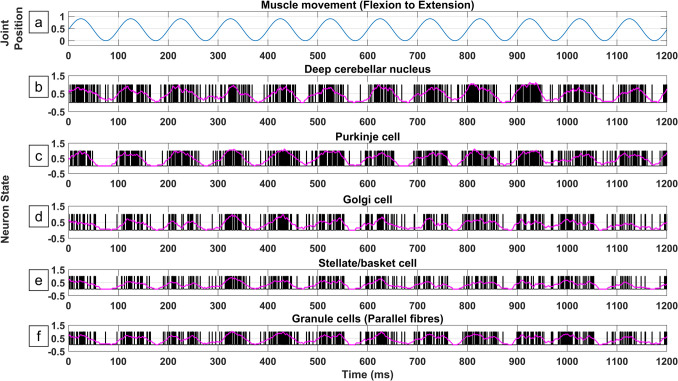 Figure 2
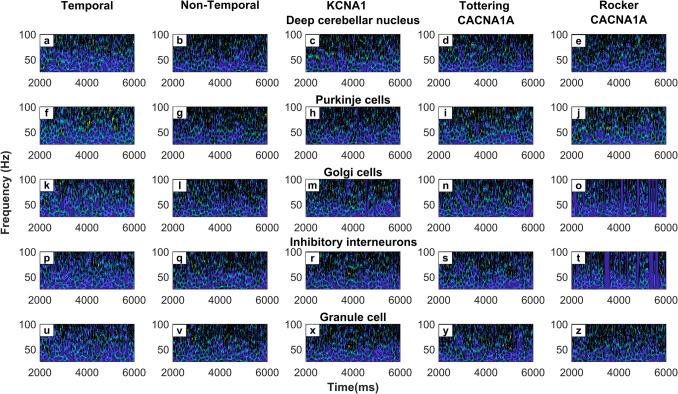 Figure 3
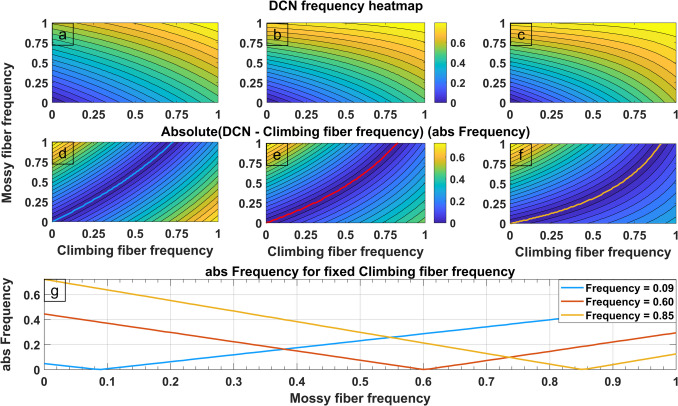 Figure 4
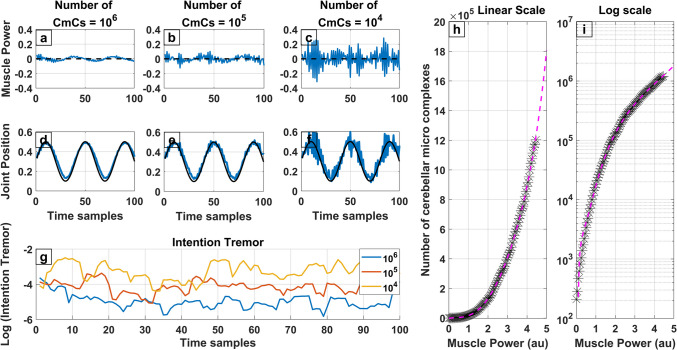 Figure 5
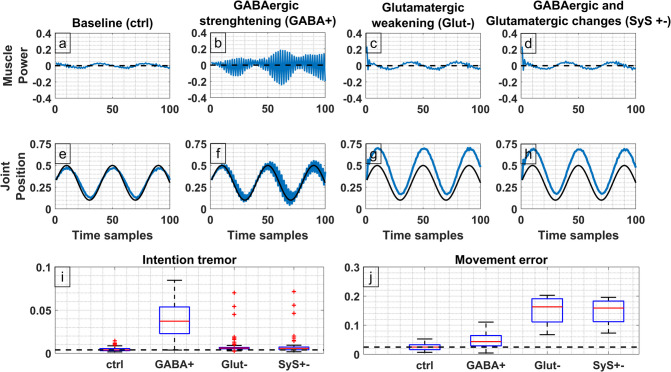 Figure 6
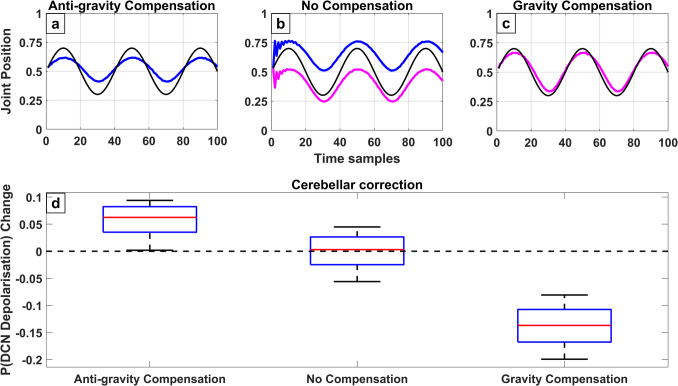 Figure 7
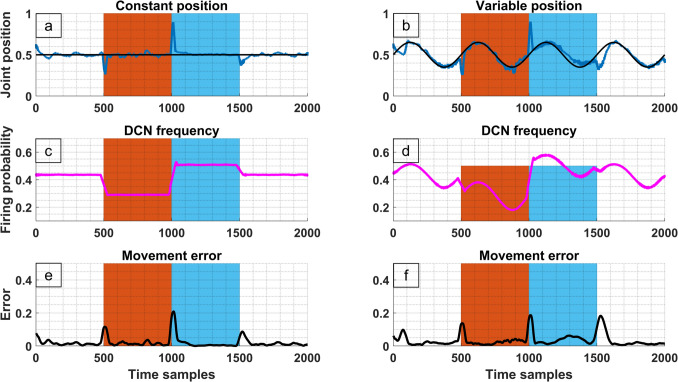 Figure 8
Peer Reviews
No public reviews on file for this paper yet. If you reviewed it on a platform where reviews are public (OpenReview, ICLR, NeurIPS, ICML), you can paste yours below so the community can read it here.
Videos
No videos yet. Explain this paper in a talk, walkthrough, or lecture? Add one.
Taxonomy
TopicsVestibular and auditory disorders · Neuroscience and Neuropharmacology Research · Mitochondrial Function and Pathology