Pairwise analysis of plasma cell-free DNA before and after palliative second-line paclitaxel plus ramucirumab treatment in patients with metastatic gastric cancer
Ji-Won Kim, Dong Soo Kyung, Won Yeong Ko, Hwang-Phill Kim, Sung-Hyun Hwang, Kui-Jin Kim, Ju Hyun Lee, Jeongmin Seo, Minsu Kang, Eun Hee Jung, Koung Jin Suh, Se Hyun Kim, Jin Won Kim, Yu Jung Kim, Jee Hyun Kim, Keun-Wook Lee

TL;DR
This study shows that plasma cell-free DNA can detect additional mutations in metastatic gastric cancer patients and predict treatment outcomes when compared to tumor tissue DNA.
Contribution
The study demonstrates that cfDNA analysis can reveal novel mutations during treatment and predict survival outcomes in metastatic gastric cancer patients.
Findings
TP53 was the most frequently mutated gene in metastatic gastric cancer patients.
PD-cfDNA analysis identified 14 novel pathogenic mutations in ten patients.
Baseline circulating tumor DNA fraction and VAF values were associated with progression-free survival.
Abstract
This study compared plasma cell-free DNA (cfDNA) and tumor tissue DNA (ttDNA) to explore the clinical applicability of cfDNA in patients with metastatic gastric cancer (mGC) receiving palliative second-line paclitaxel + ramucirumab treatment. Targeted sequencing of 106 genes was conducted using germline DNA and cfDNA at baseline (baseline-cfDNA) and progressive disease (PD-cfDNA). The results were compared with those of ttDNA-based cancer panel data. Of 76 consecutive patients, 46 (27 males; median age 57.5 [range, 32–73] years) who had all three samples were included. Combined analysis of ttDNA and baseline-cfDNA revealed that TP53 (58.7%) was the most frequently mutated gene, followed by CDH1 (26.1%), KRAS (21.7%), and APC (13.0%). For these genes, the sensitivity and positive predictive value of baseline-cfDNA over ttDNA were 71.8% and 51.9%, respectively. When baseline-cfDNA and…
Genes, proteins, chemicals, diseases, species, mutations and cell lines named across the full text — each resolved to its canonical identifier and authoritative record.
Click any figure to enlarge with its caption.
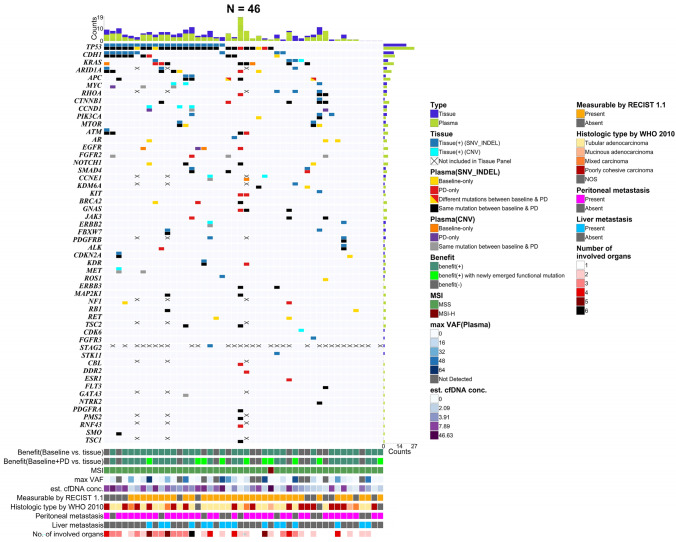 Figure 1
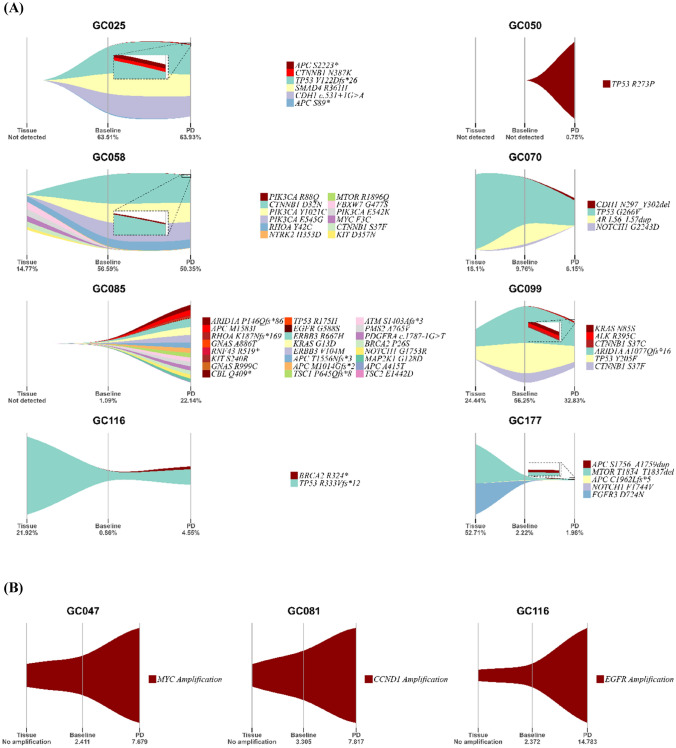 Figure 2
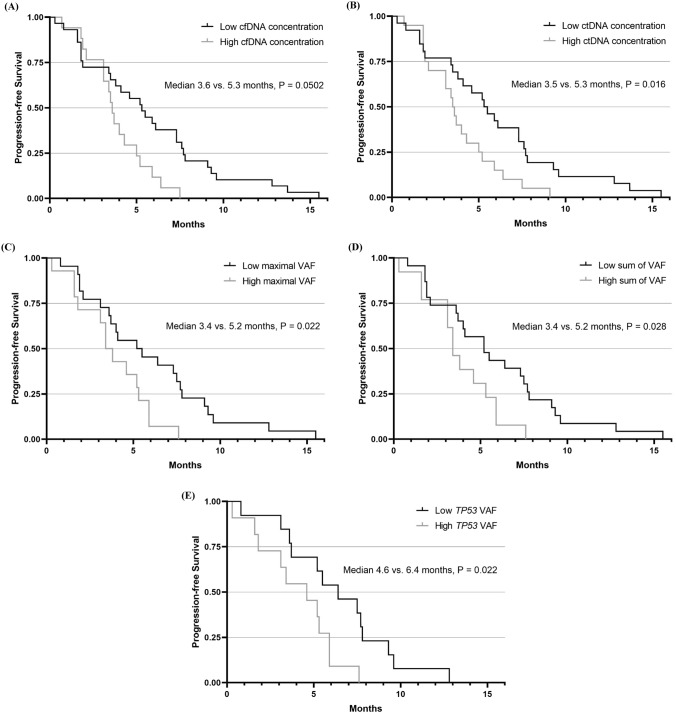 Figure 3
Peer Reviews
No public reviews on file for this paper yet. If you reviewed it on a platform where reviews are public (OpenReview, ICLR, NeurIPS, ICML), you can paste yours below so the community can read it here.
Videos
No videos yet. Explain this paper in a talk, walkthrough, or lecture? Add one.
Taxonomy
TopicsCancer Genomics and Diagnostics · Renal cell carcinoma treatment · Pancreatic and Hepatic Oncology Research