Factors and predictors affecting late external dose rates and isolation period in patients after lutetium-177-labeled DOTA-Tyr3-octreotate treatment for neuroendocrine tumors
Naoto Wakabayashi, Shiro Watanabe, Satoshi Takeuchi, Takahiro Tsuchikawa, Yamato Munakata, Kenji Hirata, Rina Kimura, Junki Takenaka, Hiroshi Ishii, Kohsuke Kudo

TL;DR
This study identifies factors affecting radiation levels in patients after a specific cancer treatment and shows how to predict these levels using imaging data.
Contribution
The study introduces a predictive model for late external dose rates using pretreatment imaging data in PRRT for neuroendocrine tumors.
Findings
Late EDR-1m is significantly correlated with total radiopharmaceutical uptake and dose per body weight.
A predictive equation using [111In] pentetreotide SPECT/CT data achieved an RMSE of 2.24 μSv/h in training and 3.47 μSv/h in testing.
Creatinine clearance and ALBI scores were not significantly correlated with late EDR-1m.
Abstract
In peptide receptor radionuclide therapy (PRRT) using lutetium-177-labeled DOTA-Tyr3-octreotate ([177Lu] DOTATATE), isolation is required until the external dose rate at 1 m (EDR-1 m) from the body surface falls below the regulatory standards of each country. While it is known that renal function influences EDR-1 m reduction within 180 min post-administration, the factors affecting EDR-1 m on the day following administration (Late EDR-1 m) remain unclear. This study aimed to identify factors influencing Late EDR-1 m after PRRT using [177Lu] DOTATATE for neuroendocrine tumors and to predict Late EDR-1 m using pretreatment [111In] pentetreotide single-photon emission computed tomography/computed tomography (SPECT/CT) data. This study analyzed 111 PRRT cycles administered to 36 patients between September 2021 and August 2024. Late EDR-1 m was set as the dependent variable, whereas total…
Genes, proteins, chemicals, diseases, species, mutations and cell lines named across the full text — each resolved to its canonical identifier and authoritative record.
Click any figure to enlarge with its caption.
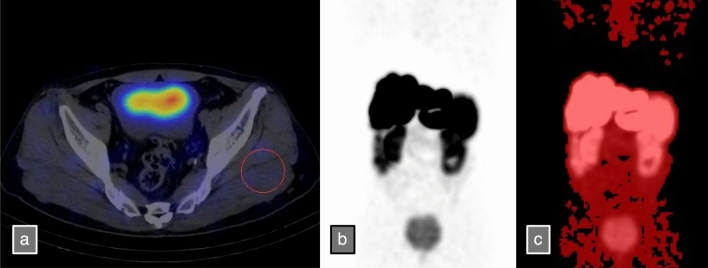 Figure 1
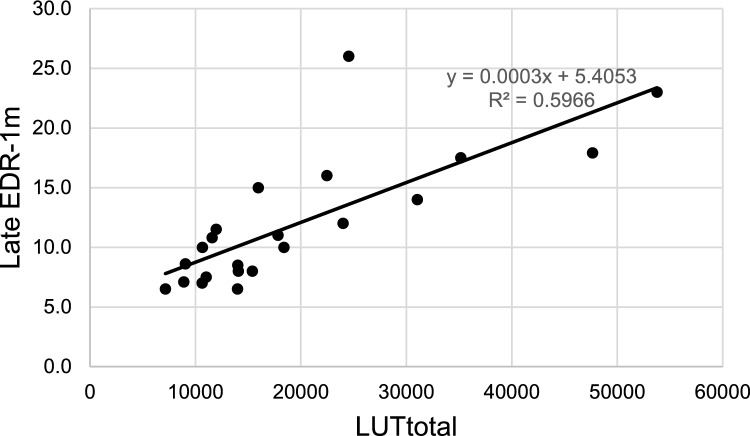 Figure 2
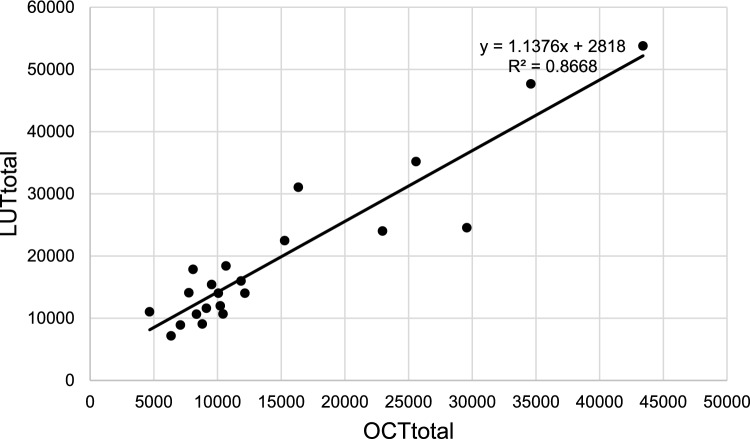 Figure 3
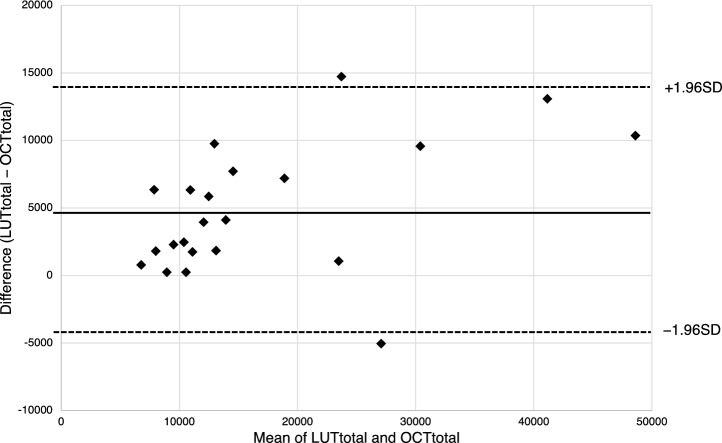 Figure 4
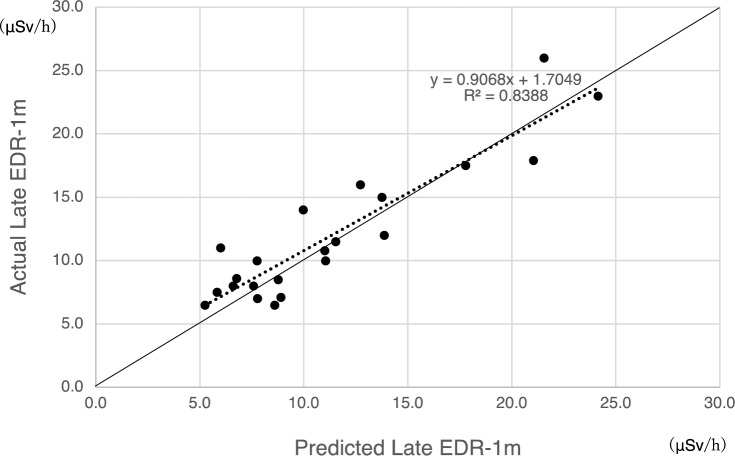 Figure 5
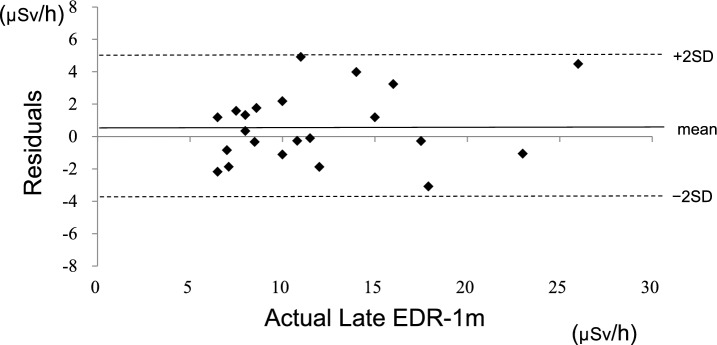 Figure 6
 Figure 7
 Figure 8
 Figure 9
 Figure 10
Peer Reviews
No public reviews on file for this paper yet. If you reviewed it on a platform where reviews are public (OpenReview, ICLR, NeurIPS, ICML), you can paste yours below so the community can read it here.
Videos
No videos yet. Explain this paper in a talk, walkthrough, or lecture? Add one.
Taxonomy
TopicsNeuroendocrine Tumor Research Advances · Radiopharmaceutical Chemistry and Applications · Neuroblastoma Research and Treatments