Japanese translation of the Functional Assessment of Cancer Therapy-Breast + 4 (FACT-B + 4) following international guidelines: a verification of linguistic validity
Takahiro Tsukioki, Nozomu Takata, Saya R. Dennis, Kaori Terata, Yasuaki Sagara, Takehiko Sakai, Shin Takayama, Dai Kitagawa, Yuichiro Kikawa, Yuko Takahashi, Tsuguo Iwatani, Fumikata Hara, Tomomi Fujisawa, Tadahiko Shien

TL;DR
This paper describes the creation of a Japanese version of the FACT-B + 4 questionnaire to assess breast cancer patients' quality of life, particularly focusing on upper limb issues.
Contribution
The paper presents the first officially approved Japanese version of the FACT-B + 4, following international translation guidelines.
Findings
The Japanese version of FACT-B + 4 was developed through a rigorous translation and validation process.
Patients found some initial Japanese terms uncomfortable or difficult to describe symptoms accurately.
The final version was adjusted to be more concise and natural in Japanese.
Abstract
For breast cancer patients, postoperative lymphedema and upper limb movement disorders are serious complications that absolutely reduce their quality of life (QOL). To evaluate this serious complication, we used “Quick Dash” or “FACT-B”, which can assess a patient's physical, social, emotional, and functional health status. To evaluate their breast cancer surgery-related dysfunction correctly, “FACT-B + 4” was created by adding four questions about “arm swelling'' and “tenderness”. We have translated it into Japanese according to international translation guidelines. At the beginning, we contacted FACT headquarters that we would like to create a Japanese version of FACT-B + 4. They formed the FACIT Trans Team (FACIT) following international translation procedures, and then, we began translating according to them. The steps are 1: perform “Forward and Reverse translations” to create a…
Genes, proteins, chemicals, diseases, species, mutations and cell lines named across the full text — each resolved to its canonical identifier and authoritative record.
Click any figure to enlarge with its caption.
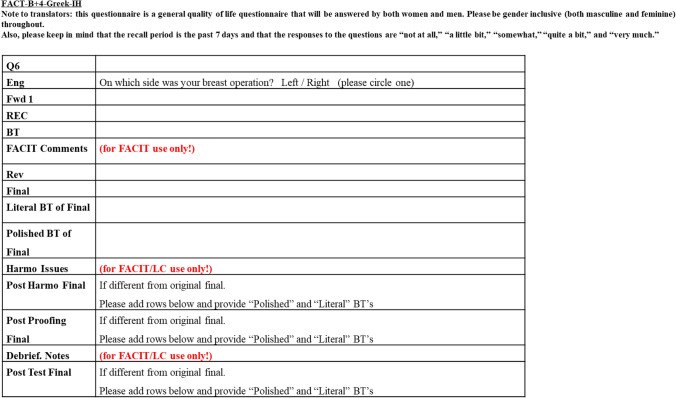 Figure 1
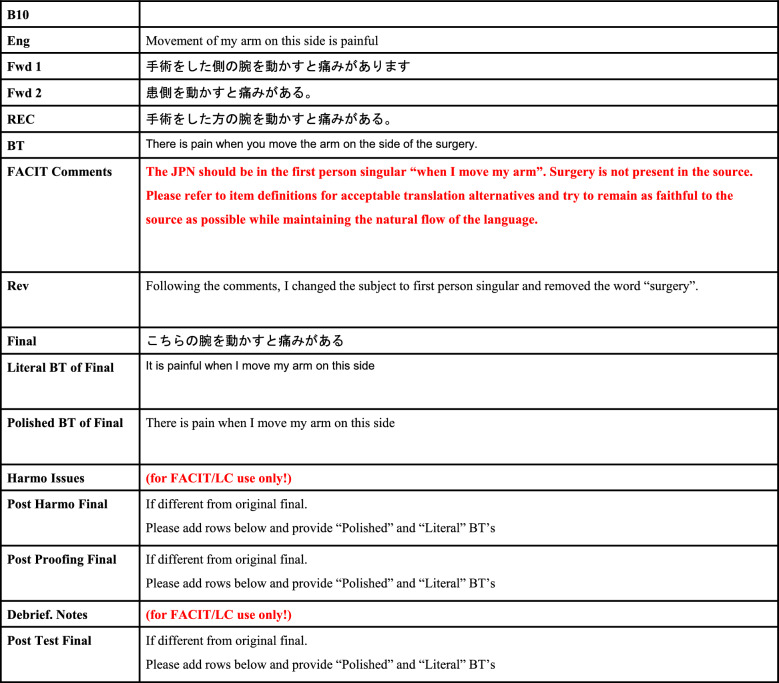 Figure 2
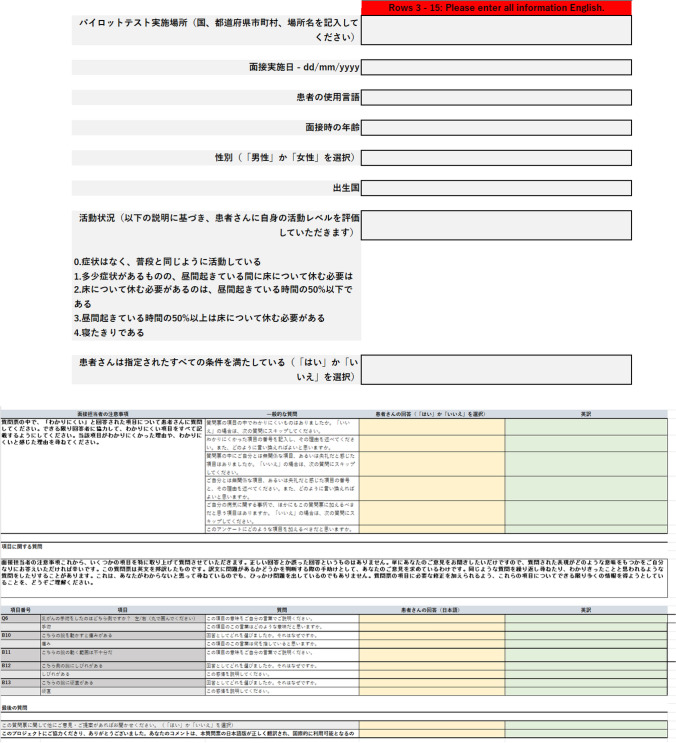 Figure 3
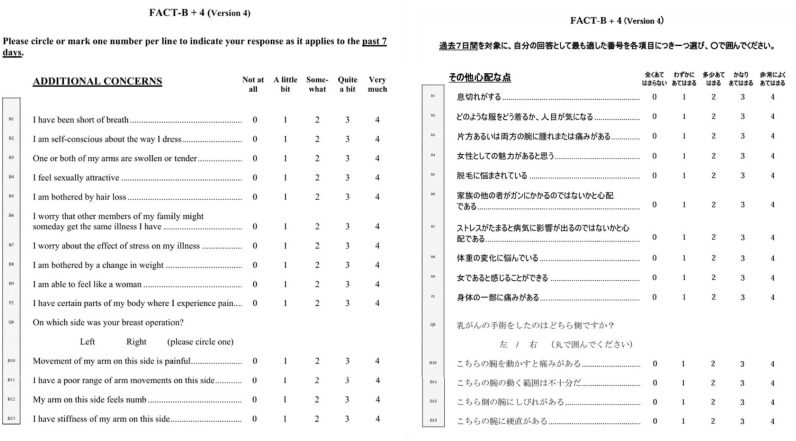 Figure 4
Peer Reviews
No public reviews on file for this paper yet. If you reviewed it on a platform where reviews are public (OpenReview, ICLR, NeurIPS, ICML), you can paste yours below so the community can read it here.
Videos
No videos yet. Explain this paper in a talk, walkthrough, or lecture? Add one.
Taxonomy
TopicsLymphatic System and Diseases · Cancer survivorship and care · Peripheral Nerve Disorders