Association between climate indicators and hay fever incidence in children and adolescents in Freiburg, Germany
Trang Dao-Siebel, Jakob Holstiege, Kathrin Graw, Christoph Müller, Andreas Matzarakis, Roxana Halbleib, Evelyn Lamy

TL;DR
This study explores how climate factors like temperature and wind speed relate to hay fever rates in children and adolescents in Freiburg, Germany.
Contribution
The study identifies specific temperature and wind speed ranges associated with hay fever incidence in a German urban setting.
Findings
Hay fever incidence was significantly associated with temperature ranges of 4–6°C and 10–17°C.
Wind speeds between 2.0 and 2.1 m/s were also significantly linked to hay fever incidence.
No significant associations were found with precipitation, PM10, NO2, or O3 levels.
Abstract
Allergic conditions including hay fever are a sentinel measure of environmental impact on human health in early life. In this study we investigated the association between climate indicators and allergic rhinitis (hay fever) incidence in children and adolescents in Freiburg im Breisgau (Germany), as a representative study site for an urban German environment. Data on climate indicators and hay fever incidence in children and adolescents in the period 2013 to 2021 were implemented within the free software environment for statistical computing R using generalized additive Gamma family models. Our results from all “seasonal”, “non-seasonal”, and “single-factor” models could not support the associations between the hay fever incidence and the precipitation as well as the concentrations of PM10, NO2, and O3 in Freiburg. However, they indicated statistically significant associations with…
Genes, proteins, chemicals, diseases, species, mutations and cell lines named across the full text — each resolved to its canonical identifier and authoritative record.
Click any figure to enlarge with its caption.
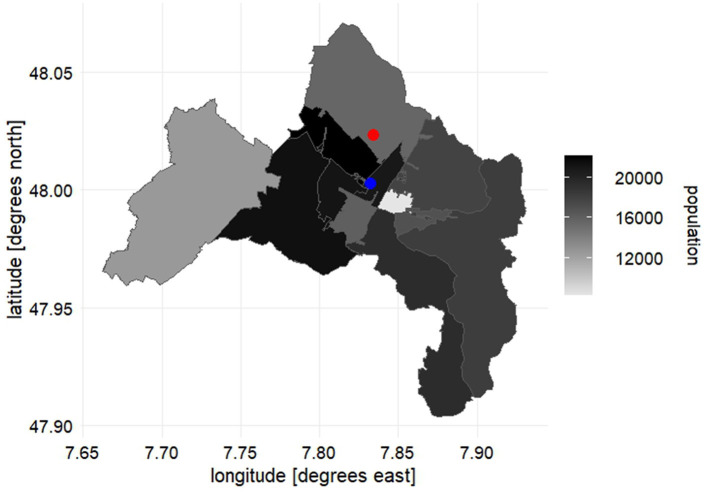 Figure 1
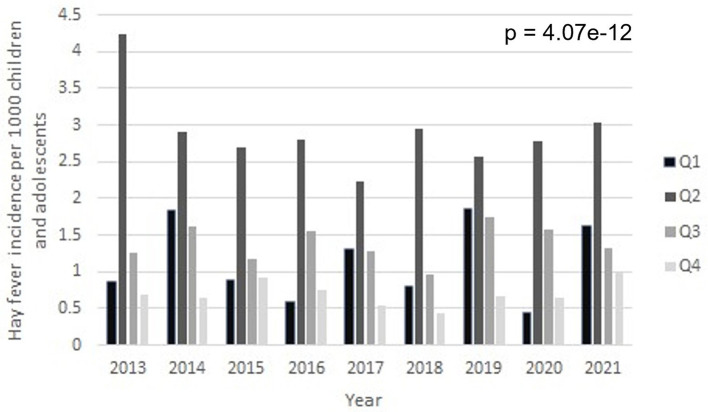 Figure 2
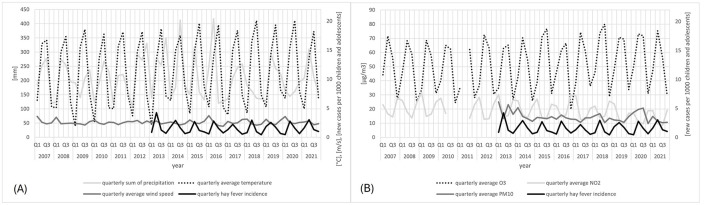 Figure 3
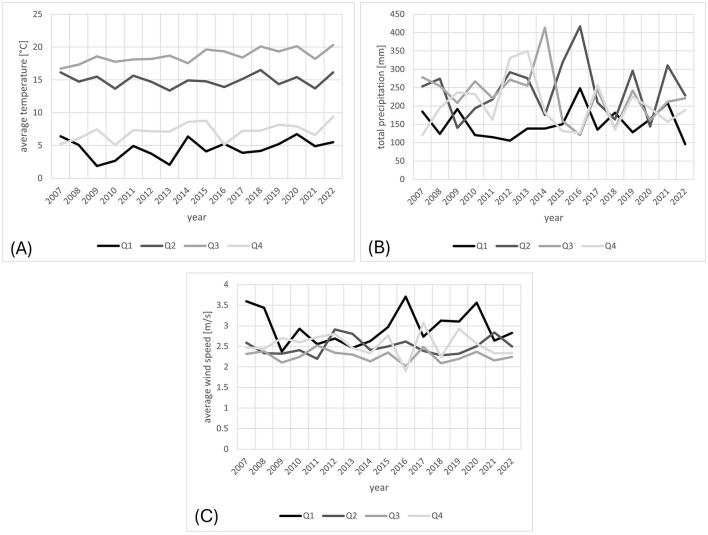 Figure 4
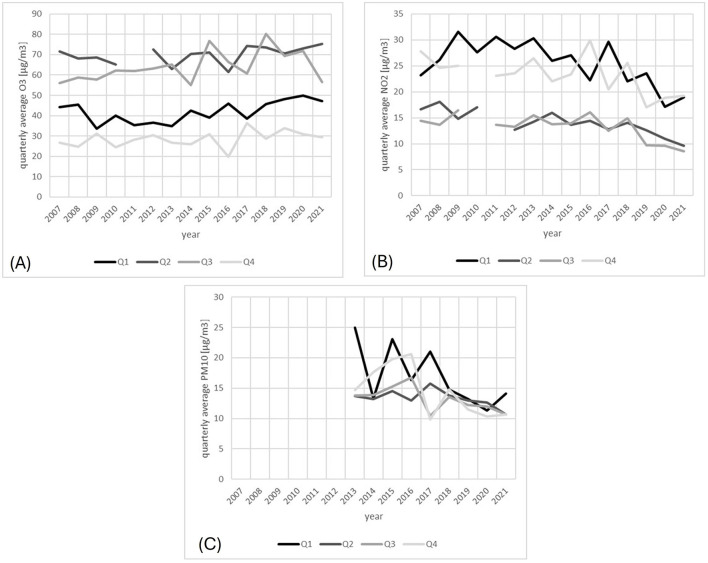 Figure 5
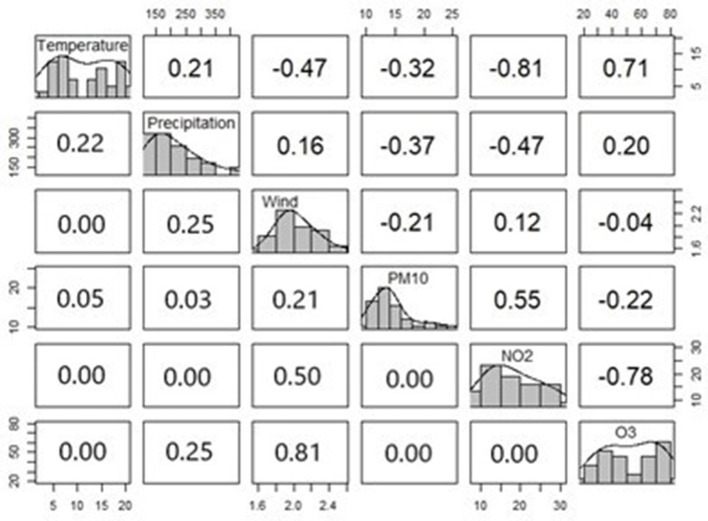 Figure 6
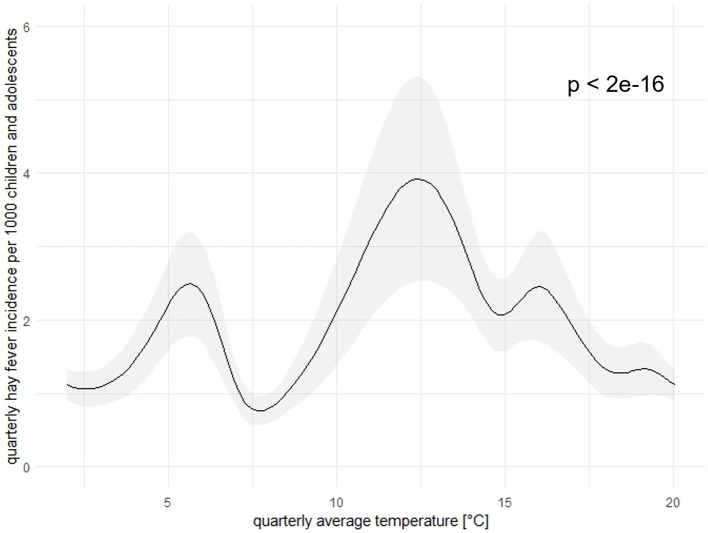 Figure 7
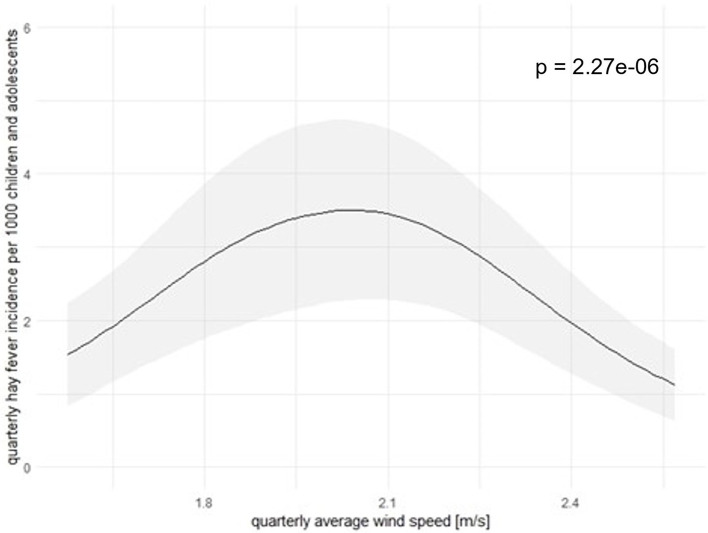 Figure 8
Peer Reviews
No public reviews on file for this paper yet. If you reviewed it on a platform where reviews are public (OpenReview, ICLR, NeurIPS, ICML), you can paste yours below so the community can read it here.
Videos
No videos yet. Explain this paper in a talk, walkthrough, or lecture? Add one.
Taxonomy
TopicsAllergic Rhinitis and Sensitization · Asthma and respiratory diseases · Air Quality and Health Impacts