Specialist Savvy Versus Generalist Grit: Elucidating the Trade‐Offs in Adaptive Dietary Ecomorphology Amongst African Green and Bush Snakes
Hanlie M. Engelbrecht, Kimberley E. J. Chapelle, Graham J. Alexander

TL;DR
This study explores how African Green and Bush Snakes adapt their feeding structures to different diets, revealing that small dietary differences lead to distinct skull shapes.
Contribution
The study provides new insights into dietary specialization and generalization in closely related snake species through geometric morphometric analysis.
Findings
Anurophagous specialists have jawbones with higher mechanical advantage and specific shape features.
Anuro-saurophagous generalists show longer and thinner jaw bones with lower mechanical advantage.
Dietary morphology is flexible and influenced by phylogenetic relationships and ecological opportunities.
Abstract
Kinetic feeding bones of macrostomatan Afrophidian snakes enable them to consume diverse prey types. While significant research has focused on functional feeding morphology in snakes, it often emphasizes broad taxonomic comparisons or species with distinct dietary ecologies. There is limited knowledge of how small variations in prey type composition may influence feeding morphology among closely related species sharing similar ecological niches. African Green and Bush Snakes (Philothamnus) feed primarily on frogs (anurophagous) and lizards (saurophagous), but the degree of intraspecific dietary generalization and specialization remains unclear. Thus, our study had three objectives: (1) to evaluate proportional differences in anurophagy and saurophagy between Philothamnus species, (2) quantitatively assess the shape differences in four of the main cranial bones functional in feeding, and…
Genes, proteins, chemicals, diseases, species, mutations and cell lines named across the full text — each resolved to its canonical identifier and authoritative record.
Click any figure to enlarge with its caption.
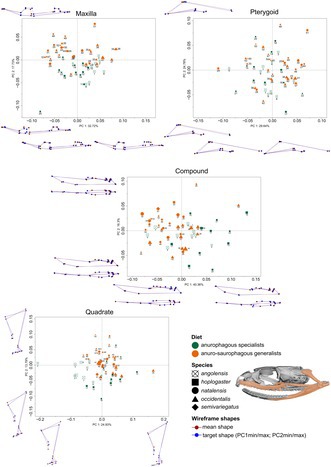 Figure 1
 Figure 2
 Figure 3
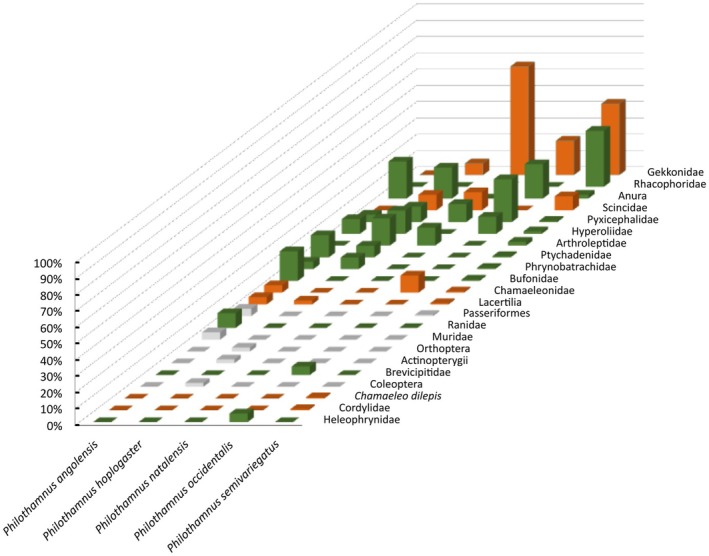 Figure 4
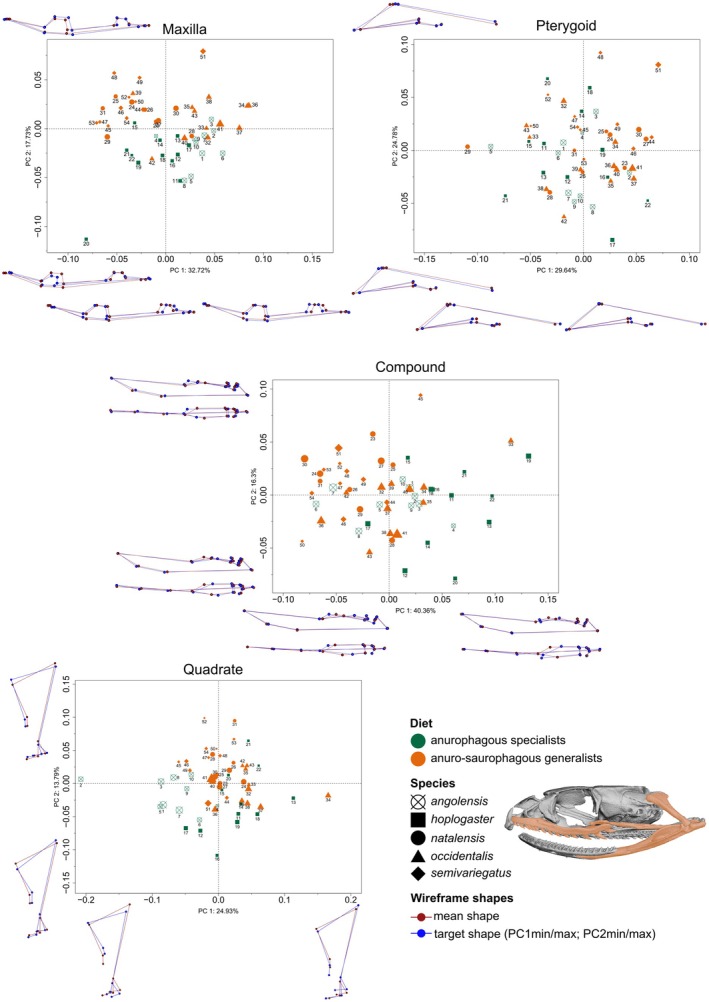 Figure 5
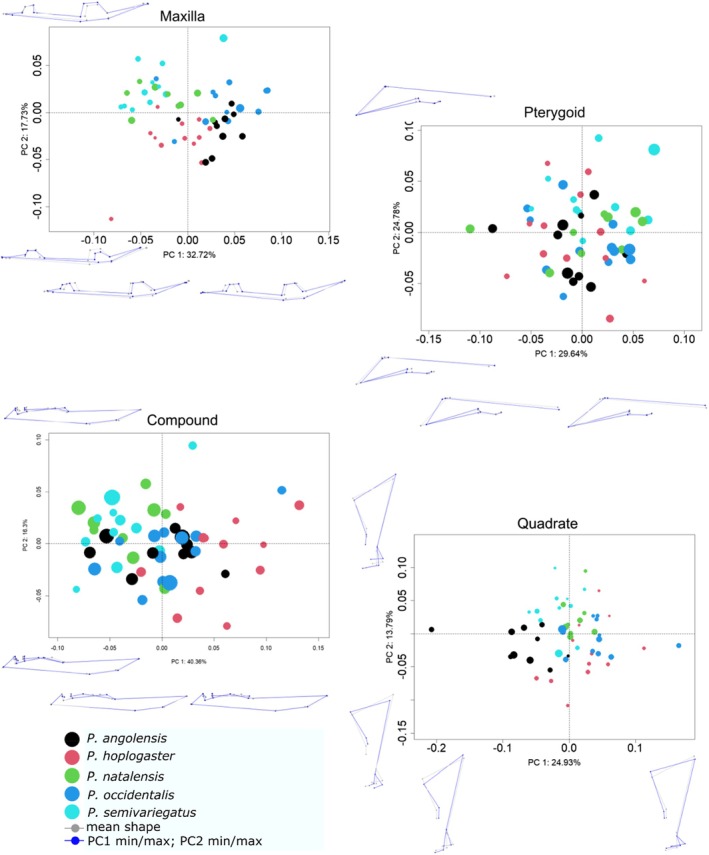 Figure 6
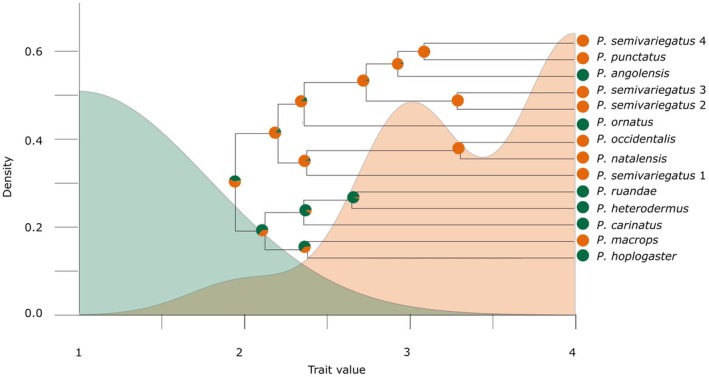 Figure 7
Peer Reviews
No public reviews on file for this paper yet. If you reviewed it on a platform where reviews are public (OpenReview, ICLR, NeurIPS, ICML), you can paste yours below so the community can read it here.
Videos
No videos yet. Explain this paper in a talk, walkthrough, or lecture? Add one.
Taxonomy
TopicsAmphibian and Reptile Biology · Evolution and Paleontology Studies · Wildlife Ecology and Conservation