Optimization of the sealed yellowing parameters and suitability evaluation of the different cultivars for manufacturing the Pingyang Huangtang tea
Shanshan Wu, Dingwu Zhang, Siyi Hu, Cunyu Li, Zhanbo Dong, Yurong Hu, Fangyuan Fan, Jianhui Ye, Xinqiang Zheng, Yuerong Liang, Liaoyuan Yu, Jianliang Lu

TL;DR
This study identifies optimal sealed yellowing conditions and suitable tea cultivars to improve the quality of Pingyang Huangtang tea.
Contribution
The study provides optimized sealed yellowing parameters and recommends new tea cultivars for Pingyang Huangtang tea production.
Findings
Optimal sealed yellowing occurs at 60°C, 70% RH for 10 hours with two ventilation operations.
Cultivars 'Zhenong 801', 'Zhongcha 108', 'Jiukengzao', and '5–21' produce higher quality Pingyang Huangtang tea.
Quality is influenced by chlorophyll degradation, volatile compounds, and polyphenol-to-amino acid ratios.
Abstract
Lack of optimal sealed yellowing (SY) technique and suitable tea cultivars limits the yield and quality improvement of the Pingyang Huangtang (PYHT) tea. In this study, the effect of SY temperature, relative humidity (RH) and ventilation operation on the PYHT quality had been investigated. Results showed total sensory score was significantly influenced by SY temperature and RH, and optimal PYHT quality could be achieved when SY was performed at 60 °C, 70 % RH for 10 h with 2 ventilation operation. Quality formation of PYHT was mainly associated with degradation of chlorophylls, fluctuation of volatile with different odor notes, and decrease in level of galloylated catechins and the ratio of total polyphenols to amino acids. The quality of tea made from the shoots of ‘Zhenong 801’, ‘Zhongcha 108’, ‘Jiukengzao’ and ‘5–21’ was higher than that of the commonly used cultivar ‘Pingyang…
Genes, proteins, chemicals, diseases, species, mutations and cell lines named across the full text — each resolved to its canonical identifier and authoritative record.
Click any figure to enlarge with its caption.
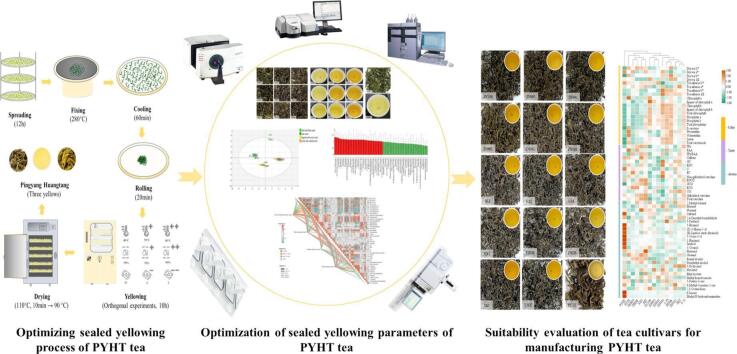 Figure 1
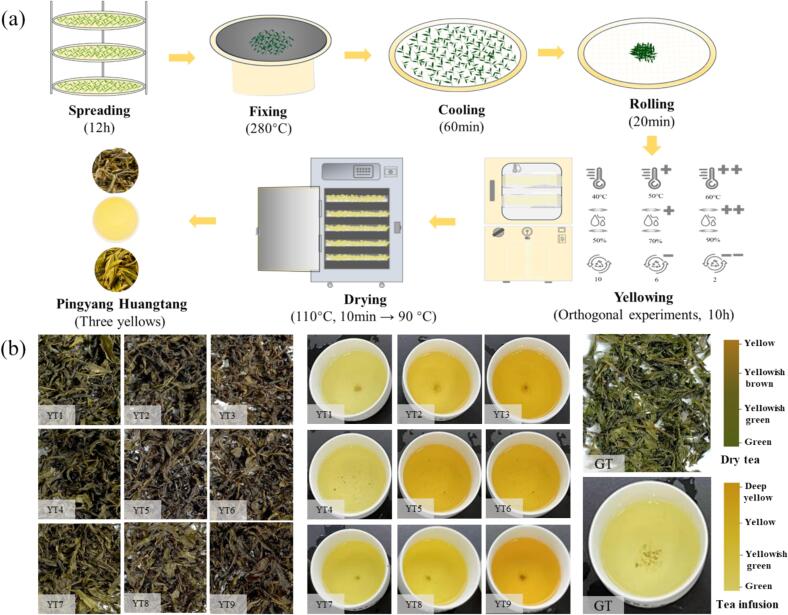 Figure 2
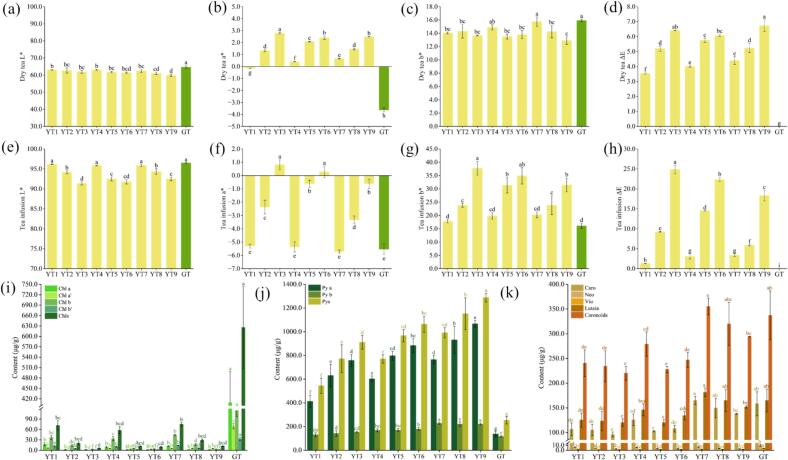 Figure 3
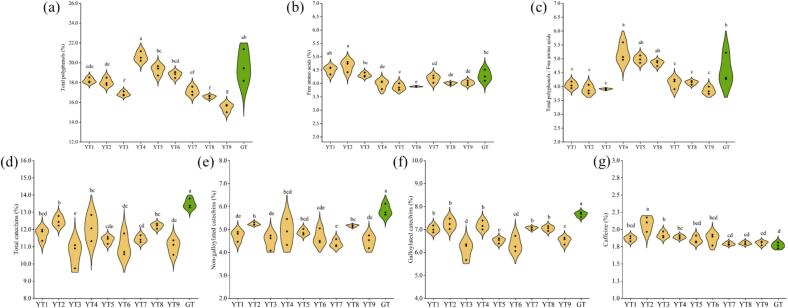 Figure 4
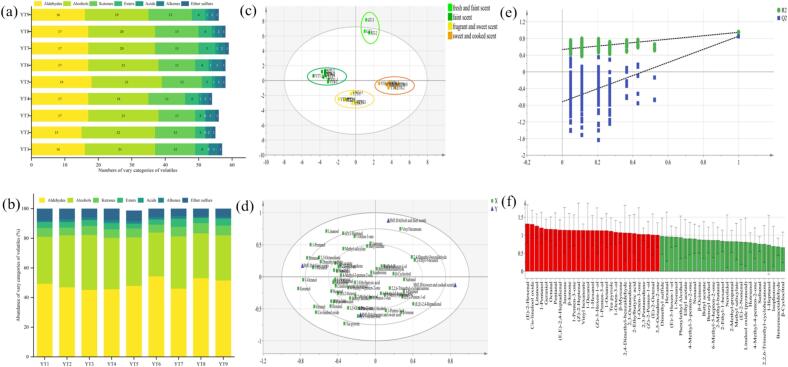 Figure 5
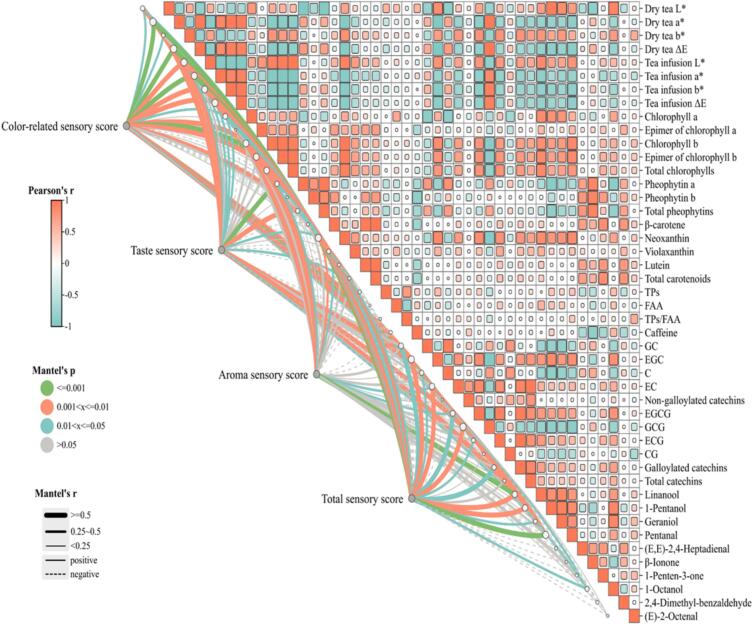 Figure 6
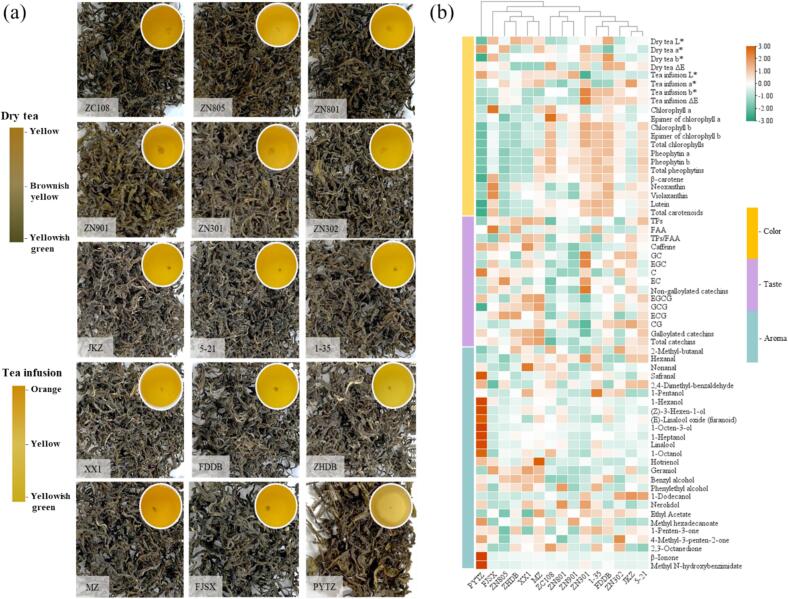 Figure 7
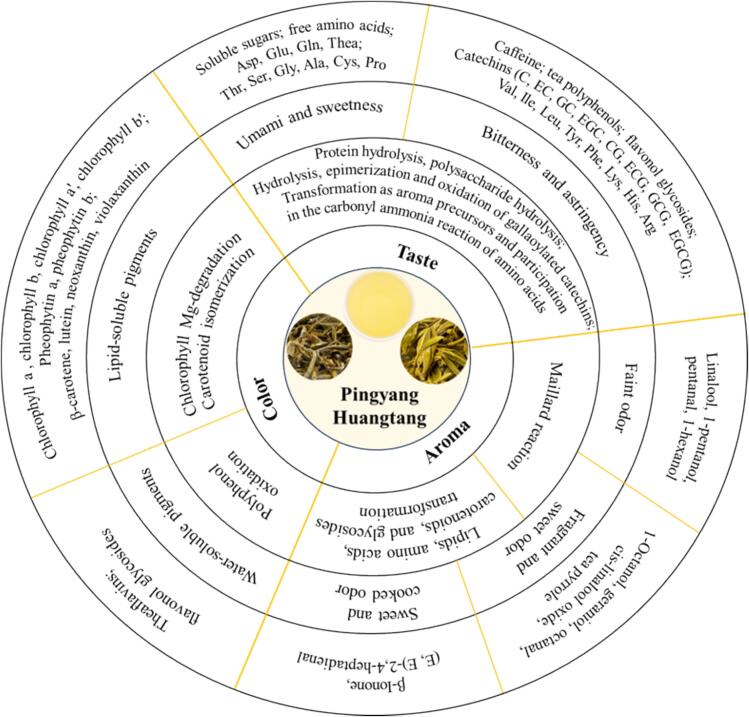 Figure 8
Peer Reviews
No public reviews on file for this paper yet. If you reviewed it on a platform where reviews are public (OpenReview, ICLR, NeurIPS, ICML), you can paste yours below so the community can read it here.
Videos
No videos yet. Explain this paper in a talk, walkthrough, or lecture? Add one.
Taxonomy
TopicsTea Polyphenols and Effects · Food Quality and Safety Studies · Phytochemicals and Antioxidant Activities