Upregulation of LINC02154 promotes esophageal cancer progression by enhancing cell cycling and epithelial-mesenchymal transition
Kotoha Shimote, Takeshi Niinuma, Hiroshi Kitajima, Kazuya Ishiguro, Eiichiro Yamamoto, Gota Sudo, Akira Yorozu, Mutsumi Toyota, Masahiro Kai, Masashi Idogawa, Hiromu Suzuki

TL;DR
This study identifies LINC02154 as a long noncoding RNA that promotes esophageal cancer progression by enhancing cell growth and cancer spread.
Contribution
The study reveals LINC02154 as a novel oncogenic lncRNA in esophageal cancer and identifies its role in cell cycling, EMT, and chemoresistance.
Findings
LINC02154 is significantly upregulated in primary esophageal cancer tumors and correlates with advanced T stages.
Knockdown of LINC02154 reduces cell proliferation and migration in ESCA cell lines.
LINC02154 promotes EMT and chemoresistance by suppressing miR-200b and interacts with desmosome-related proteins.
Abstract
Long noncoding RNAs (lncRNAs) play crucial roles in the progression of human malignancies; however, their involvement in esophageal cancer (ESCA) remains incompletely understood. In this study, we screened for lncRNAs upregulated in ESCA and identified 12 lncRNAs significantly upregulated in primary ESCA tumors. Among those, elevated LINC02154 expression correlated positively with advanced T stages. LINC02154 knockdown in ESCA cell lines suppressed cell proliferation and migration, while ectopic expression of LINC02154 enhanced colony formation. Depletion of LINC02154 suppressed genes involved in various oncogenic processes, including cell cycling, epithelial-mesenchymal transition (EMT), and metabolism. We also found that LINC02154 promotes EMT and enhances chemoresistance, at least in part, through suppression of miR-200b. Finally, RNA-pulldown and mass spectrometry analysis revealed…
Genes, proteins, chemicals, diseases, species, mutations and cell lines named across the full text — each resolved to its canonical identifier and authoritative record.
Click any figure to enlarge with its caption.
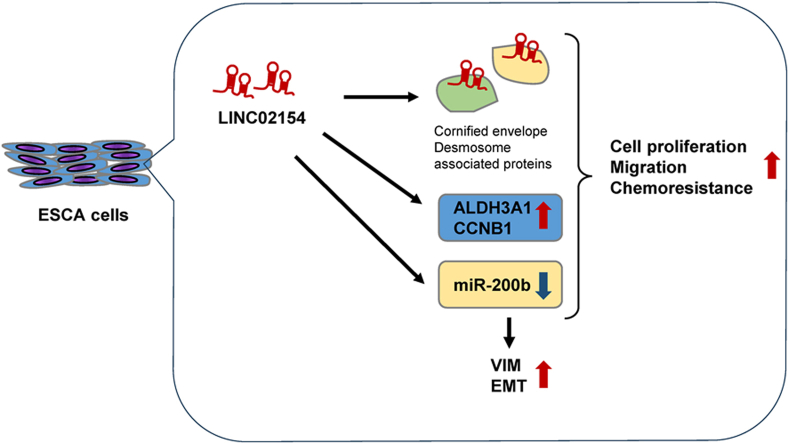 Figure 1
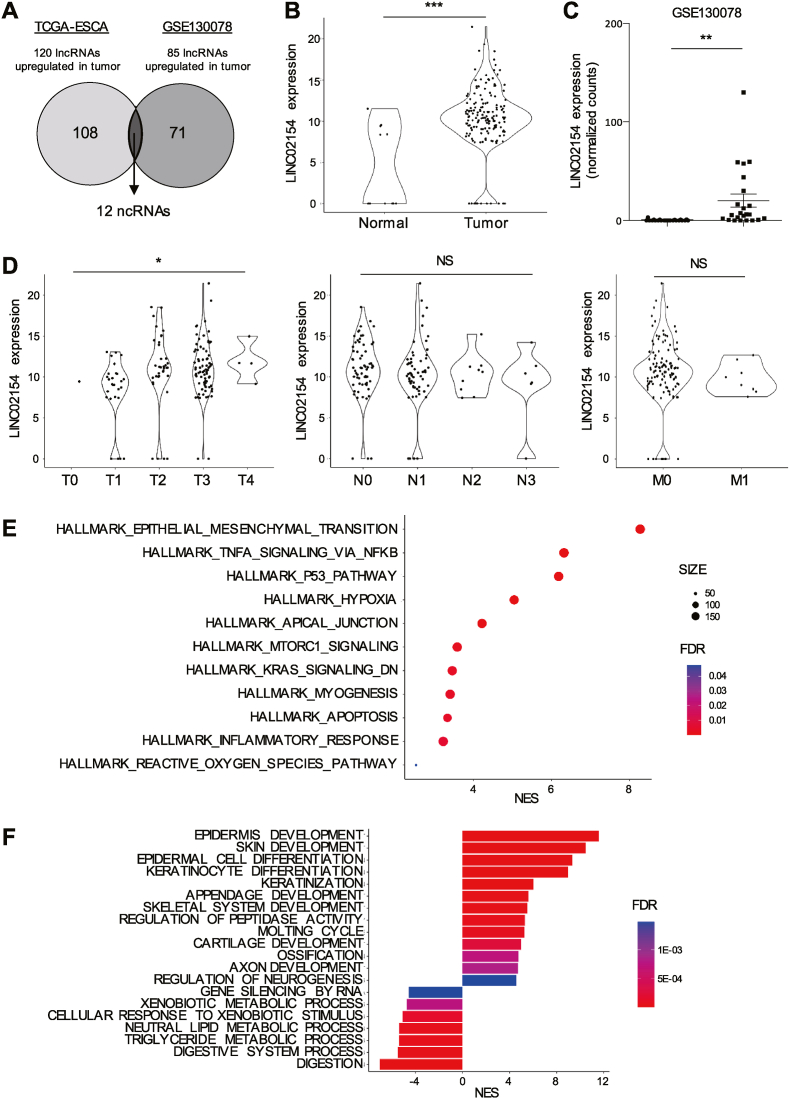 Figure 2
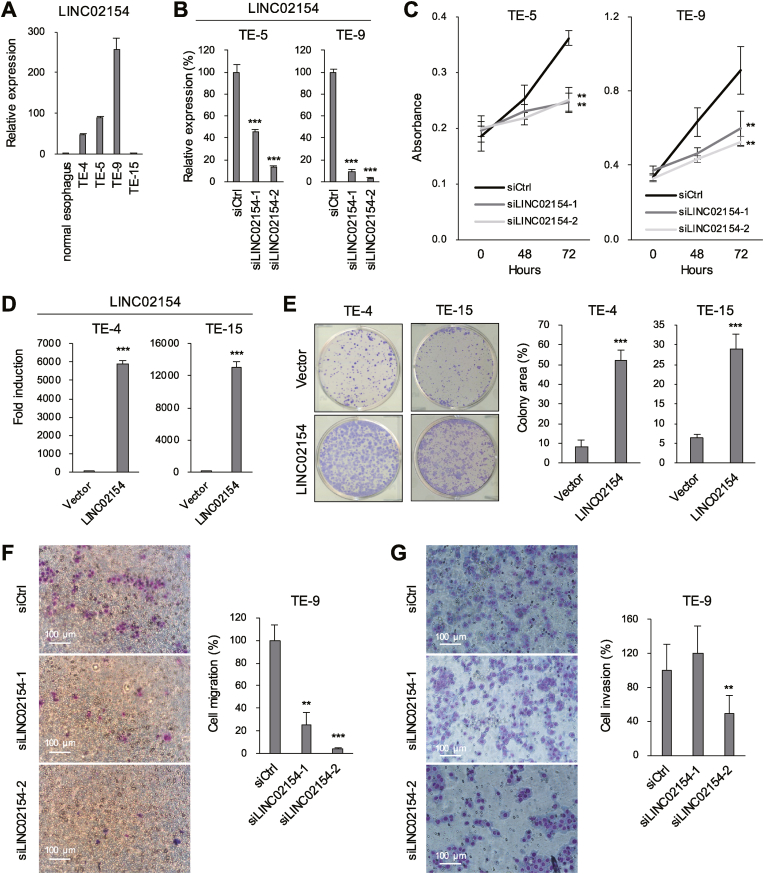 Figure 3
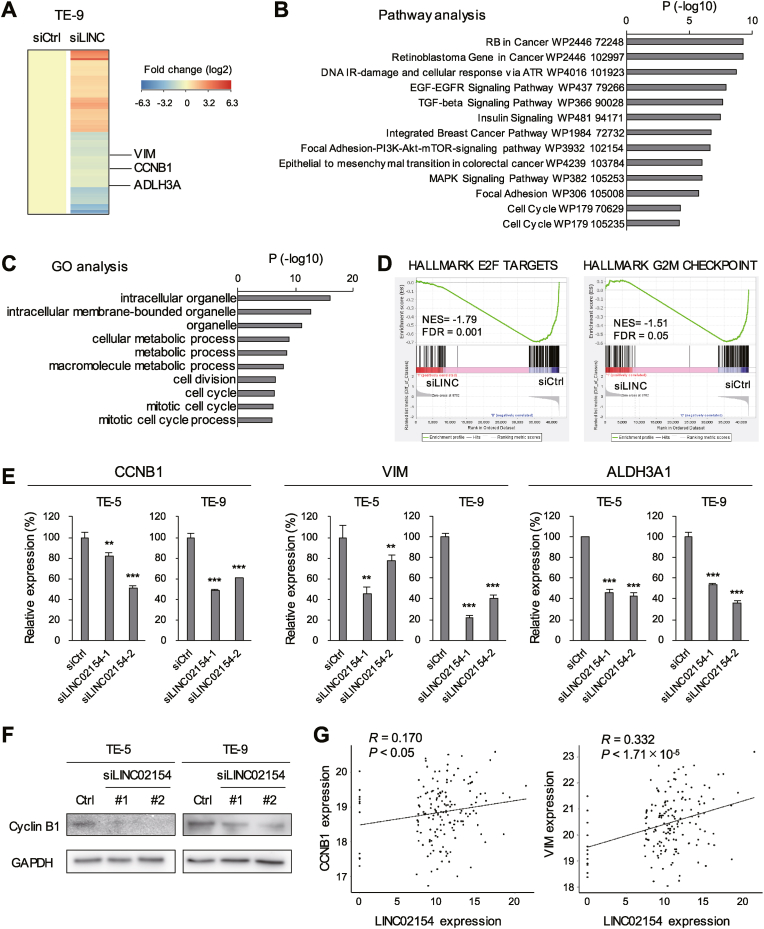 Figure 4
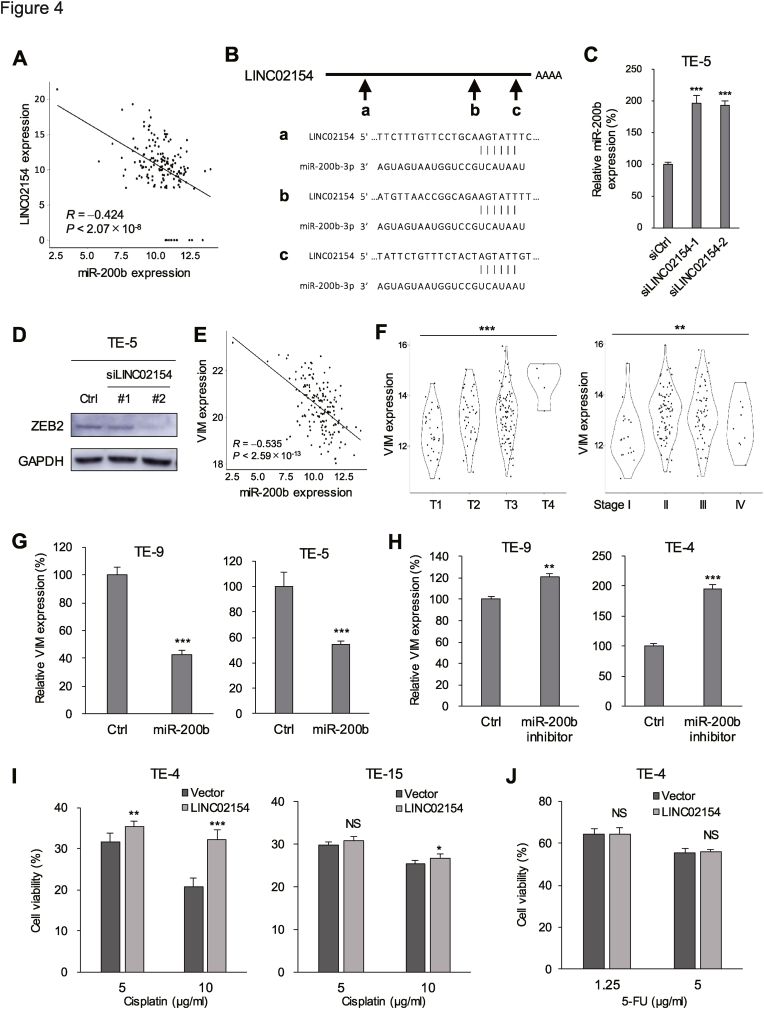 Figure 5
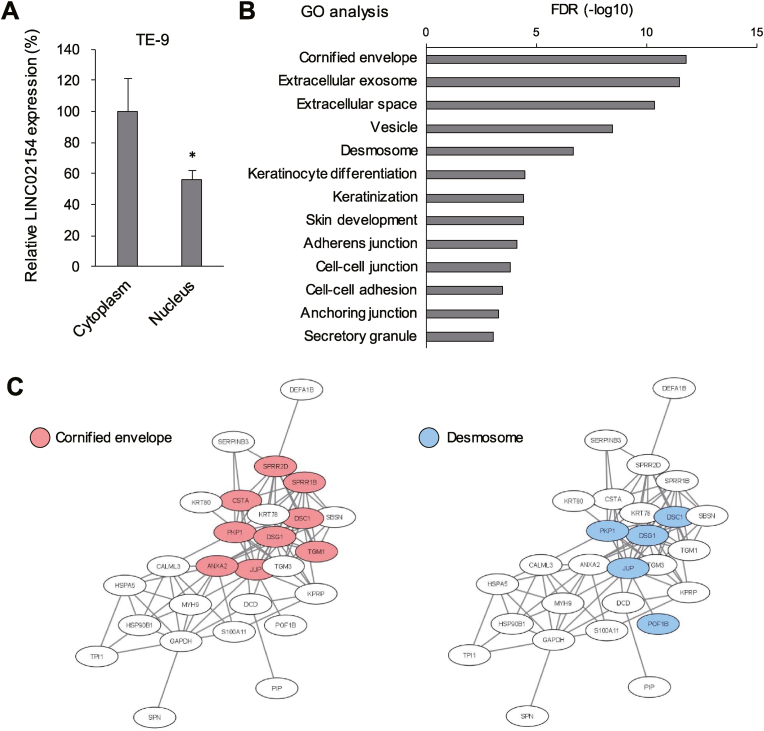 Figure 6
Peer Reviews
No public reviews on file for this paper yet. If you reviewed it on a platform where reviews are public (OpenReview, ICLR, NeurIPS, ICML), you can paste yours below so the community can read it here.
Videos
No videos yet. Explain this paper in a talk, walkthrough, or lecture? Add one.
Taxonomy
TopicsCancer-related molecular mechanisms research · RNA modifications and cancer · RNA Research and Splicing