Exogenous diatoms ameliorate thermal bleaching of symbiont bearing benthic foraminifera
Danna Titelboim, Craig J. Dedman, Rose Pian Hodgson, Lucy S. Knowles, Xuan Liu, Luca Lenzi, Jack Tudor, Edith Vamos, Rosalind E. M. Rickaby

TL;DR
Exogenous diatoms help reduce heat stress in foraminifera by altering their algal symbiont communities.
Contribution
The study reveals that heat tolerance in foraminifera is linked to specific symbiont species rather than broader community shifts.
Findings
Amphistegina lobifera reshuffles its symbiont community under heat stress, while Pararotalia calcariformata maintains a stable Arcocellulus cornucervis symbiont.
Supplementing isolated diatoms reduced bleaching in A. lobifera, indicating the importance of specific symbiont species for heat tolerance.
Only one diatom species from P. calcariformata survived at 35°C, highlighting species-specific thermal resilience.
Abstract
Many marine calcifiers engage in obligatory algal symbiosis which is threatened by ocean warming. Large benthic foraminifera are prominent carbonate and sand producers in shallow environments with a wide range of species-specific thermal tolerances assumed to be related to their diverse algal symbionts. We examine two diatom-bearing benthic foraminifera species which differ in their thermal physiological tolerance and symbiont community composition. Our findings demonstrate that the less thermally tolerant host, Amphistegina lobifera Larsen, 1976, ‘shuffles’ the dominant players of the internal symbiont community with increasing temperature while the more thermally tolerant host Pararotalia calcariformata McCulloch, 1977, is dominated by Arcocellulus cornucervis Medlin, 1990, at all temperatures. Although this diatom species was present in A. lobifera from all treatments, it became more…
Genes, proteins, chemicals, diseases, species, mutations and cell lines named across the full text — each resolved to its canonical identifier and authoritative record.
Click any figure to enlarge with its caption.
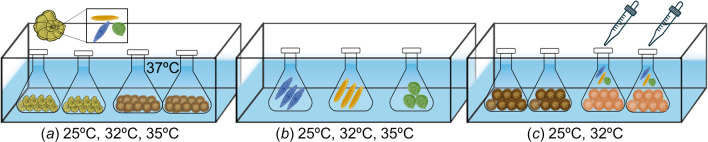 Figure 1
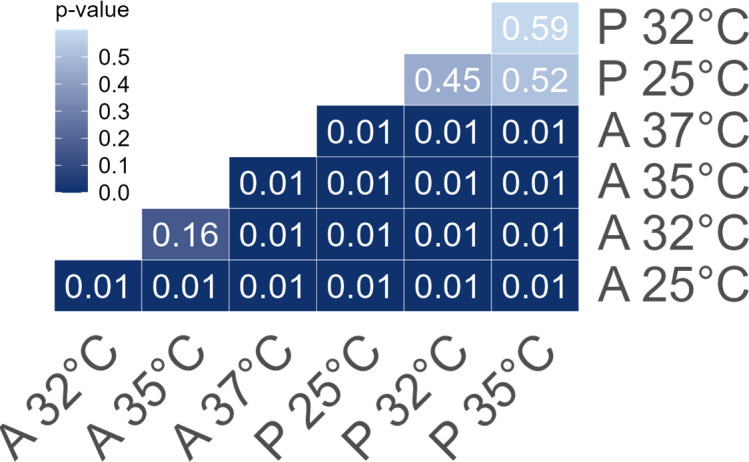 Figure 2
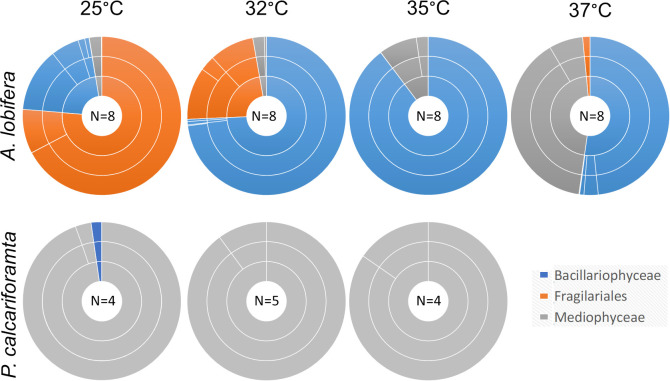 Figure 3
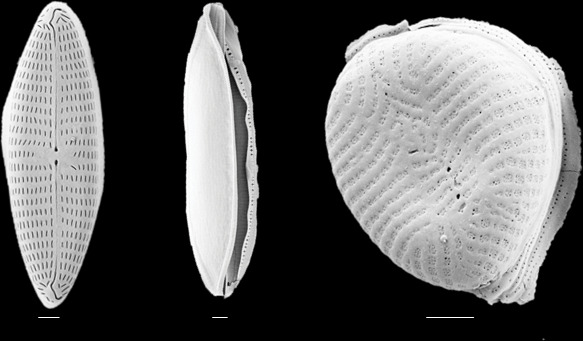 Figure 4
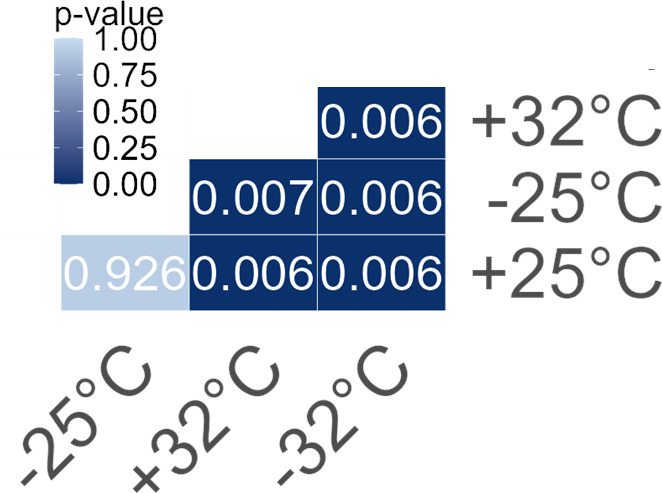 Figure 5
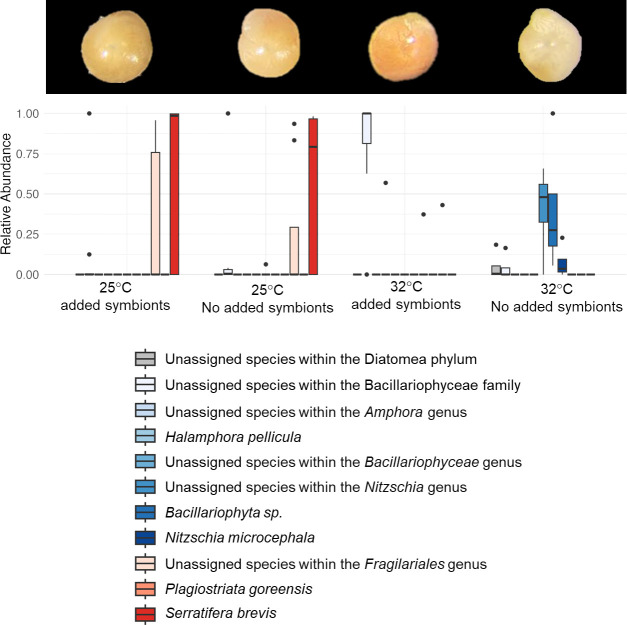 Figure 6
Peer Reviews
No public reviews on file for this paper yet. If you reviewed it on a platform where reviews are public (OpenReview, ICLR, NeurIPS, ICML), you can paste yours below so the community can read it here.
Videos
No videos yet. Explain this paper in a talk, walkthrough, or lecture? Add one.
Taxonomy
TopicsMarine and coastal plant biology · Marine Biology and Ecology Research · Marine and coastal ecosystems