Male-dependent resistance to Spiroplasma-induced cytoplasmic incompatibility
Marie Pollmann, Ronja Reinisch, Lea von Berg, Molly Avidan King, Marina Geiselmann, Lena-Maria Käppeler, Raz Leibson, Natascha Traub, Johannes L. M. Steidle, Yuval Gottlieb

TL;DR
Some wasp species resist bacterial-induced reproductive failure in a male-dependent way, offering insights into how such resistance evolves.
Contribution
The discovery of male-dependent resistance to Spiroplasma-induced cytoplasmic incompatibility in Lariophagus distinguendus clade B.
Findings
All L. distinguendus clades share the same Spiroplasma strain (sDis), suggesting a single infection event in their ancestor.
Clade B shows male-dependent resistance to cytoplasmic incompatibility, unlike clade A which is susceptible.
The resistance mechanism supports theoretical predictions about male-dependent traits driving bacterial loss.
Abstract
Cytoplasmic incompatibility (CI) caused by bacterial endosymbionts is an embryonic developmental failure between infected host males and uninfected females. Although even closely related hosts can have different CI phenotypes, little is known on the resistance mechanism in non-susceptible hosts. The parasitoid wasp species complex of Lariophagus distinguendus encompasses at least three species, termed clades A, B and C. All three species contain strains infected with the endosymbiotic bacterium Spiroplasma, which causes CI in clade A. We studied the relatedness of Spiroplasma in the species complex, the occurrence of CI in selected strains, and the effect of host strain and sex on CI induction. According to multi-locus sequence typing, all host species carry the same sDis strain. CI was absent in strains of clades B and C. Cross-transferring sDis revealed a male-dependent CI resistance…
Genes, proteins, chemicals, diseases, species, mutations and cell lines named across the full text — each resolved to its canonical identifier and authoritative record.
Click any figure to enlarge with its caption.
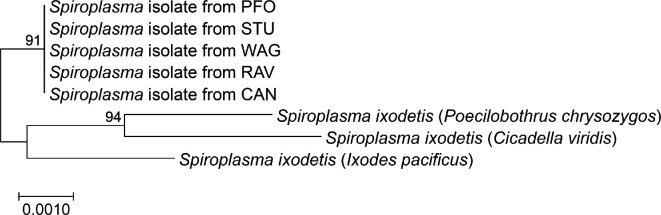 Figure 1
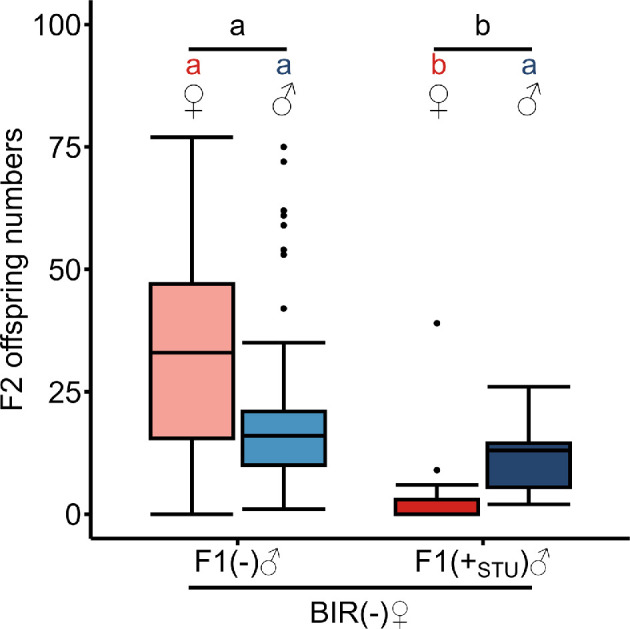 Figure 2
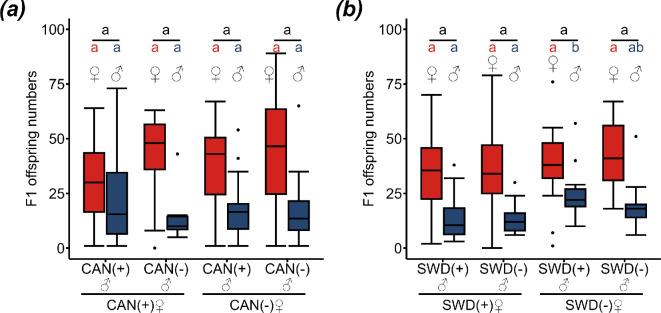 Figure 3
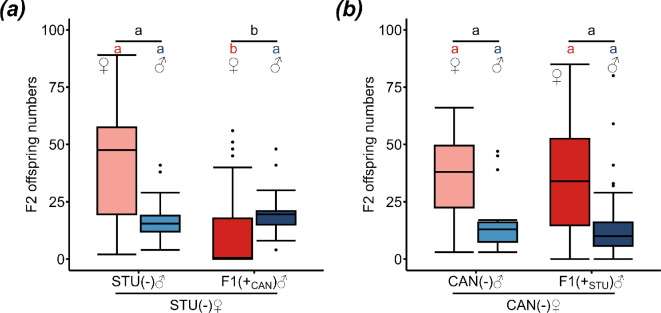 Figure 4
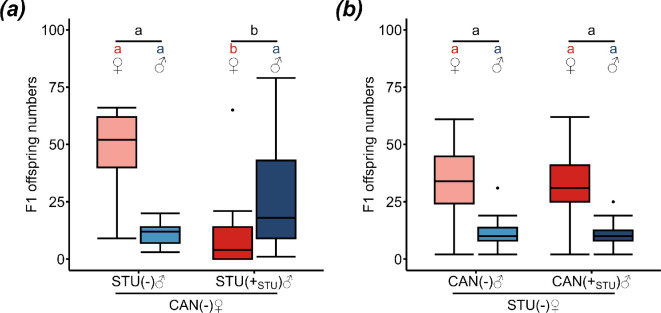 Figure 5
Peer Reviews
No public reviews on file for this paper yet. If you reviewed it on a platform where reviews are public (OpenReview, ICLR, NeurIPS, ICML), you can paste yours below so the community can read it here.
Videos
No videos yet. Explain this paper in a talk, walkthrough, or lecture? Add one.
Taxonomy
TopicsInsect symbiosis and bacterial influences · Phytoplasmas and Hemiptera pathogens · Plant Virus Research Studies