Wolf cranial morphology tracks population replacement in Fennoscandia
Dominika Bujnáková, Jouni Aspi, Carsten Gundlach, Laura Kvist, Christy A. Hipsley

TL;DR
The study shows that wolf skull shapes in Scandinavia and Finland have changed over time, likely due to genetic and environmental factors.
Contribution
The paper provides evidence of morphological changes in wolf cranial morphology linked to population replacement and environmental changes.
Findings
Modern wolves in Scandinavia and Finland have crania with wider frontal bones and zygomatic arches compared to historical populations.
Scandinavian wolves show a significant increase in overall cranial size compared to historical populations.
Morphological changes are likely influenced by genetic origins and shifts in prey availability.
Abstract
Humans have directly or indirectly contributed to the genetic and thus often phenotypic changes of many species. Anthropogenic pressures, such as persecution and hunting, have negatively affected wolf populations in northern Europe. In line with the genetic replacement that occurred during the twentieth century following the extirpation of wolves from Scandinavia (Norway and Sweden) and their near-extirpation from Finland, we provide evidence of morphological changes in wolf cranial morphology across these populations. Using three-dimensional landmark-based geometric morphometrics, we show that modern wolves in Scandinavia and Finland have, on average, crania with wider frontal bones, wider and higher positioned zygomatic arches and more ventral flexion of the rostrum compared to the historical wolf populations. Although both populations differ in the magnitude and direction of shape…
Genes, proteins, chemicals, diseases, species, mutations and cell lines named across the full text — each resolved to its canonical identifier and authoritative record.
Click any figure to enlarge with its caption.
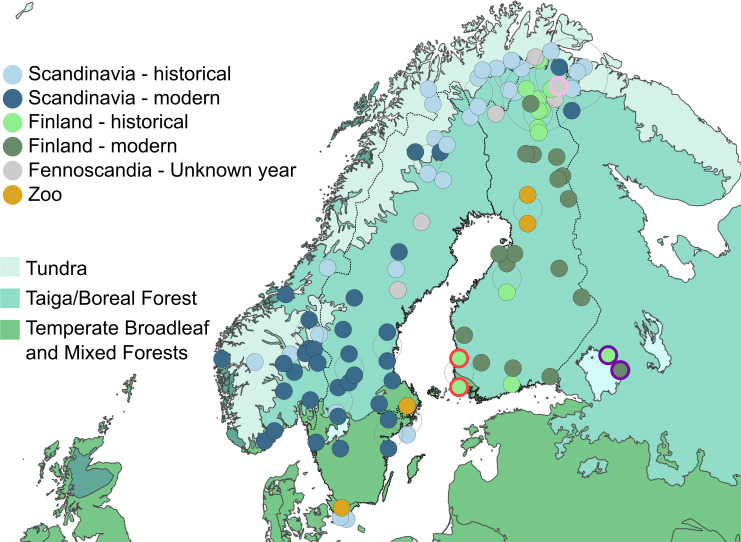 Figure 1
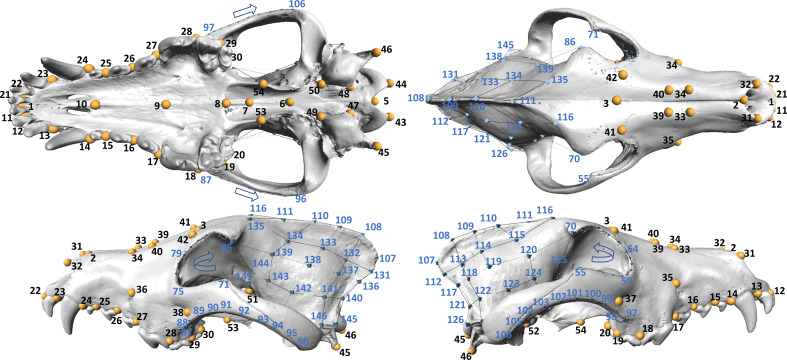 Figure 2
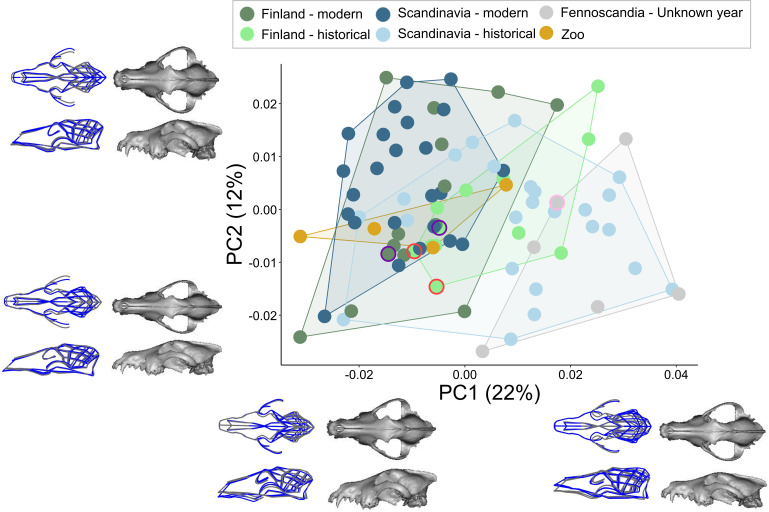 Figure 3
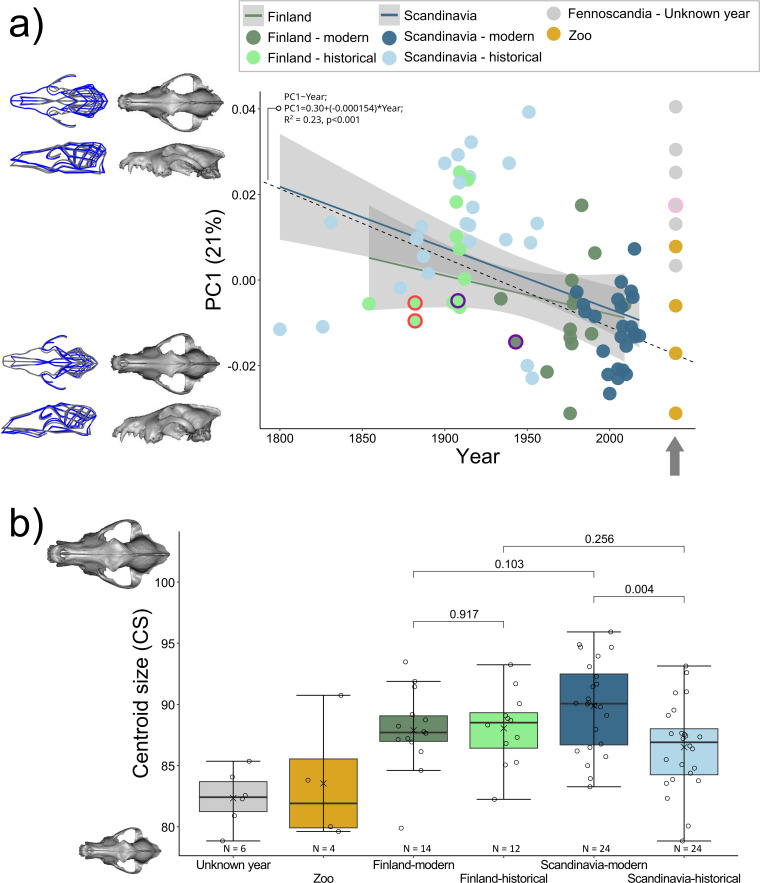 Figure 4
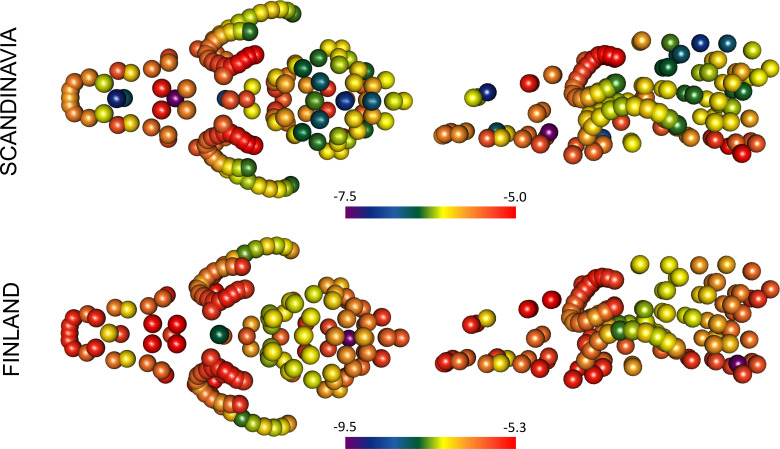 Figure 5
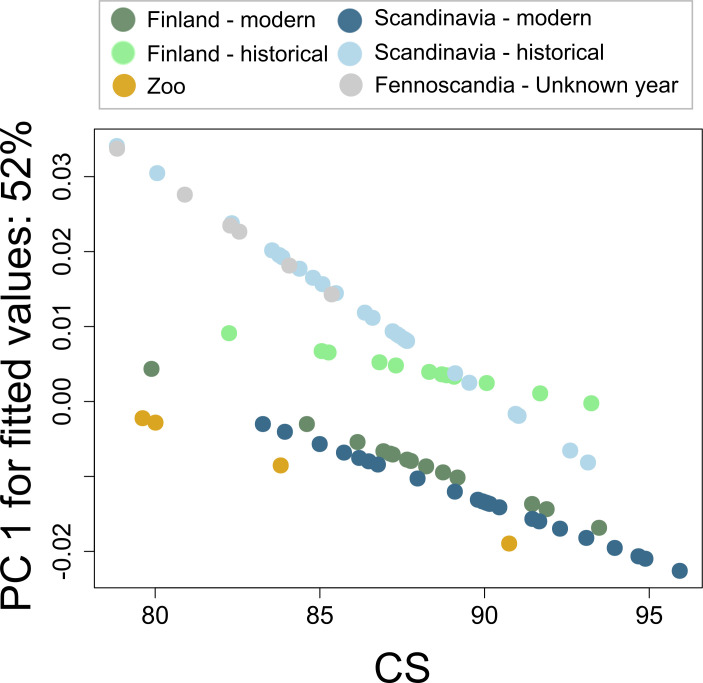 Figure 6
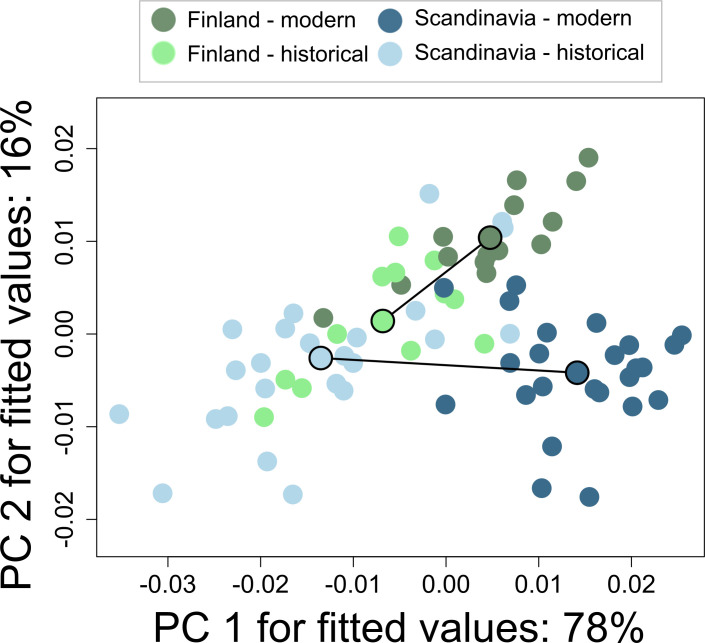 Figure 7
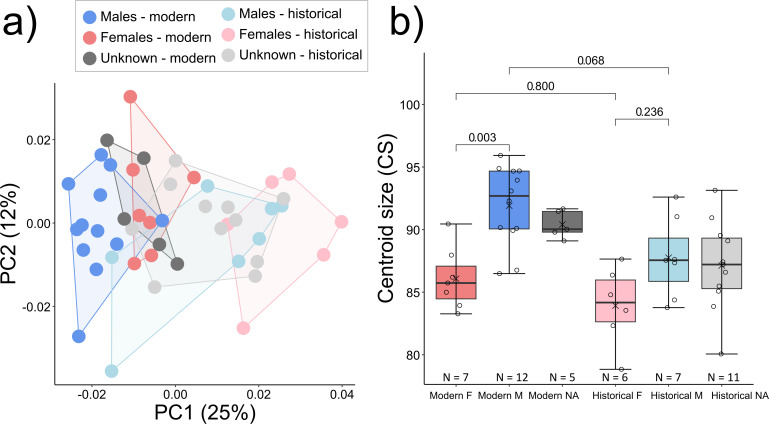 Figure 8
Peer Reviews
No public reviews on file for this paper yet. If you reviewed it on a platform where reviews are public (OpenReview, ICLR, NeurIPS, ICML), you can paste yours below so the community can read it here.
Videos
No videos yet. Explain this paper in a talk, walkthrough, or lecture? Add one.
Taxonomy
TopicsWildlife Ecology and Conservation · Morphological variations and asymmetry · Human-Animal Interaction Studies