Prediction of future aging-related slow gait and its determinants with deep learning and logistic regression
Alison Deatsch, Michael McKenna, Jonathan Palumbo, Qu Tian, Eleanor Simonsick, Luigi Ferrucci, Robert Jeraj, Richard G. Spencer, Esedullah Akaras, Esedullah Akaras, Esedullah Akaras

TL;DR
This paper uses deep learning and logistic regression to predict slow gait, a sign of accelerated aging, and identifies key factors like age and BMI.
Contribution
The novel use of a deep learning neural network to predict future slow gait and compare it with logistic regression.
Findings
The deep learning model achieved 81.2% sensitivity and 87.9% specificity for predicting slow gait 10 years in advance.
Logistic regression achieved 84.5% sensitivity and 86.3% specificity for the same prediction task.
Age, BMI, sleep, and grip strength were identified as the strongest determinants of future slow gait.
Abstract
Identification of accelerated aging and its biomarkers can lead to more timely therapeutic interventions and decision-making. Therefore, we sought to predict aging-related slow gait, a known predictor of accelerated aging, and its determinants. We applied a deep learning neural network (NN) and compared it to conventional logistic regression (LR) analysis. We incorporated 1,363 participants from the Baltimore Longitudinal Study of Aging to predict current and future slow gait at 6-year and 10-year follow-up using two clinically-relevant cut-points. Our NN achieved a maximum sensitivity (specificity) of 81.2% (87.9%), for a 10-year prediction with 0.8 m/s cut-point. We demonstrated the necessity of class balancing and found the NN to perform comparably to or in some cases, better than, LR which achieved a maximum sensitivity and specificity of 84.5% and 86.3%, respectively. Sobol index…
Genes, proteins, chemicals, diseases, species, mutations and cell lines named across the full text — each resolved to its canonical identifier and authoritative record.
Click any figure to enlarge with its caption.
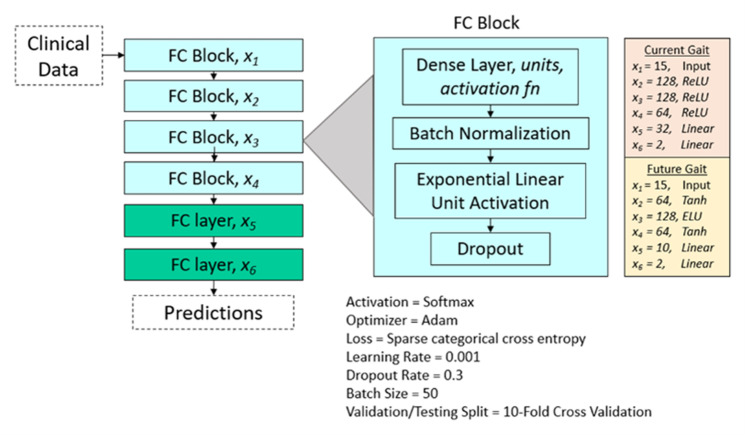 Figure 1
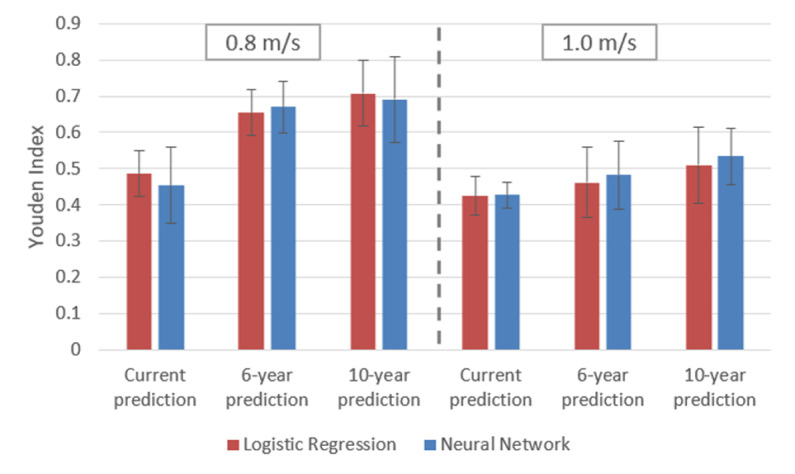 Figure 2
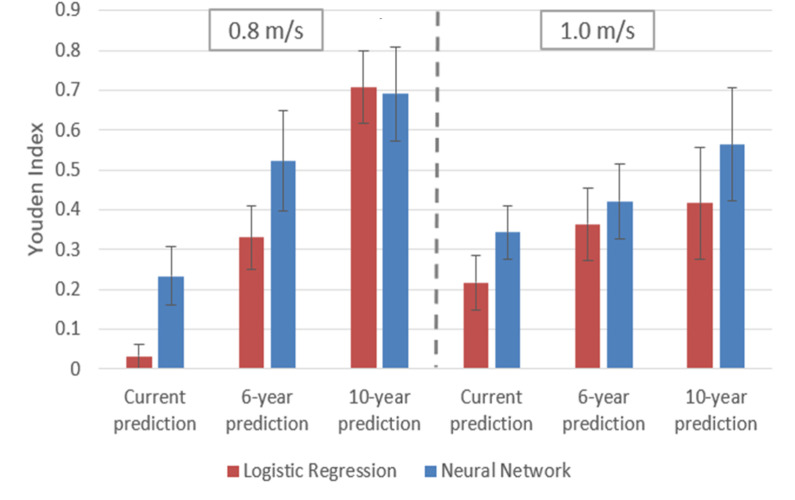 Figure 3
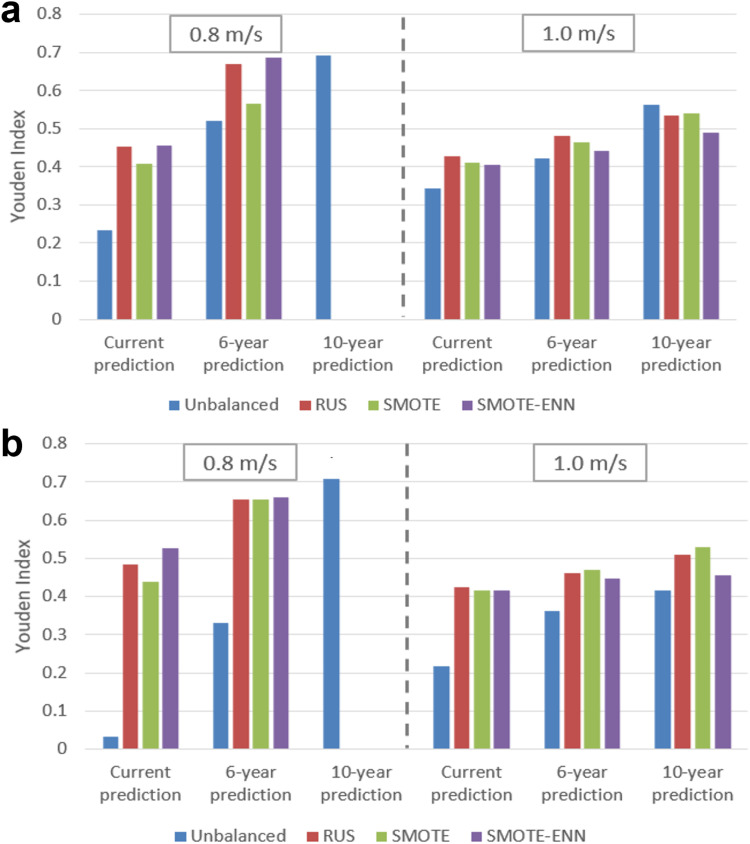 Figure 4
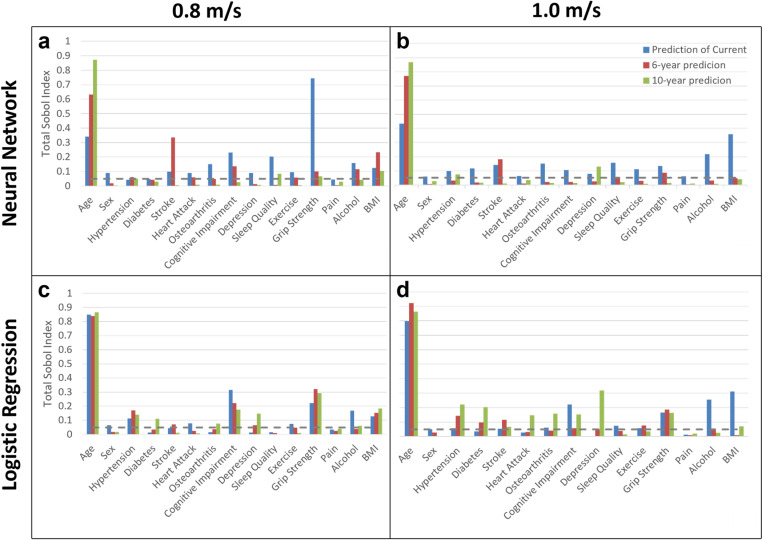 Figure 5
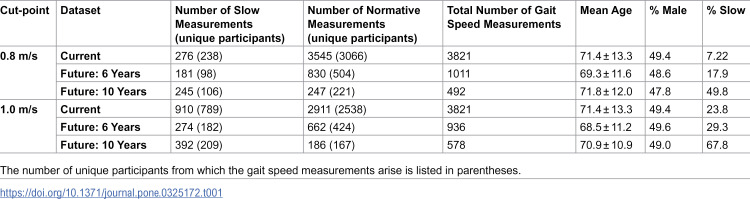 Figure 6
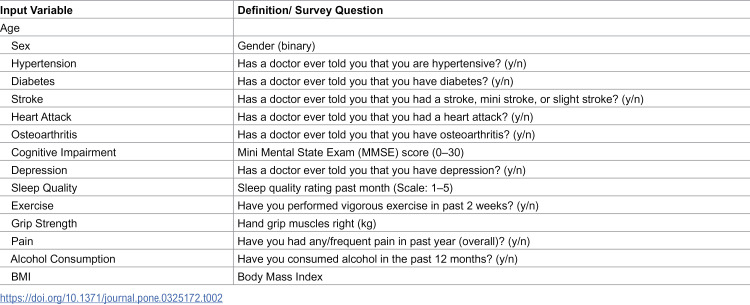 Figure 7
 Figure 8
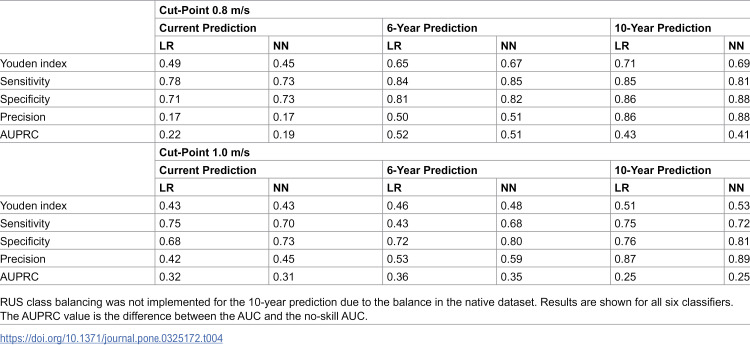 Figure 9
Peer Reviews
No public reviews on file for this paper yet. If you reviewed it on a platform where reviews are public (OpenReview, ICLR, NeurIPS, ICML), you can paste yours below so the community can read it here.
Videos
No videos yet. Explain this paper in a talk, walkthrough, or lecture? Add one.
Taxonomy
TopicsBalance, Gait, and Falls Prevention · Cerebral Palsy and Movement Disorders · Noise Effects and Management