A model of mobile robots in networks with resolvability properties
Carlos Camacho Campos, José Carlos Camacho Moreno, Dorota Kuziak, Zahid Raza, Ismael G. Yero

TL;DR
This paper introduces a model for mobile robots in networks that maintain the ability to uniquely identify all network nodes as they move.
Contribution
The paper introduces the concept of mobile metric dimension and explores its combinatorial properties.
Findings
Mobile metric dimension is related to classical metric dimension and resolving number of graphs.
The value of mobile metric dimension is computed for several graph classes.
Robots can move while maintaining the resolving set property.
Abstract
A model for mobility of robots keeping the property of uniquely recognizing the vertices of a given network is considered in this work. This is made in order to detect failures or intruders, by means of dynamic vectors of distances to the set of mobile robots. We consider the smallest set of robots that can be placed in a set of nodes of a network that forms a resolving set, which is a structure of a graph such that it uniquely recognizes all the vertices of the graph by using distances. We are then focused on allowing such robots to move from one vertex to another adjacent one, through the edges of the whole graph. At each performed movement we require that the new set of covered nodes forms a resolving set. This process allows the robots to recognize all the vertices of the graph, independently on the position in which they are located. In this sense, the notion of mobile metric…
Genes, proteins, chemicals, diseases, species, mutations and cell lines named across the full text — each resolved to its canonical identifier and authoritative record.
Click any figure to enlarge with its caption.
 Figure 1
 Figure 2
 Figure 3
 Figure 4
 Figure 5
 Figure 6
 Figure 7
 Figure 8
 Figure 9
 Figure 10
 Figure 11
 Figure 12
 Figure 13
 Figure 14
 Figure 15
 Figure 16
 Figure 17
 Figure 18
 Figure 19
 Figure 20
 Figure 21
 Figure 22
 Figure 23
 Figure 24
 Figure 25
 Figure 26
 Figure 27
 Figure 28
 Figure 29
 Figure 30
 Figure 31
 Figure 32
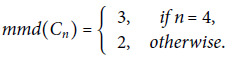 Figure 33
 Figure 34
 Figure 35
 Figure 36
 Figure 37
 Figure 38
 Figure 39
 Figure 40
 Figure 41
 Figure 42
 Figure 43
 Figure 44
 Figure 45
 Figure 46
 Figure 47
 Figure 48
 Figure 49
 Figure 50
Peer Reviews
No public reviews on file for this paper yet. If you reviewed it on a platform where reviews are public (OpenReview, ICLR, NeurIPS, ICML), you can paste yours below so the community can read it here.
Videos
No videos yet. Explain this paper in a talk, walkthrough, or lecture? Add one.
Taxonomy
TopicsGraph Labeling and Dimension Problems