Epac1 increases myosin regulatory light-chain phosphorylation, energetic cost of contraction, and susceptibility to heart failure
Yoshiki Ohnuki, Kenji Suita, Misao Ishikawa, Yasumasa Mototani, Megumi Nariyama, Aiko Ito, Ichiro Matsuo, Yoshio Hayakawa, Akinaka Morii, Takao Mitsubayashi, Yasutake Saeki, Yoshihiro Ishikawa, Satoshi Okumura, Pan Li, Pan Li, Pan Li, Pan Li

TL;DR
This study shows that Epac1, a cAMP effector, increases heart contraction energy costs and worsens heart failure risk under chronic stimulation.
Contribution
The study reveals a novel role of Epac1 in modulating cardiac myofilament function and heart failure susceptibility.
Findings
Epac1 increases calcium sensitivity of force and ATPase activity in cardiac myofilaments.
Epac1 activation leads to higher myosin regulatory light chain phosphorylation without affecting TnI or MyBP-C.
Chronic β-AR stimulation causes greater heart function decline in Epac1-overexpressing mice.
Abstract
β-Adrenergic receptor (β-AR) stimulation of the heart, leading to increased cardiac output, is mediated by cyclic AMP (cAMP), which induces protein kinase A (PKA)-mediated phosphorylation of the myofilament proteins troponin I (TnI) and myosin binding protein-C (MyBP-C). The aim of this study was to investigate the contribution of the exchange protein activated by cAMP (Epac1), a PKA-independent cAMP effector, to the response of cardiac myofilaments to β-AR stimulation. The calcium sensitivity of force and ATPase activity, and the tension cost (ATPase activity/force) were significantly greater in skinned myocardium from transgenic mice specifically overexpressing Epac1 in the heart (Epac1TG) and wild-type (WT) mice treated with 8CPT-AM, an Epac-selective cAMP analogue, as compared with non-transgenic (NTG) or control mice, respectively. In addition, myosin regulatory light chain (RLC)…
Genes, proteins, chemicals, diseases, species, mutations and cell lines named across the full text — each resolved to its canonical identifier and authoritative record.
Click any figure to enlarge with its caption.
 Figure 1
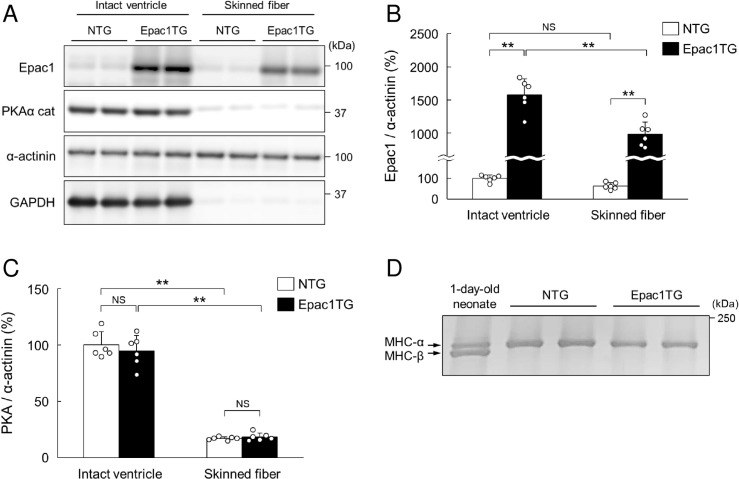 Figure 2
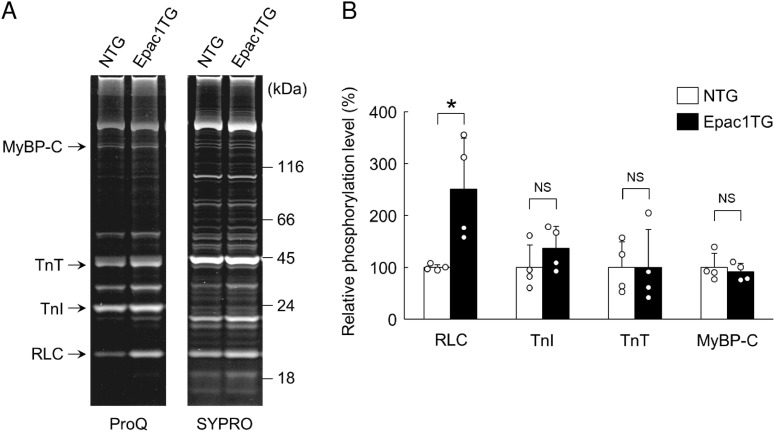 Figure 3
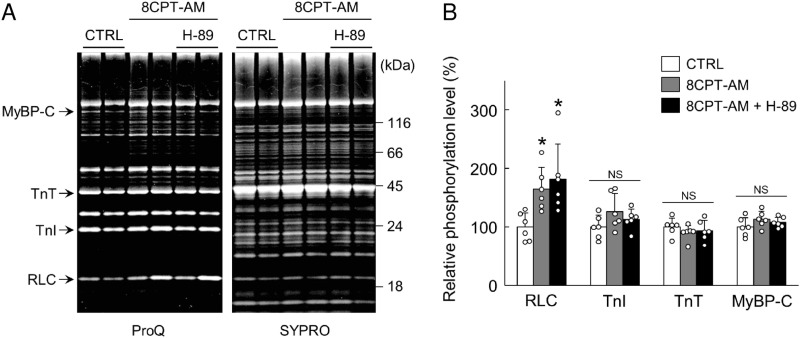 Figure 4
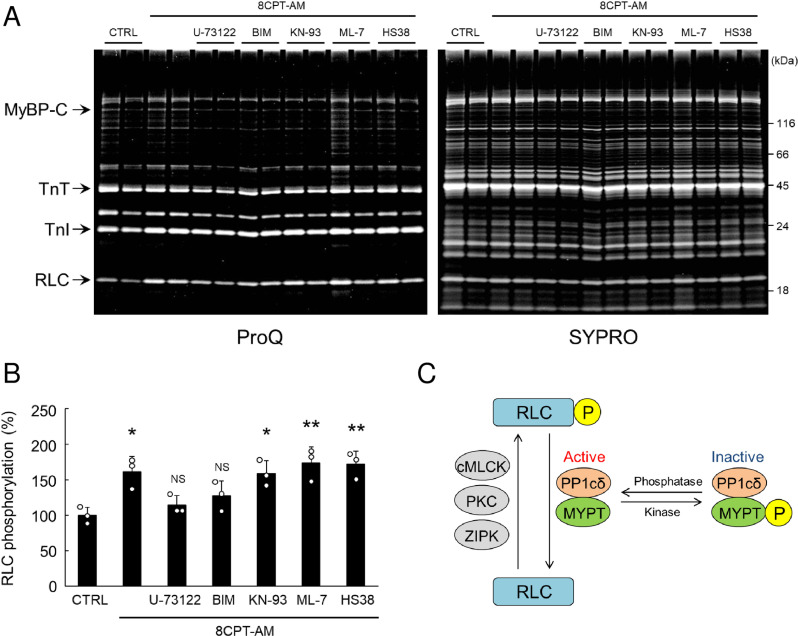 Figure 5
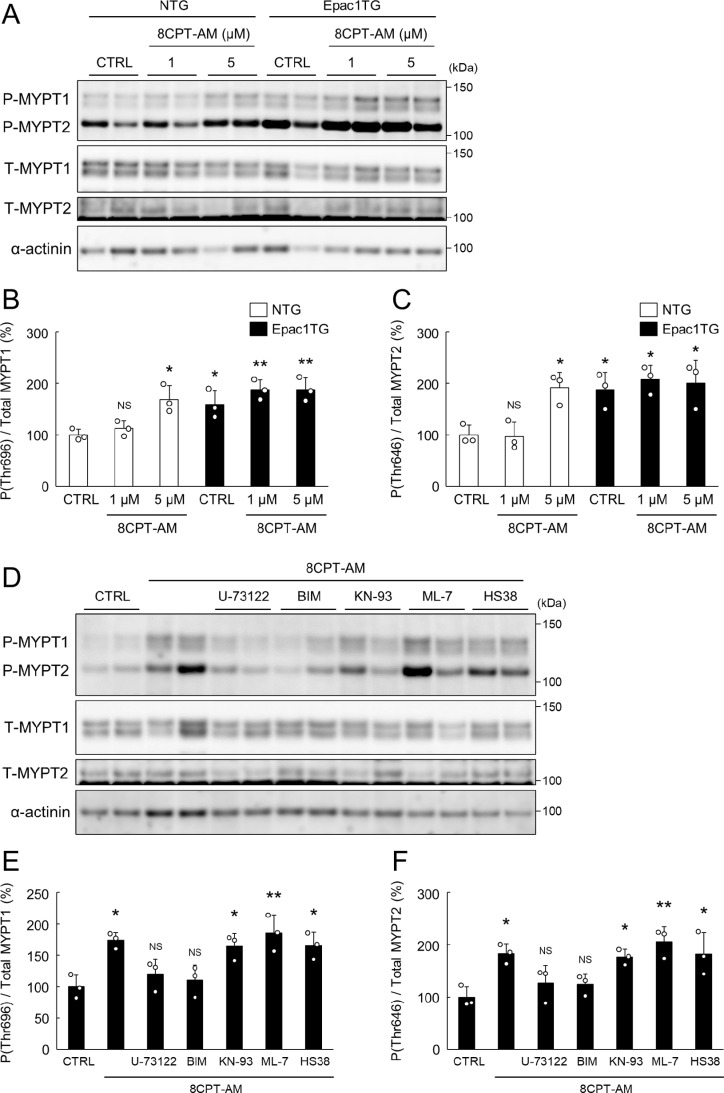 Figure 6
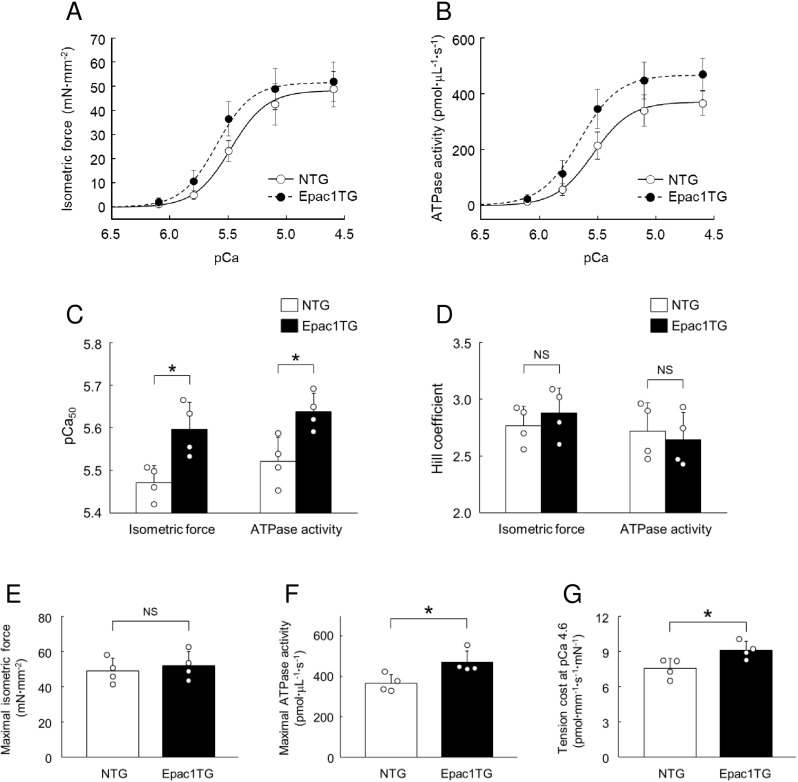 Figure 7
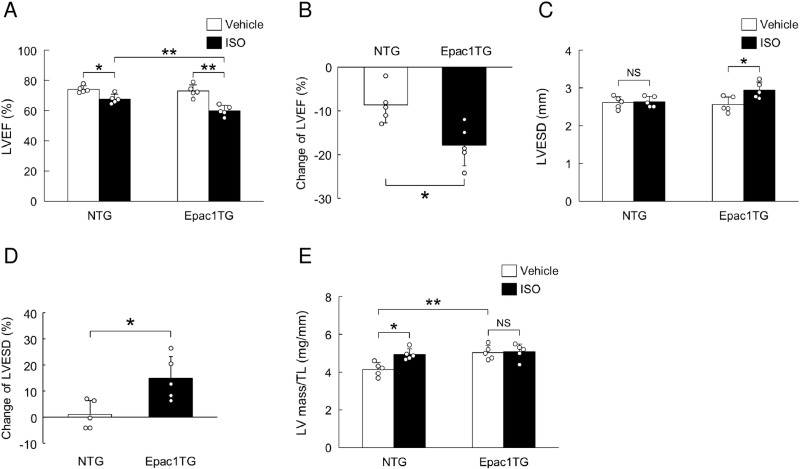 Figure 8
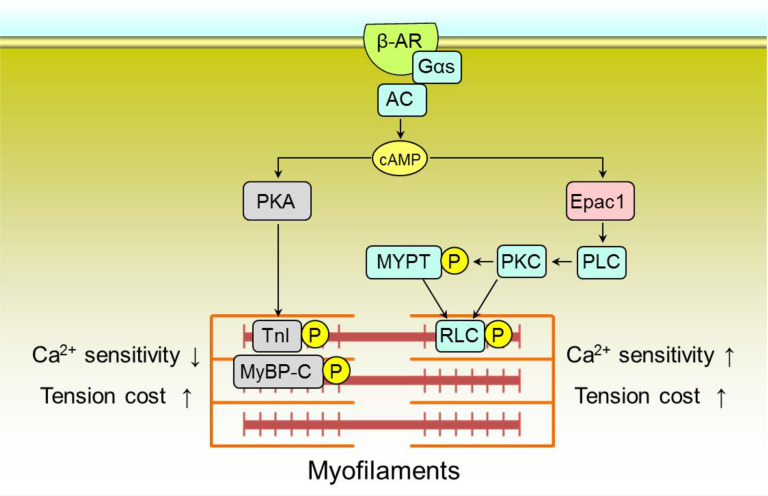 Figure 9
Peer Reviews
No public reviews on file for this paper yet. If you reviewed it on a platform where reviews are public (OpenReview, ICLR, NeurIPS, ICML), you can paste yours below so the community can read it here.
Videos
No videos yet. Explain this paper in a talk, walkthrough, or lecture? Add one.
Taxonomy
TopicsIon channel regulation and function · Cardiac electrophysiology and arrhythmias · Cardiomyopathy and Myosin Studies