Electrical circuit model of spatiotemporal trade dynamics: Foundations and derivation of the gravity model
P.A. Robinson, Alexander McInnes, Najmeh Sajedianfard, Mark Melatos, James A. Henderson

TL;DR
This paper introduces a new model of trade dynamics using an electrical circuit analogy, showing how it can explain real-world trade patterns and derive the gravity model of trade.
Contribution
The paper introduces a novel electrical circuit-based model for trade dynamics and derives the gravity model from first principles.
Findings
The model explains price setting, price fluctuations, and trade network structure through emergent balances of supply and demand.
The model reproduces the gravity model of trade with exponents matching empirical data and predicts core-periphery trade structures.
Trade flows self-organize to minimize overall trade friction, emerging from local producer-consumer interactions.
Abstract
A model of time-dependent trade of goods between spatial locations is formulated via an electric circuit analogy, in which goods are analogous to charge and price to voltage, while producers and consumers are represented by sources and sinks of goods flow, which is represented by current, located at the nodes of a trade network. The core ansatz is that the flow of goods along each network link is driven by the voltage difference across that link, opposed by resistance that represents trade friction. Market prices are then determined indirectly by internal balances of flows, subject to external constraints on supply and demand. The model yields multiple outcomes that support its validity and applicability, including price setting via emergent balance of supply and demand, price fluctuations, traditional and generalized elasticities, network structure-flow relations, competition between…
Genes, proteins, chemicals, diseases, species, mutations and cell lines named across the full text — each resolved to its canonical identifier and authoritative record.
Click any figure to enlarge with its caption.
 Figure 1
 Figure 2
 Figure 3
 Figure 4
 Figure 5
 Figure 6
 Figure 7
 Figure 8
 Figure 9
 Figure 10
 Figure 11
 Figure 12
 Figure 13
 Figure 14
 Figure 15
 Figure 16
 Figure 17
 Figure 18
 Figure 19
 Figure 20
 Figure 21
 Figure 22
 Figure 23
 Figure 24
 Figure 25
 Figure 26
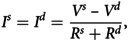 Figure 27
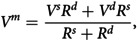 Figure 28
 Figure 29
 Figure 30
 Figure 31
 Figure 32
 Figure 33
 Figure 34
 Figure 35
 Figure 36
 Figure 37
 Figure 38
 Figure 39
 Figure 40
 Figure 41
 Figure 42
 Figure 43
 Figure 44
 Figure 45
 Figure 46
 Figure 47
 Figure 48
 Figure 49
 Figure 50
Peer Reviews
No public reviews on file for this paper yet. If you reviewed it on a platform where reviews are public (OpenReview, ICLR, NeurIPS, ICML), you can paste yours below so the community can read it here.
Videos
No videos yet. Explain this paper in a talk, walkthrough, or lecture? Add one.
Taxonomy
TopicsComplex Network Analysis Techniques · Global trade and economics · Economic and Technological Innovation