Global burden of metabolic-associated fatty liver disease among women of childbearing age: Trends from 1990 to 2021 and projections to 2040
Jiaxing Li, Qihui Hu, Jiajie Leng, Baoyong Zhou, Cong Chen, Yaoyue Hu, Bingdi Chao, Zhenhao Huang, Zhenrui Cao, Zhongling An, Jixing Wang, Dingheng Hu, Rui Tao

TL;DR
This study examines the rising global health burden of fatty liver disease among women of childbearing age from 1990 to 2021 and predicts future trends through 2040.
Contribution
The study provides new global and regional projections of fatty liver disease trends among women of childbearing age using advanced statistical modeling.
Findings
Global incidence and prevalence of MAFLD among women of childbearing age increased significantly from 1990 to 2021.
China experienced declining mortality and disability rates from MAFLD during the study period.
Population growth was the main driver of the global rise in MAFLD incidence.
Abstract
Metabolic-associated fatty liver disease (MAFLD) is a growing global health concern, particularly among women of childbearing age (WCBA). We aimed to analyze the global burden of MAFLD among WCBA from 1990 to 2021 and project trends to 2040. Data on incidence, prevalence, deaths, and disability-adjusted life years (DALYs) were extracted from the Global Burden of Disease Study 2021. Joinpoint regression and decomposition analysis were used to assess historical trends, and Bayesian Age-Period-Cohort (BAPC) modeling projected future burdens. From 1990 to 2021, the age-standardized rate (ASR) of MAFLD incidence and prevalence among WCBA increased globally (EAPC = 0.76 and 0.71, respectively). China showed declining trends in deaths (EAPC = −2.63) and DALYs (EAPC = −2.62). By 2040, BAPC modeling predicts a continued rise in global incidence and prevalence, with regional disparities in…
Genes, proteins, chemicals, diseases, species, mutations and cell lines named across the full text — each resolved to its canonical identifier and authoritative record.
Click any figure to enlarge with its caption.
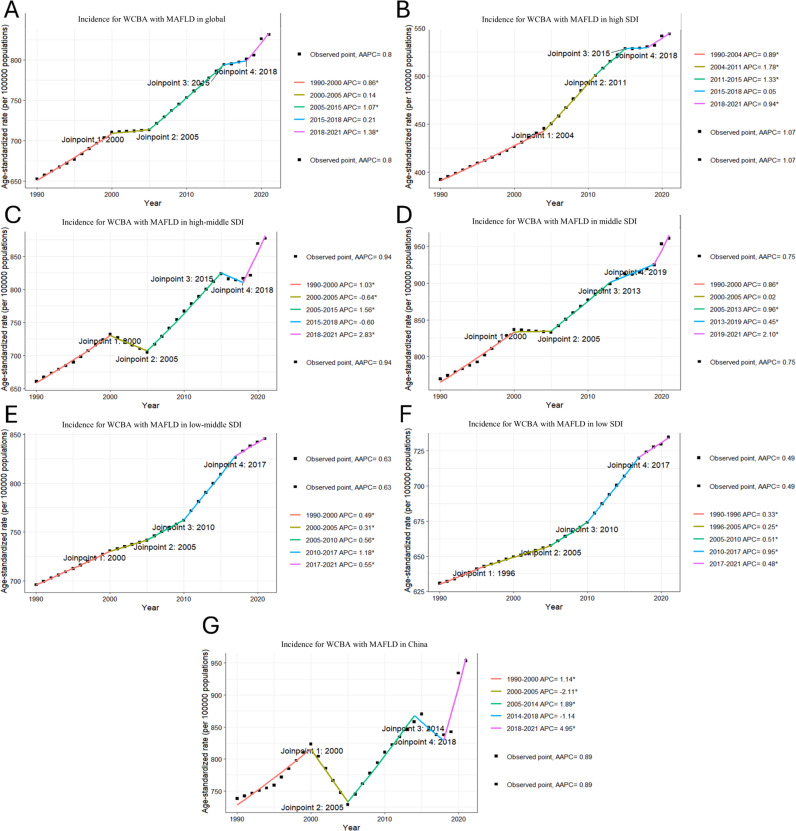 Figure 1
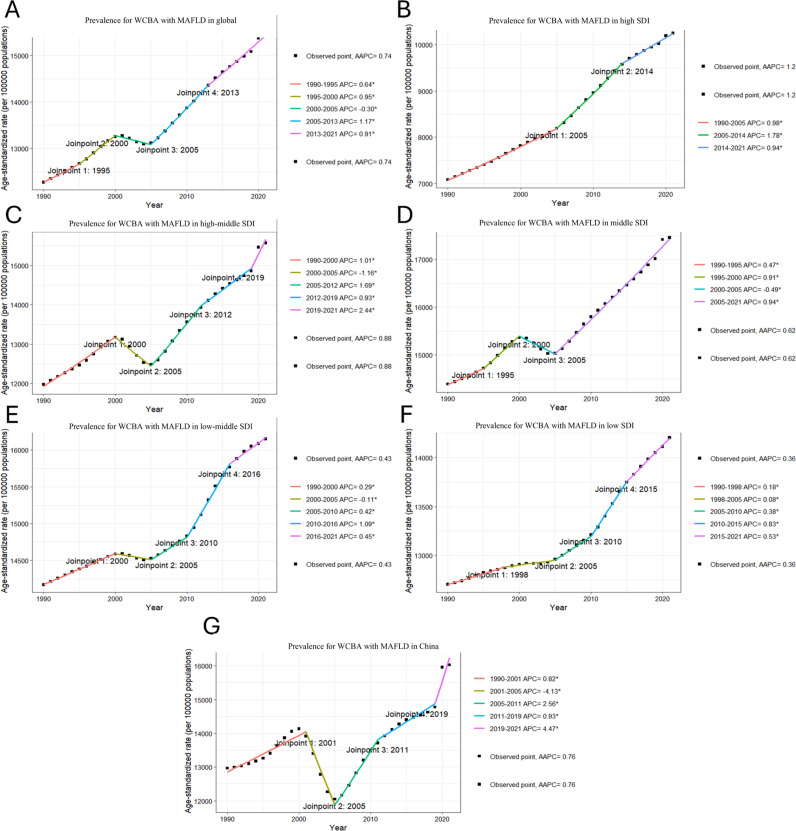 Figure 2
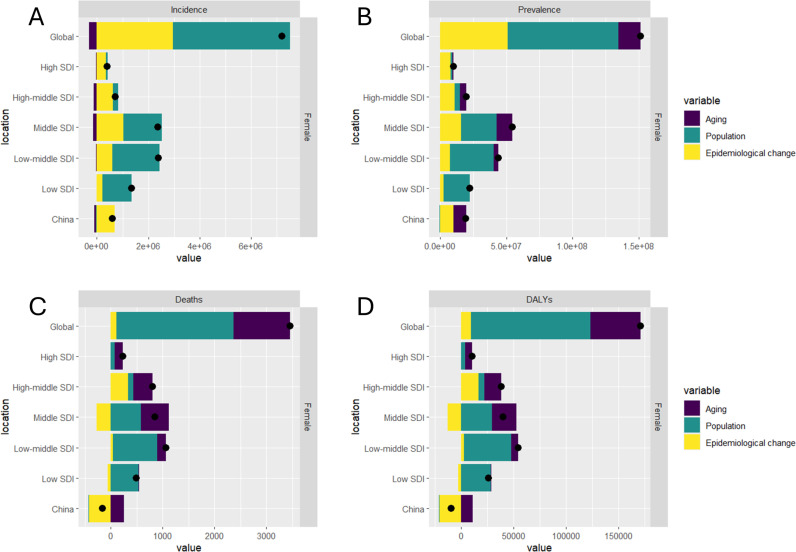 Figure 3
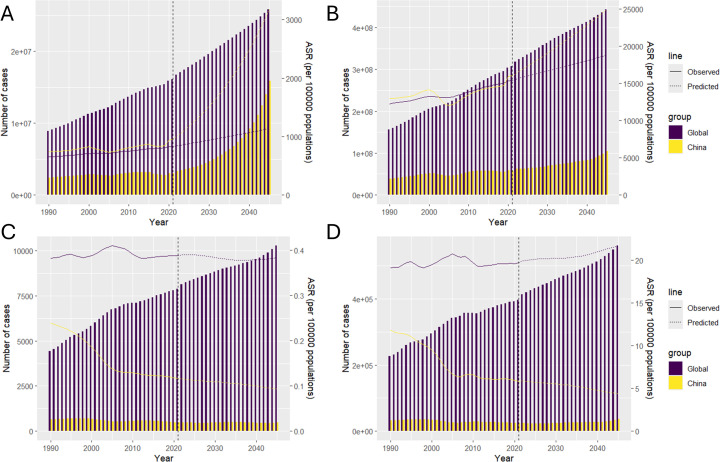 Figure 4
Peer Reviews
No public reviews on file for this paper yet. If you reviewed it on a platform where reviews are public (OpenReview, ICLR, NeurIPS, ICML), you can paste yours below so the community can read it here.
Videos
No videos yet. Explain this paper in a talk, walkthrough, or lecture? Add one.
Taxonomy
TopicsLiver Disease Diagnosis and Treatment · Birth, Development, and Health · Bariatric Surgery and Outcomes