Invitation appeals and STEM academic scientists research participation: Findings from six survey experiments
Tipeng Chen, Timothy P. Johnson, Jinghuan Ma, Ashlee Frandell, Lesley Michalegko, Eric W. Welch, Marco Improta, Marco Improta, Marco Improta

TL;DR
This study explores how different invitation strategies affect survey response rates among STEM scientists, finding that effectiveness depends on topic relevance, polarization, and recipient characteristics.
Contribution
The paper introduces a nuanced framework for optimizing survey participation among academic scientists using leverage-salience theory.
Findings
Self-representation appeals work best for polarized topics when recipients have low community affiliation.
Less detailed information appeals are more effective for low relevance topics among time-constrained scientists.
Detailed information appeals are effective for first-time recipients in survey panels.
Abstract
Survey research is a primary method used to investigate the opinions, perceptions and behaviors of academic scientists. However, little is known about the most successful appeal strategies for eliciting survey participation from these busy, highly educated professionals. Drawing on leverage-salience theory, this study examines the impacts of two sets of invitation appeals—information and representation appeals—on survey response rates among academic scientists in four STEM fields employed at U.S. R1 universities. Findings from six randomized experiments show that the effectiveness of both sets of invitation appeals is mixed and context-dependent, varying based on the polarization and relevance of survey topics, STEM academic scientists’ career stage, and their prior interactions with survey administrators. Specifically, self-representation appeals are most effective for polarized topics…
Genes, proteins, chemicals, diseases, species, mutations and cell lines named across the full text — each resolved to its canonical identifier and authoritative record.
Click any figure to enlarge with its caption.
 Figure 1
 Figure 2
 Figure 3
 Figure 4
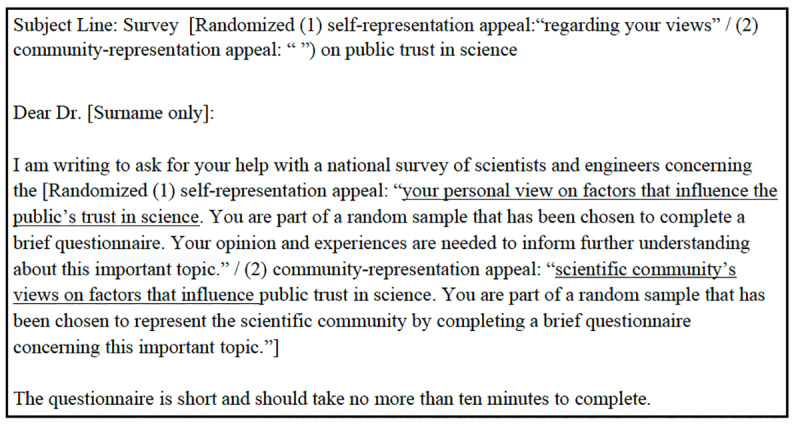 Figure 5
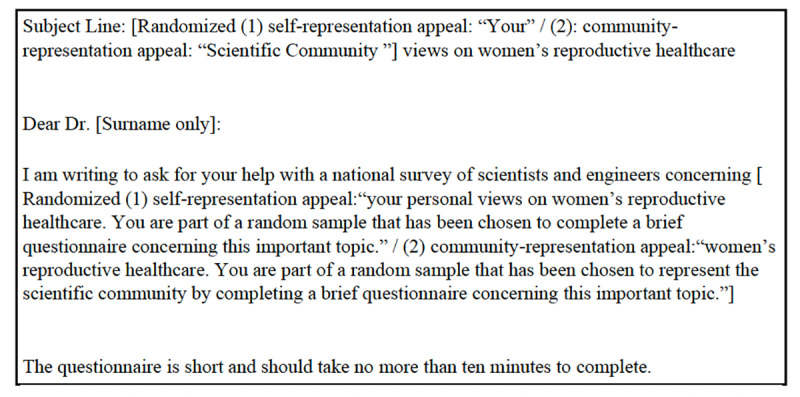 Figure 6
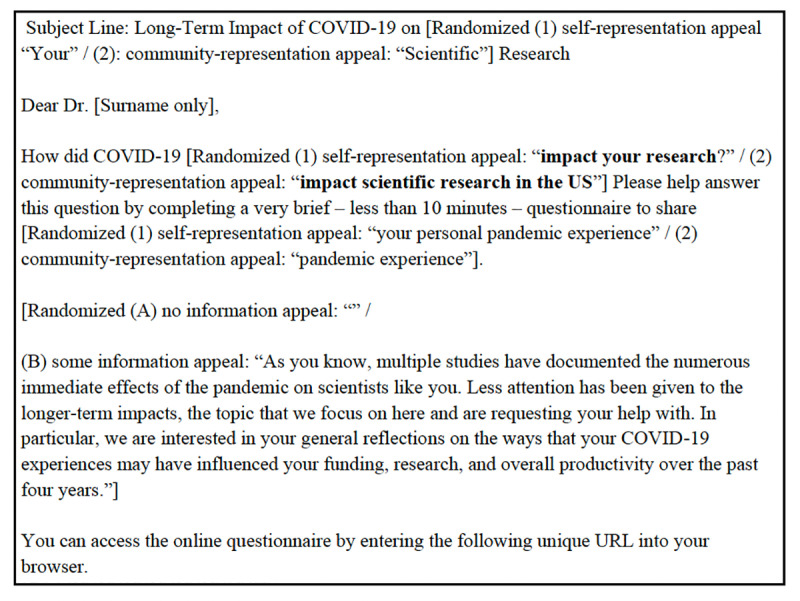 Figure 7
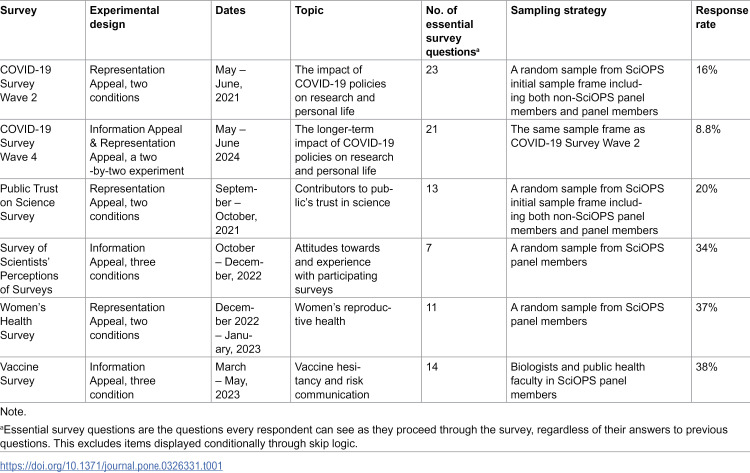 Figure 8
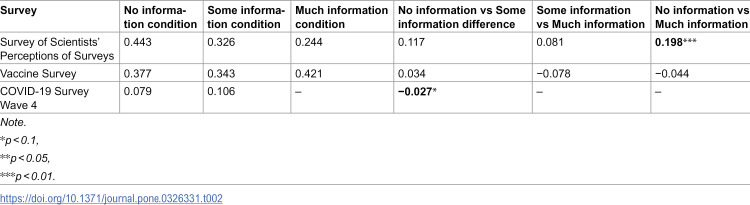 Figure 9
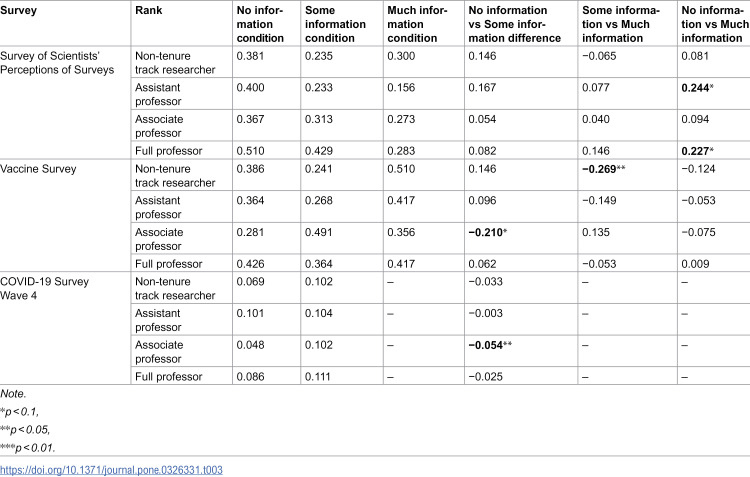 Figure 10
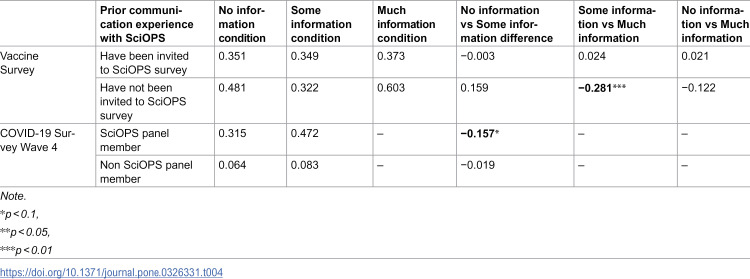 Figure 11
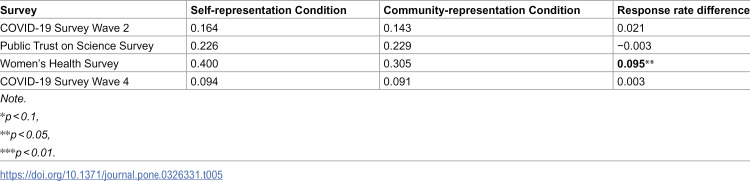 Figure 12
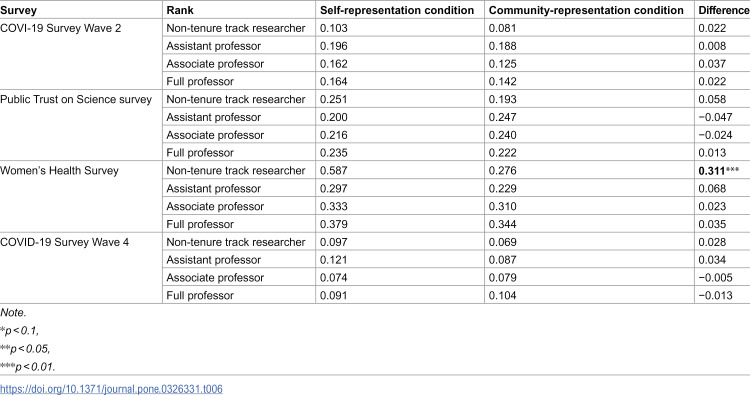 Figure 13
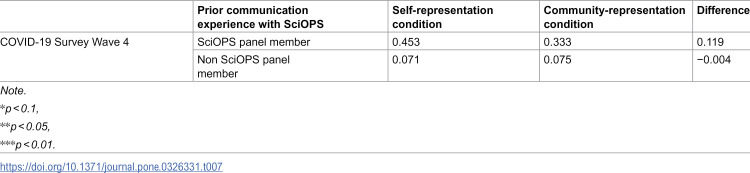 Figure 14
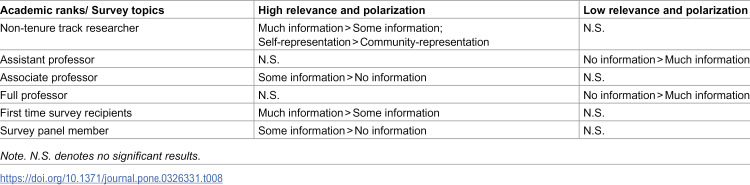 Figure 15
Peer Reviews
No public reviews on file for this paper yet. If you reviewed it on a platform where reviews are public (OpenReview, ICLR, NeurIPS, ICML), you can paste yours below so the community can read it here.
Videos
No videos yet. Explain this paper in a talk, walkthrough, or lecture? Add one.
Taxonomy
TopicsSurvey Methodology and Nonresponse · Economic and Environmental Valuation · Social and Intergroup Psychology