Insights on the User Experience and Feasibility of an Electromyography-Driven Exergame Combined With Blood Flow Restriction for Strength Training in Hospitalized Older Adults: Mixed Methods Randomized Controlled Feasibility Study
Ruben Debeuf, Reinhard Claeys, Margo Berlanger, Myrthe Bunt, Aziz Debain, Daan De Vlieger, Matthias Eggermont, Mahyar Firouzi, Stefania Guida, Katarína Kostková, Siddhartha Lieten, Lubos Omelina, Silvia Zaccardi, Bart Jansen, Eva Swinnen, David Beckwée

TL;DR
This study explores the feasibility of using an electromyography-driven exergame, with or without blood flow restriction, to improve strength training in hospitalized older adults.
Contribution
The study introduces a novel combination of exergames and blood flow restriction for strength training in hospitalized older adults.
Findings
High user satisfaction scores were reported for the Ghostly game across usefulness, ease of use, and satisfaction.
Expert observations identified issues with color contrast and reaction time speed in the game.
The study confirmed the feasibility of the research protocol for future randomized controlled trials.
Abstract
Hospitalized older adults often spend prolonged periods of time bedridden, leading to decreased muscle strength and function. To tackle this, rehabilitation aims to keep patients active and train affected muscles. Exergames have proven to be effective in the rehabilitation of different patient populations and offer a motivating solution to combat inactivity associated with hospitalization. Furthermore, blood flow restriction (BFR) is effective in therapy for weakened patients, so combining BFR and exergames might be promising. As part of an iterative process of user-centered development, this mixed method study investigates the acceptability and feasibility of the Ghostly game as a stand-alone added therapy or combined with BFR in strength training of hospitalized older adults. A mixed methods study was conducted on 15 hospitalized older adults. Participants were randomized into 3…
Genes, proteins, chemicals, diseases, species, mutations and cell lines named across the full text — each resolved to its canonical identifier and authoritative record.
Click any figure to enlarge with its caption.
 Figure 1
 Figure 2
 Figure 3
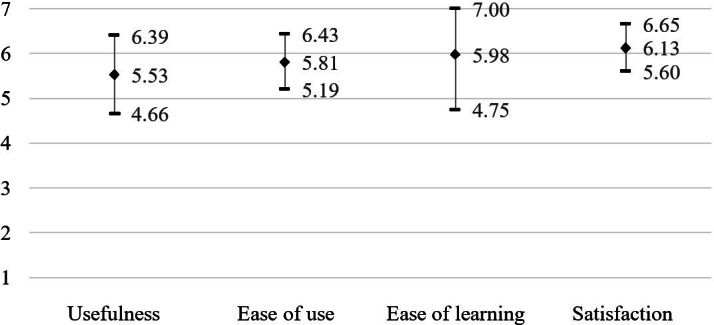 Figure 4
 Figure 5
 Figure 6
Peer Reviews
No public reviews on file for this paper yet. If you reviewed it on a platform where reviews are public (OpenReview, ICLR, NeurIPS, ICML), you can paste yours below so the community can read it here.
Videos
No videos yet. Explain this paper in a talk, walkthrough, or lecture? Add one.
Taxonomy
TopicsCardiovascular and exercise physiology · Muscle activation and electromyography studies · Stroke Rehabilitation and Recovery