Unveiling New Triazoloquinoxaline‐Based PROTACs Designed for the Selective Degradation of the ncBAF Chromatin Remodeling Subunit BRD9
Martina Pierri, Guglielmo Bove, Erica Gazzillo, Ester Colarusso, Francesca Scala, Giacomo Pepe, Stefania Terracciano, Maria Giovanna Chini, Nicla Simonelli, Ines Bruno, Angela Nebbioso, Pietro Campiglia, Giuseppe Bifulco, Lucia Altucci, Nunzio Del Gaudio, Gianluigi Lauro

TL;DR
This paper introduces new molecules that can selectively destroy a protein called BRD9, which is linked to cancer, and shows they work well in leukemia cells.
Contribution
The study presents novel BRD9-targeting PROTACs with a unique chemical scaffold and E3 ligase ligands.
Findings
Two VHL-based PROTACs (2 and 9) effectively degrade BRD9 and show antiproliferative activity in AML cells.
Compound 9 selectively degrades BRD9 over BRD7, indicating high specificity.
The new degraders expand the range of molecules available for BRD9-targeted protein degradation.
Abstract
PROteolysis Targeting Chimera (PROTAC) technology is an innovative and potent approach for achieving targeted protein degradation (TPD). Within bromodomain‐containing proteins, various degraders targeting BET family‐related targets, for example, BRD4, were developed in the last years. On the other hand, a limited number of PROTACs acting against non‐BET proteins were reported so far. Among them, BRD9 was recently linked to oncogenic roles in the tumorigenesis processes, especially in sarcomas and leukemias. Herein, we describe the design and synthesis of a focused collection of new BRD9‐targeting degraders based on the [1,2,4]triazolo[4,3‐a]quinoxaline heterocyclic scaffold employing two distinct E3 ubiquitin ligase ligands. Through in silico evaluation, synthesis, binding affinity determination, and in vitro analysis, we identified two new VHL‐based PROTACs (2 and 9), which showed…
Genes, proteins, chemicals, diseases, species, mutations and cell lines named across the full text — each resolved to its canonical identifier and authoritative record.
Click any figure to enlarge with its caption.
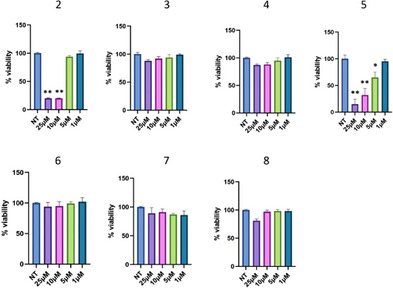 Figure 1
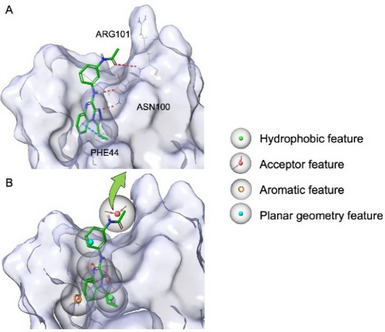 Figure 2
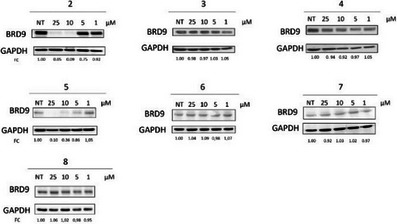 Figure 3
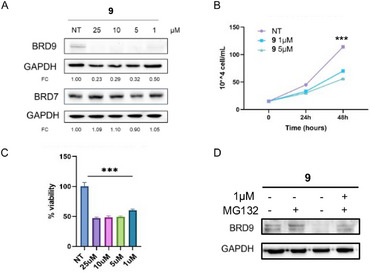 Figure 4
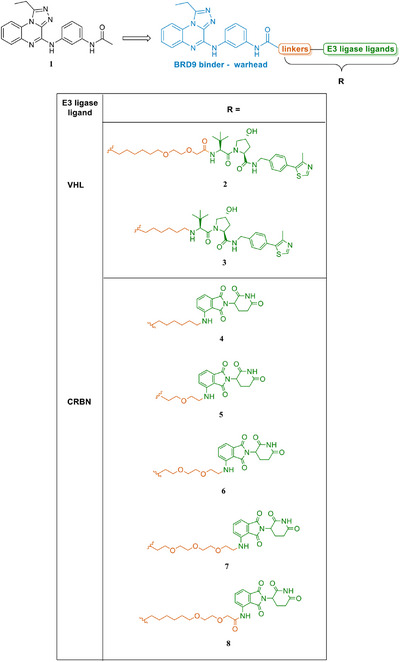 Figure 5
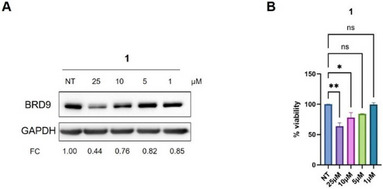 Figure 6
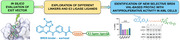 Figure 7
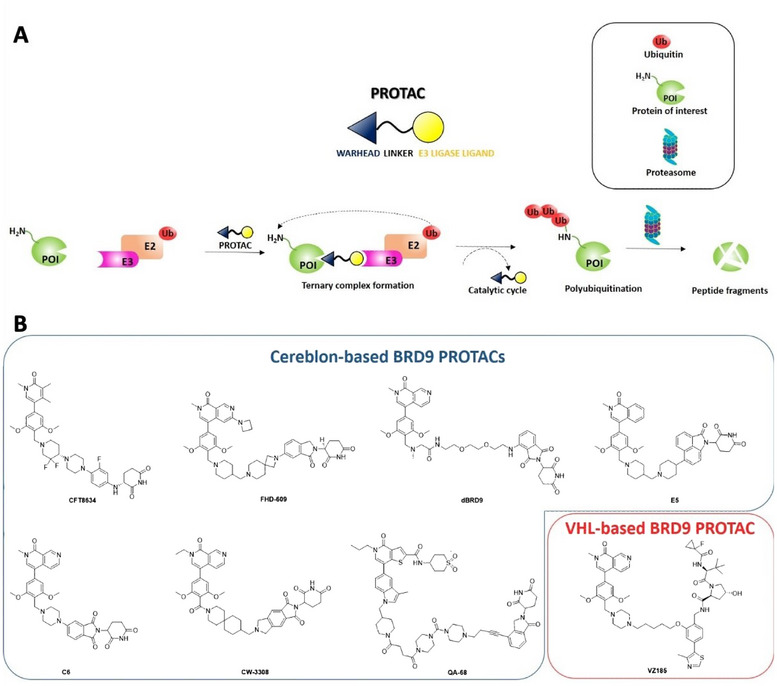 Figure 8
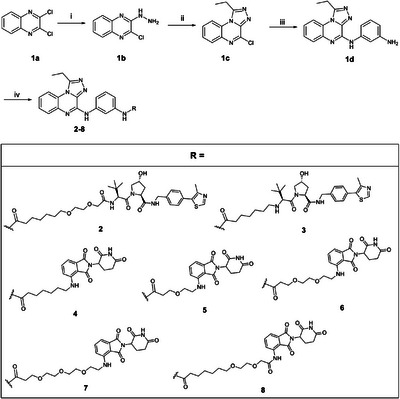 Figure 9
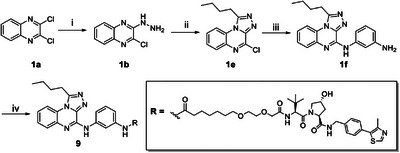 Figure 10
Peer Reviews
No public reviews on file for this paper yet. If you reviewed it on a platform where reviews are public (OpenReview, ICLR, NeurIPS, ICML), you can paste yours below so the community can read it here.
Videos
No videos yet. Explain this paper in a talk, walkthrough, or lecture? Add one.
Taxonomy
TopicsProtein Degradation and Inhibitors · Peptidase Inhibition and Analysis · Multiple Myeloma Research and Treatments