Seasonal transcriptomic shifts reveal metabolic flexibility of chemosynthetic symbionts in an upwelling region
Isidora Morel-Letelier, Benedict Yuen, Luis H. Orellana, A. Carlotta Kück, Yolanda E. Camacho-García, Minor Lara, Matthieu Leray, Laetitia G. E. Wilkins

TL;DR
This study shows how symbiotic bacteria in a type of clam adjust their metabolism in response to seasonal upwelling events, helping the host survive environmental changes.
Contribution
The study reveals the metabolic flexibility of chemosynthetic symbionts in response to seasonal environmental shifts in an upwelling region.
Findings
Symbiont transcriptomic profiles shifted before and during upwelling, indicating changes in energy source use.
Dissimilatory methanol oxidation genes were upregulated before upwelling, while sulfide oxidation genes were upregulated during upwelling.
The observed physiological changes were likely driven by upwelling-induced changes in sediment biogeochemistry and resource availability.
Abstract
Upwelling in the Tropical Eastern Pacific profoundly affects marine coastal ecosystems by driving drastic seasonal changes in water temperature, oxygen levels, and nutrient availability. These conditions serve as a natural experiment that provides a unique opportunity to study how marine animals and their associated microorganisms respond in the face of environmental change. Lucinid bivalves host chemosynthetic Candidatus Thiodiazotropha symbionts equipped with diverse metabolic pathways for sulfur, carbon, and nitrogen use. However, how these symbionts employ their metabolic toolkit in a changing environment remains poorly understood. To address this question, we conducted metagenomic and metatranscriptomic analyses of Ctena cf. galapagana symbionts before and during a Papagayo upwelling event in Santa Elena Bay, Costa Rica. The C. cf. galapagana were co-colonized mainly by two Ca.…
Genes, proteins, chemicals, diseases, species, mutations and cell lines named across the full text — each resolved to its canonical identifier and authoritative record.
Click any figure to enlarge with its caption.
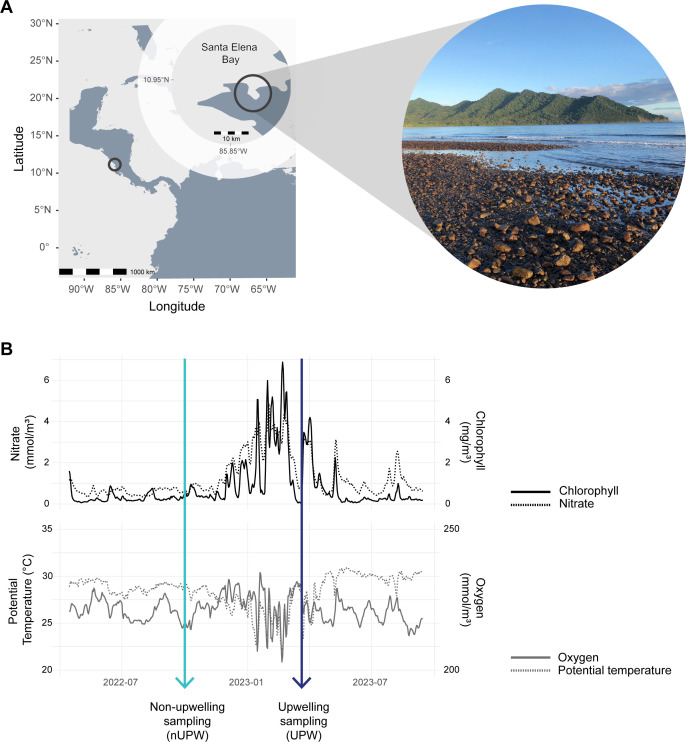 Figure 1
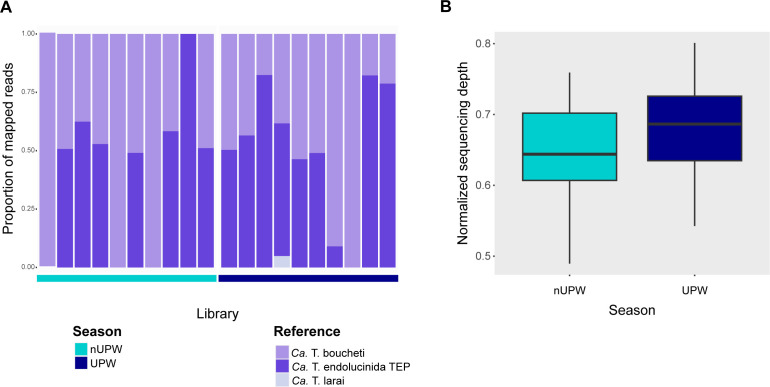 Figure 2
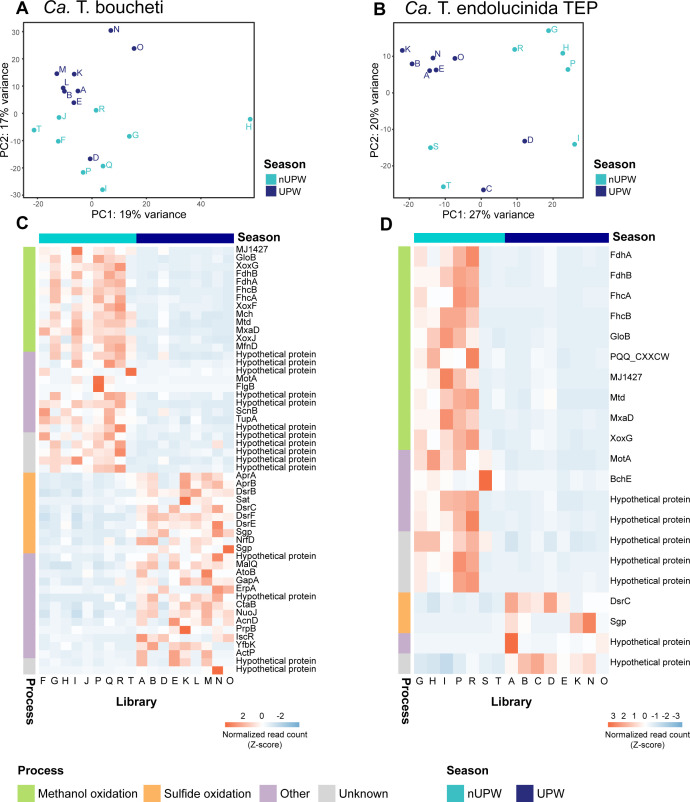 Figure 3
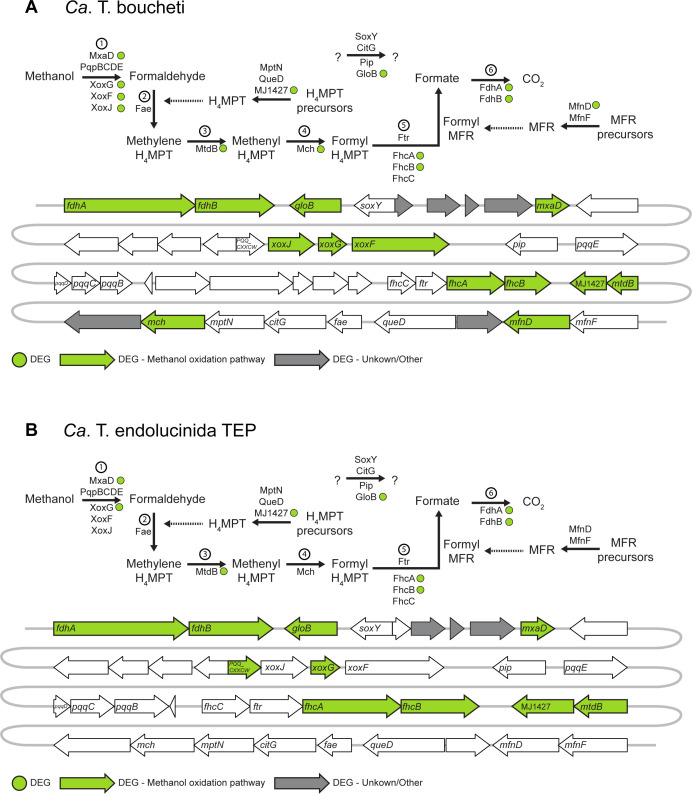 Figure 4
Peer Reviews
No public reviews on file for this paper yet. If you reviewed it on a platform where reviews are public (OpenReview, ICLR, NeurIPS, ICML), you can paste yours below so the community can read it here.
Videos
No videos yet. Explain this paper in a talk, walkthrough, or lecture? Add one.
Taxonomy
TopicsMarine Biology and Ecology Research · Microbial Community Ecology and Physiology · Marine Bivalve and Aquaculture Studies