Comparative study on the virulence of mycobacteriophages
Ilaria Rubino, Carlos A. Guerrero-Bustamante, Melissa Harrison, Sheila Co, Isobel Tetreau, Mani Ordoubadi, Sasha E. Larsen, Rhea N. Coler, Reinhard Vehring, Graham F. Hatfull, Dominic Sauvageau

TL;DR
This study compares the effectiveness of three mycobacteriophages and their combinations in fighting TB-related bacteria under different growth conditions.
Contribution
The study systematically evaluates phage virulence and adsorption under varying host growth conditions and phage combinations.
Findings
Phage D29 and cocktails containing D29 showed the highest virulence under all tested conditions.
Phages Fionnbharth and Muddy had higher virulence against early-stage biofilm than planktonic hosts.
Lower adsorption efficiency on biofilms did not correlate with reduced virulence, indicating other infection advantages.
Abstract
The global tuberculosis (TB) epidemic affected 10 million people and caused 1.3 million deaths in 2022 alone. Multidrug-resistant TB is successfully treated in less than 60% of cases by long, expensive, and aggressive treatments. Mycobacteriophages, viruses that can infect bacteria such as Mycobacterium tuberculosis—the species responsible for TB—have the potential to redefine TB prevention and treatments. However, the development of phage-based products necessitates the assessment of numerous parameters, including virulence and adsorption, to ensure their performance and quality. In this work, we characterized the virulence of three different mycobacteriophages (Fionnbharth, Muddy, and D29), alone and as cocktails, against a TB model host (Mycobacterium smegmatis) under planktonic and early-stage biofilm growth conditions. Phage D29 and cocktails containing D29 had the highest…
Genes, proteins, chemicals, diseases, species, mutations and cell lines named across the full text — each resolved to its canonical identifier and authoritative record.
Click any figure to enlarge with its caption.
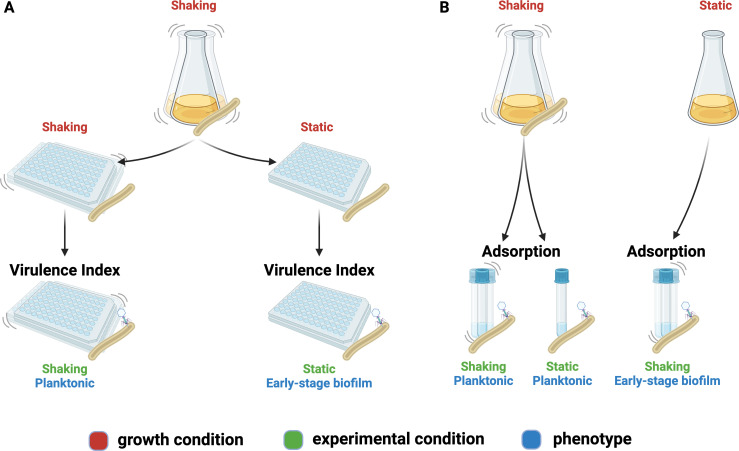 Figure 1
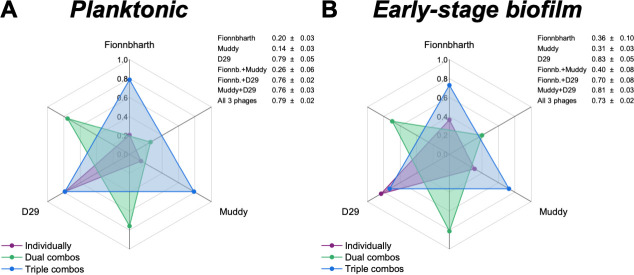 Figure 2
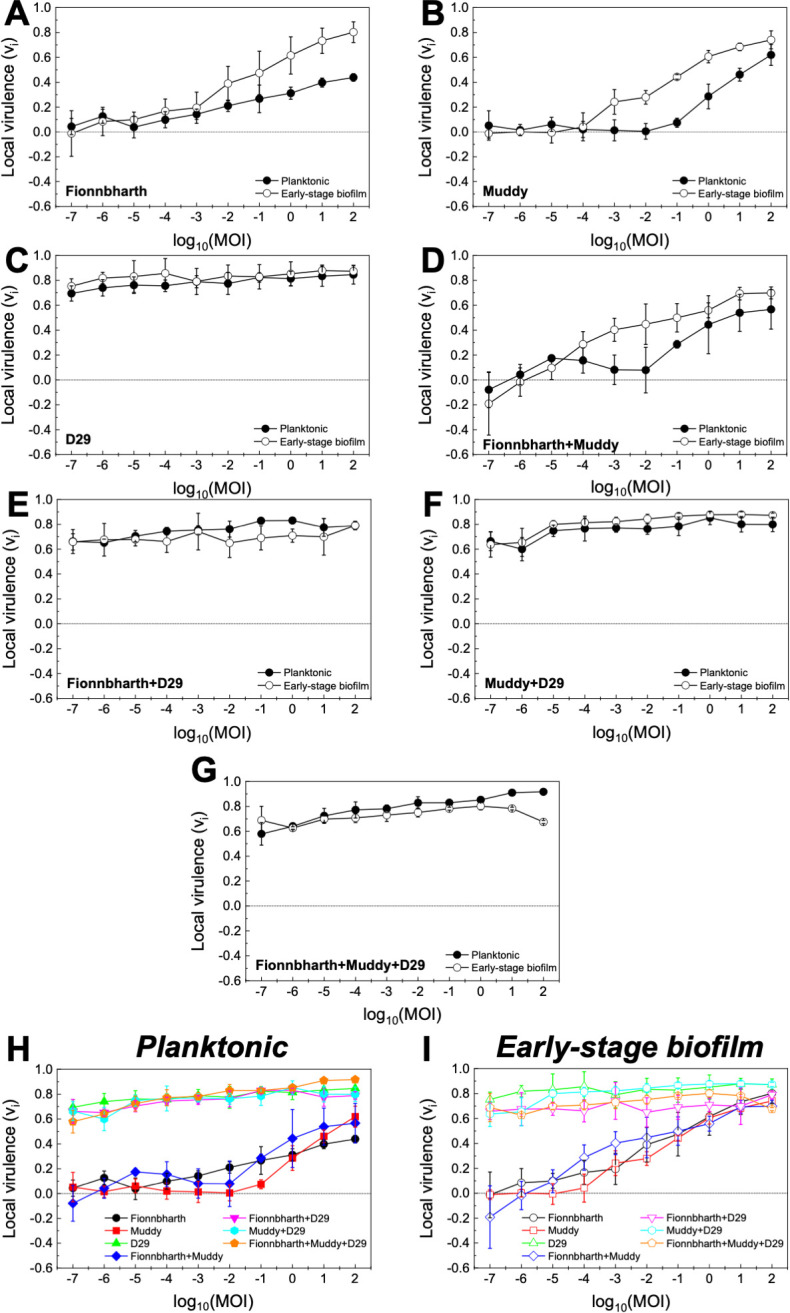 Figure 3
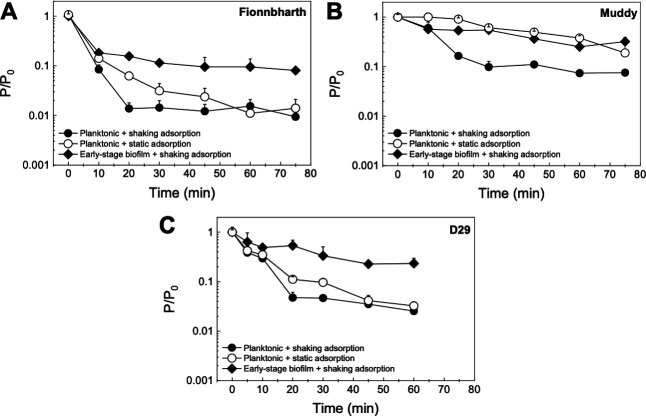 Figure 4
 Figure 5
 Figure 6
Peer Reviews
No public reviews on file for this paper yet. If you reviewed it on a platform where reviews are public (OpenReview, ICLR, NeurIPS, ICML), you can paste yours below so the community can read it here.
Videos
No videos yet. Explain this paper in a talk, walkthrough, or lecture? Add one.
Taxonomy
TopicsBacteriophages and microbial interactions · Microbial infections and disease research · Mycobacterium research and diagnosis