Severe Hypertriglyceridemia-Induced Pancreatitis Presenting as Diabetic Ketoacidosis in a Young Adult With Type 2 Diabetes Mellitus
Dhayananth Rattaipalivalasu Saravanan, Salil Avasthi, Chintan Desai, Maryam Saghir, Arzoo Khadka

TL;DR
A young adult with type 2 diabetes presented with diabetic ketoacidosis and was found to have severe hypertriglyceridemia-induced pancreatitis, which improved rapidly with plasmapheresis.
Contribution
This case highlights the rare but critical overlap between hypertriglyceridemia-induced pancreatitis and diabetic ketoacidosis, emphasizing the role of plasmapheresis in treatment.
Findings
A 20-year-old male with type 2 diabetes presented with DKA and was diagnosed with HTGP.
Urgent plasmapheresis led to rapid clinical improvement and a significant drop in triglyceride levels.
The case emphasizes the importance of considering HTGP in DKA patients with abdominal pain.
Abstract
Hypertriglyceridemia-induced pancreatitis (HTGP) is an uncommon but serious condition typically associated with markedly elevated triglyceride levels, often exceeding 1,000 mg/dL and more frequently seen above 2,000-3,000 mg/dL. Diabetic ketoacidosis (DKA), a common complication in patients with poorly controlled diabetes, may contribute to or be worsened by hypertriglyceridemia due to insulin deficiency and increased lipolysis. We report the case of a 20-year-old male with type 2 diabetes mellitus who presented with DKA and was subsequently diagnosed with HTGP. The patient experienced significant clinical improvement following urgent plasmapheresis, which resulted in a rapid decline in triglyceride levels. This case underscores the importance of considering hypertriglyceridemia as a potential underlying cause in patients with DKA and abdominal pain and highlights the therapeutic role…
Genes, proteins, chemicals, diseases, species, mutations and cell lines named across the full text — each resolved to its canonical identifier and authoritative record.
Click any figure to enlarge with its caption.
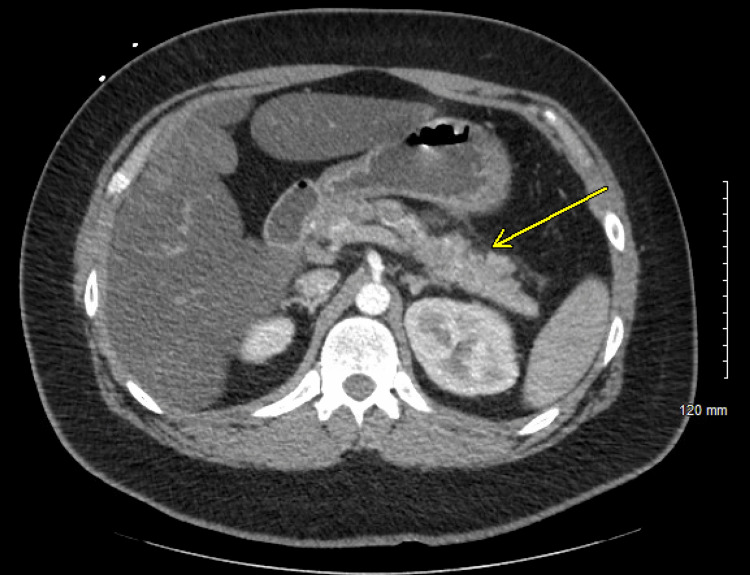 Figure 1
| Parameter | Value | Reference Range | Interpretation |
|---|---|---|---|
| Sodium | 119 mmol/L | 135–144 | Critically low |
| Potassium | 4.0 mmol/L | 3.7–5.3 | Normal |
| Chloride | 84 mmol/L | 98–107 | Low |
| CO₂ (Bicarbonate) | 13 mmol/L | 20–31 | Low |
| Anion Gap | 22 mmol/L | 9–17 | High |
| Glucose | 355 mg/dL | 70–99 | High |
| Beta-hydroxybutyrate | 9.76 mmol/L | <0.6 | High |
| Lipase | 382 U/L | 13–60 | High |
| HbA1c | 11.5% | 4.0–6.0% | High |
| Parameter | Value | Reference Range | Interpretation |
|---|---|---|---|
| Triglycerides | 3,070 mg/dL | <150 | Critically high |
| Total Cholesterol | 648 mg/dL | 0–199 | High |
| HDL Cholesterol | 9 mg/dL | >40 | Low |
| LDL, Direct | 23 mg/dL | <100 | Normal |
| Chol/HDL Ratio | 72.0 | <5 | High |
| CRP | 30.6 mg/L | 0.0–5.0 | High |
| Parameter | Value | Reference Range | Interpretation |
|---|---|---|---|
| Venous pH | 7.037 | 7.320–7.430 | Critically low |
| Venous pCO₂ | 15.7 mmHg | 41.0–51.0 mmHg | Low |
| Venous pO₂ | 85.3 mmHg | 30.0–50.0 mmHg | High (venous) |
| Venous Bicarbonate | 4.2 mmol/L | 22.0–29.0 mmol/L | Critically low |
| Base Excess | -23.9 | 0.0–2.0 mmol/L | High deficit |
| Hospital Day | Triglyceride Level (mg/dL) | Clinical Note |
|---|---|---|
| Day 0 (AM) | 3,070 | Initial lipid panel on admission |
| Day 0 (PM) | 2,248 | Pre-plasmapheresis |
| Day 1 | 481 | Post-plasmapheresis |
| Day 2 | 323 | Continued decline |
| Day 3 | 241 | Continued decline |
Peer Reviews
No public reviews on file for this paper yet. If you reviewed it on a platform where reviews are public (OpenReview, ICLR, NeurIPS, ICML), you can paste yours below so the community can read it here.
Videos
No videos yet. Explain this paper in a talk, walkthrough, or lecture? Add one.
Taxonomy
TopicsPancreatitis Pathology and Treatment · Lipid metabolism and disorders · Diabetes and associated disorders
Introduction
Acute pancreatitis (AP) is a common inflammatory condition of the pancreas with multiple etiologies, including gallstones, alcohol use, medications, and metabolic disorders. Hypertriglyceridemia (HTG) is an infrequent cause of AP, accounting for up to 10% of cases [1]. Pathogenesis involves the hydrolysis of triglycerides by pancreatic lipase into free fatty acids, which exert a direct cytotoxic effect on pancreatic acinar cells. Severe HTG-often defined as serum triglyceride levels >1,000 mg/dL-can occur in the setting of insulin deficiency, most notably in diabetic ketoacidosis (DKA), due to enhanced lipolysis and hepatic very-low-density lipoprotein (VLDL) production [2].
Prompt identification of HTGP and rapid reduction of triglyceride levels are essential to prevent organ failure. Plasmapheresis has emerged as a therapeutic option for rapidly lowering serum triglycerides in cases resistant to conventional therapies [3,4].
Case presentation
A 20-year-old male with obesity, type 2 diabetes mellitus (T2DM) on metformin and dapagliflozin, and occasional alcohol use presented with left-sided chest and flank pain, nausea, vomiting, and shortness of breath. He denied any change in bowel or bladder habits. Initial vital signs revealed hypertension (167/108 mmHg) and tachycardia (HR 128 bpm). He was afebrile and saturating well on room air.
Initial labs, shown in Tables 1-3, were notable for leukocytosis, hyponatremia (Na 119 mmol/L), hyperglycemia (glucose 355 mg/dL), anion gap metabolic acidosis (anion gap 22), elevated beta-hydroxybutyrate, and elevated lipase (382 U/L). Urinalysis showed glycosuria, ketonuria, and proteinuria. Computed tomography (CT) imaging (Figure 1) revealed acute pancreatitis with no gallstones or biliary obstruction.
CT abdomen with contrast showing signs of acute pancreatitis
The patient was admitted to the ICU on hospital day 0 with a diagnosis of diabetic ketoacidosis (DKA) and acute pancreatitis. He was started on insulin infusion and intravenous fluids per standard DKA protocol. However, his DKA was unusually severe and prolonged, with persistent anion gap acidosis and critically low bicarbonate levels. Given the atypical severity and lack of response to standard therapy, a lipid panel was obtained on hospital day 0, revealing a triglyceride level of 3,070 mg/dL. Therapeutic plasmapheresis was performed on hospital day one, within 48 hours of admission. Following the procedure, there was a rapid and significant drop in triglyceride levels, which coincided with clinical stabilization. The trend in triglyceride levels during hospitalization is summarized in Table 4.
Therapeutic plasmapheresis was performed on hospital day one, within 48 hours of admission. Following the procedure, there was a rapid and significant drop in triglyceride levels, which coincided with clinical stabilization.
Given the severity of pancreatitis and persistent metabolic acidosis, it took nearly four days for the DKA to fully resolve, underscoring the profound systemic impact of hypertriglyceridemia in this case. Gemfibrozil was initiated on hospital day one, concurrent with plasmapheresis, to facilitate long-term triglyceride control. As the patient’s acid-base status improved and the anion gap closed, he was successfully transitioned to subcutaneous insulin and discharged in a stable condition with close outpatient follow-up.
Discussion
This case exemplifies the pathophysiological connection between DKA and HTGP. Insulin deficiency in DKA stimulates hormone-sensitive lipase, promoting the release of free fatty acids and increased hepatic VLDL production, which can lead to severe hypertriglyceridemia [2].
HTGP should be suspected in patients with unexplained pancreatitis or DKA with abdominal pain and no obvious precipitating factor. Our patient’s triglyceride (TG) level of 3,070 mg/dL exceeded the threshold typically associated with pancreatitis and required urgent intervention. While insulin and hydration remain first-line therapy, plasmapheresis is recommended in cases with extremely elevated TG levels and ongoing systemic compromise [3,4]. It can rapidly reduce serum triglyceride concentrations and may decrease the inflammatory burden and risk of organ dysfunction.
Conclusions
This case highlights the bidirectional relationship between diabetic ketoacidosis (DKA) and hypertriglyceridemia-induced pancreatitis (HTGP), particularly in young adults with poorly controlled type 2 diabetes. DKA can precipitate severe hypertriglyceridemia, leading to acute pancreatitis, a life-threatening complication if not promptly recognized. While insulin and fluids are first-line therapy, plasmapheresis serves as a valuable adjunct in cases with significant metabolic instability, enabling rapid clinical improvement.
Clinicians should suspect HTGP in DKA patients with abdominal pain, especially when typical causes like gallstones or alcohol are absent. Early lipid profiling and timely intervention, including consideration of extracorporeal therapies, are crucial. As obesity and diabetes rise among younger populations, such cases may become more frequent. This report underscores the need for standardized diagnostic criteria and evidence-based thresholds for plasmapheresis in HTGP.
The reference list from the paper itself. Each links out to its DOI / PubMed record.
- 1Issues in hypertriglyceridemic pancreatitis: an update J Clin Gastroenterol Scherer J Singh VP Pitchumoni CS Yadav D 1952034820142417217910.1097/01.mcg.0000436438.60145.5a PMC 3939000 · doi ↗ · pubmed ↗
- 2Association of diabetic ketoacidosis and acute pancreatitis: observations in 100 consecutive episodes of DKA Am J Gastroenterol Nair S Yadav D Pitchumoni CS 279528009520001105135010.1111/j.1572-0241.2000.03188.x · doi ↗ · pubmed ↗
- 3Therapeutic plasma exchange in patients with hyperlipidemic pancreatitis World J Gastroenterol Chen JH Yeh JH Lai HW Liao CS 227222741020041525908010.3748/wjg.v 10.i 15.2272 PMC 4724982 · doi ↗ · pubmed ↗
- 4Plasmapheresis in the management of acute severe hyperlipidemic pancreatitis: report of 5 cases Pancreatology Kyriakidis AV Karydakis P Neofytou N 201204520051585581610.1159/000085272 · doi ↗ · pubmed ↗