A retrospective case–control study of a cluster of surgical site infections after coronary artery bypass grafting at a tertiary medical center
Alaina S. Ritter, Vidya Kollu, Amanda Aspilcueta, Jennifer D. Connolly, Eddie Manning, Lennox Archibald

TL;DR
A study investigated a cluster of surgical site infections after heart surgery and found ways to reduce infection rates.
Contribution
The study identified specific risk factors and implemented infection control measures that reduced surgical site infections.
Findings
Lower age and proper perioperative temperature management were independent risk factors for surgical site infections.
Reducing operating room traffic and limiting wound VAC use helped lower infection rates.
The infection rate returned to baseline after implementing these measures.
Abstract
To investigate a cluster of surgical site infections (SSIs) in patients who underwent coronary artery bypass graft (CABG) procedures, identify risk factors for infection, and implement measures to prevent new cases. The investigation comprised a retrospective case–control study and an observational review of infection control practices between the fall of 2018 and 2019 (study period). Tertiary care medical center in Florida, USA. Patients who acquired an SSI following CABG during the study period were defined as case-patients. Control-patients were randomly selected patients who did not acquire a post-CABG SSI. We recorded clinical and epidemiologic details on a standardized form and analyzed data with SAS statistical software. Odds ratios and 95% confidence intervals were calculated. Seven patients met the case definition and 21 control-patients were identified. While multiple…
Genes, proteins, chemicals, diseases, species, mutations and cell lines named across the full text — each resolved to its canonical identifier and authoritative record.
Click any figure to enlarge with its caption.
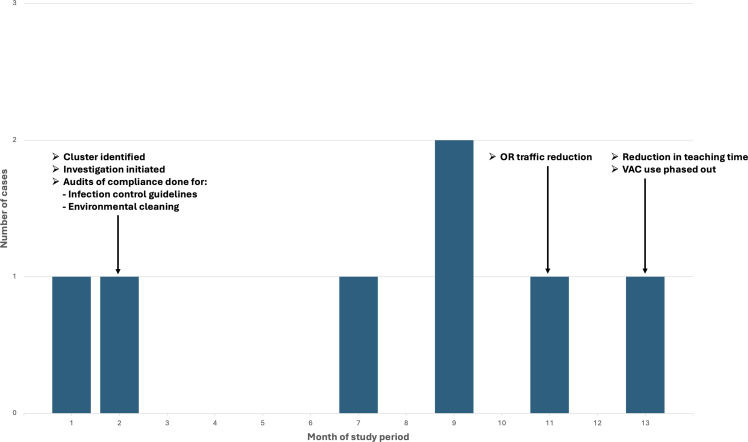 Figure 1
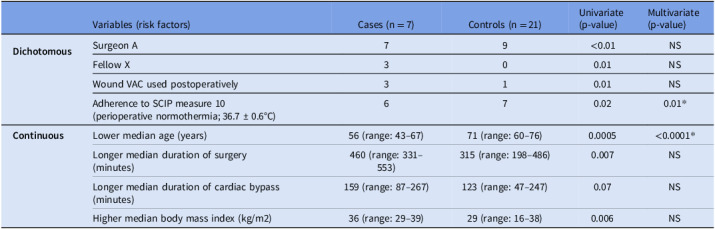 Figure 2
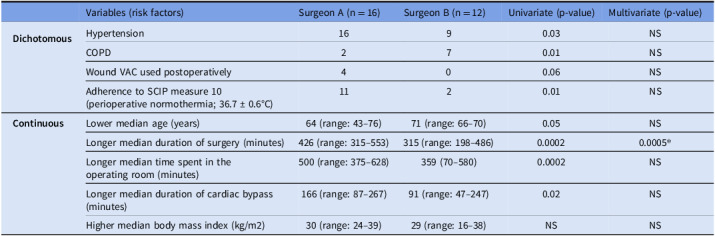 Figure 3
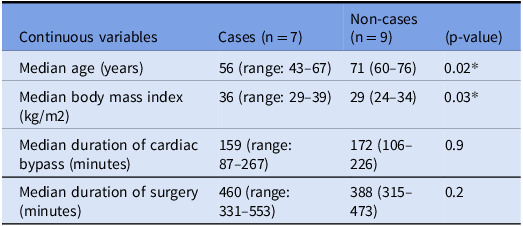 Figure 4
Peer Reviews
No public reviews on file for this paper yet. If you reviewed it on a platform where reviews are public (OpenReview, ICLR, NeurIPS, ICML), you can paste yours below so the community can read it here.
Videos
No videos yet. Explain this paper in a talk, walkthrough, or lecture? Add one.
Taxonomy
TopicsSurgical site infection prevention · Pressure Ulcer Prevention and Management · Reconstructive Surgery and Microvascular Techniques
Introduction
Coronary artery bypass grafting (CABG) is the most common cardiac surgical procedure performed in the United States.^ 1 ^ Surgical site infection (SSI) following CABG is a significant cause of morbidity and mortality.^ 2–4 ^ Mitigating strategies include adherence to mandatory preoperative preventive requirements, including those established by the Surgical Care Improvement Project (SCIP) along with the Joint Commission. Despite these measures, approximately 1 to 4% of patients acquire infections after undergoing CABG.^ 2,3,5–7 ^ The most common causative organisms in sternal wound infections are Staphylococcus species and gram-negative bacilli.^ 8 ^ Deep SSIs, including mediastinitis, are associated with increased mortality rates.^ 9 ^ Previous investigations of risk factors for SSI after CABG have yielded variable results.^ 2,10–12 ^
Between the fall of 2018 and 2019, an increase in the occurrence of SSIs in patients who underwent a CABG procedure at our facility was noted despite standard SSI prevention measures, which included preoperative chlorhexidine skin preparation and intranasal povidone-iodine for all preoperative patients. Based on prior hospital surveillance data of SSI rates, these occurrences qualified a new cluster of SSIs and an investigation was initiated. The objectives of the investigation were to identify risk factors for SSI as well as implement measures to prevent additional cases.
Methods
This study was approved by our institutional research compliance office. The need for patient consent was waived given that the study was determined not to meet criteria for human subjects research through use of the VA Electronic Determination Aid (VAEDA).
Case definition and case ascertainment
A case was defined as any adult patient who acquired an SSI (superficial, deep, and organ/space) within 90 days of CABG surgery at this tertiary care medical center in Florida, USA during a 13-month period between the fall of 2018 and 2019 (study period). Case-patients were ascertained by review of the hospital’s infection control surveillance data. We compared the rates of all post-CABG SSIs during the pre- and post-cluster periods to identify the study period.
Case–control study
To identify patients at risk of acquiring an SSI, we compared the case-patient population with a randomly selected group of control-patients for a case to control ratio of 1:3 to ensure adequate power. The control population was defined as any adult patient who underwent a CABG surgical procedure during the study period but did not acquire an SSI. SSIs were classified as superficial, deep, or organ/space infections involving the primary CABG surgical site based on National Healthcare Safety Network (NHSN) criteria.^ 13,14 ^ Variables analyzed included demographics, past medical history and co-morbidities, operating room procedures and timing, specific healthcare personnel involved in a patient’s care during surgery, vascular and airway access, surgical complications, duration of surgery, duration of medical device use, adherence to the SCIP measures and other perioperative standards of care (including surgical skin preparation, appropriate hair removal with clippers in the peri-operative area, appropriate timing and dosing/re-dosing of peri-operative antibiotics, and peri-operative maintenance of normothermia and normoglycemia), signs and symptoms of infection, exposure to and duration of cardiac bypass, enteral feeding, mechanical ventilation, urinary catheterization, types and duration of intravascular access including postsurgical intracardiac lines and devices, types and duration of intravenous antimicrobial therapy, receipt of blood products, and clinical outcomes.
Procedural review
Upon identification of the cluster in the second month of the study period, infection preventionists immediately conducted audits using standardized checklists to assess adherence to infection control practices and procedures in the operating rooms, hand hygiene, and environmental services cleaning protocols, including the cleaning of OR equipment. Of note, environmental services was adequately staffed and no changes were made regarding the type of cleaning products used or the frequency/location of cleaning. Any lapses found during audits were conveyed immediately to involved staff, and the OR manager and nursing cardiothoracic surgery leader subsequently monitored and enforced ongoing compliance.
Given ongoing cases despite the above measures, infection prevention personnel subsequently sought additional opinions and feedback from OR staff. These informal conversations occurred in group and individual settings. Staff raised concerns about operating room traffic during CABG procedures and infection preventionists directly observed the perfusion team removing their machinery when cardiac bypass was complete, resulting in prolonged door opening. As a result, policy was changed so that all equipment was left in place until the chest was closed. This change was implemented in the 11^th^ month of the study period.
One surgeon also self-reported increased operation durations in part due to teaching activities and trainee involvement. As a result, additional limitations were placed on the time allotted to trainees during procedures. The cardiothoracic surgery team also reported that prior to the study period, only infected wounds healing by secondary intention received a vacuum-assisted closure device (wound VAC). Around the time of the study period, however, the VAC manufacturer provided new data supporting use in patients at higher risk of infection or dehiscence, leading to expanded use at our institution. In the 13^th^ month of the study period, VAC use was phased out in favor of alternative methods, including surgical glue and VAC systems compatible with surgical glue dressings.
See Figure 1 for a graphical representation of the case distribution within the cluster as well as timing of the above interventions.
Figure 1.Distribution of cases during the study period including the timing of associated interventions.
Statistical analysis
All data were recorded on standardized forms, entered electronically, and analyzed using SAS statistical software Version 9.4 (SAS Institute Inc, Cary, North Carolina). Categorical variables were compared using the likelihood ratio test or, where appropriate, Fisher’s Exact test. Medians of continuous variables were compared using the Wilcoxon two-sample test. Odds ratios (OR) and 95% confidence intervals (C_95_) were calculated. P < 0.05 was considered statistically significant. We performed multivariate analyses and logistic regression to control for confounding variables and effect modification and to identify independent risk factors among those found to be statistically significant on univariate analysis.
Results
Case ascertainment and characteristics
During the study period, 118 total CABG surgeries were performed by two surgeons (58 by Surgeon A and 60 by Surgeon B). Seven adult patients met the case definition. Twenty-one control patients were randomly selected. All seven patients who met the case definition were male; six were Caucasian and one was Black. All of the control patients were Caucasian males. The median age of case-patients was 56 (range: 43–67) years; median body mass index (BMI) was 36 (range: 29–39) kg/m^2^. Of the seven patients meeting the case definition, two had superficial SSIs while five had deep SSIs per NHSN classification of surgical wound infections.^ 13,14 ^ Two of the five patients with deep SSIs also had mediastinitis. Four patients had surgical cultures positive for methicillin-susceptible Staphylococcus aureus (MSSA), one patient had a culture positive for methicillin-resistant Staphylococcus aureus (MRSA), one patient had a culture positive for Escherichia coli, and surgical cultures were not obtained for one patient. Four patients had secondary bloodstream infections. Of note, molecular analysis was not performed on the MSSA isolates given that the associated surgeries were performed in months 1, 2, 8, and 9 of the study period and a common source of infection was felt to be unlikely. There were no patient deaths attributable to SSI, although one patient died from COVID-19 pneumonia over two years after his CABG surgical procedure.
Univariate and multivariate analysis of risk factors for SSIs after CABG
Case- and control-patients were similar regarding the presence of underlying cardiac disease, type of surgical procedure performed, exposure time on cardiac bypass, receipt of blood products, or type and duration of antimicrobials. On univariate analysis, case-patients were more likely than control-patients to have a significantly lower median age, higher median BMI, longer median duration of surgical procedure, placement of a wound VAC in the post-operative period, or to have successfully met one of the requirements of the SCIP (Table 1). On univariate analysis alone, case-patients were also statistically more likely to have had exposure to a particular surgeon (Surgeon A) and surgical fellow (Fellow X) during their surgery. All other variables analyzed were not statistically significant and are therefore not included in the table.
Table 1.Univariate and multivariate analyses of case-control studyVariables (risk factors)Cases (n = 7)Controls (n = 21)Univariate (p-value)Multivariate (p-value) Dichotomous Surgeon A79<0.01NSFellow X300.01NSWound VAC used postoperatively310.01NSAdherence to SCIP measure 10 (perioperative normothermia; 36.7 ± 0.6°C)670.020.01* Continuous Lower median age (years)56 (range: 43–67)71 (range: 60–76)0.0005<0.0001Longer median duration of surgery (minutes)460 (range: 331–553)315 (range: 198–486)0.007NSLonger median duration of cardiac bypass (minutes)159 (range: 87–267)123 (range: 47–247)0.07NSHigher median body mass index (kg/m2)36 (range: 29–39)29 (range: 16–38)0.006NS = significant in a multivariate analysis.
After controlling for confounding variables by performing multivariate analysis using logistic regression, independent risk factors for SSI among case-patients were lower age (P < 0.0001) and meeting the requirements of SCIP measure 10 (SCIP inf-10; perioperative temperature management to maintain normothermia [36.7 ± 0.6°C] with the exception of intentional hypothermia while on cardiac bypass) (P = 0.01). None of the other potential risk factors, including Surgeon A and Fellow X, were ultimately significant on multivariate analysis.
To further control for confounding, we directly compared the two surgeons who carried out the CABG procedures (Table 2). Univariate analysis revealed that patients operated on by surgeon A were more likely to have a longer duration of surgery (P = 0.0002), have spent a longer overall time in the operating room (P = 0.0002), have met SCIP measure 10 for maintaining perioperative normothermia (P = 0.01), have been on cardiopulmonary bypass longer (P = 0.02), and have HTN (P = 0.03) than patients operated on by surgeon B. There was a trend toward significance for younger patients as well (P = 0.05). Surgeon A was also more likely to have patients with a wound VAC in the post- operative period although the difference was not statistically significant. In contrast, Surgeon B was more likely to have patients with COPD (P = 0.01).
Table 2.Univariate and multivariate analyses comparing Surgeon A with Surgeon BVariables (risk factors)Surgeon A (n = 16)Surgeon B (n = 12)Univariate (p-value)Multivariate (p-value) Dichotomous Hypertension1690.03NSCOPD270.01NSWound VAC used postoperatively400.06NSAdherence to SCIP measure 10 (perioperative normothermia; 36.7 ± 0.6°C)1120.01NS Continuous Lower median age (years)64 (range: 43–76)71 (range: 66–70)0.05NSLonger median duration of surgery (minutes)426 (range: 315–553)315 (range: 198–486)0.00020.0005Longer median time spent in the operating room (minutes)500 (range: 375–628)359 (70–580)0.0002NSLonger median duration of cardiac bypass (minutes)166 (range: 87–267)91 (range: 47–247)0.02NSHigher median body mass index (kg/m2)30 (range: 24–39)29 (range: 16–38)NSNS = significant in a multivariate analysis.
Additional comparisons were made between the case-patients and non-case-patients for Surgeon A with regards to patient age, patient BMI, duration of bypass, and duration of surgery. Median duration of cardiac bypass and duration of surgery for case and non-case-patients in this comparison were similar. Patients who acquired SSIs were significantly more likely to be younger (P = 0.02) or have a higher BMI (P = 0.03), however (Table 3).
Table 3.Analysis of the 16 study patients who underwent surgery with Surgeon AContinuous variablesCases (n = 7)Non-cases (n = 9)(p-value)Median age (years)56 (range: 43–67)71 (60–76)0.02Median body mass index (kg/m2)36 (range: 29–39)29 (24–34)0.03Median duration of cardiac bypass (minutes)159 (range: 87–267)172 (106–226)0.9Median duration of surgery (minutes)460 (range: 331–553)388 (315–473)0.2* = significant in analysis.
Procedural review results
As a result of the audits conducted by institutional infection preventionists, some lapses were identified with regards to hand hygiene (alcohol-based, not surgical scrub), and equipment cleaning (specifically tubing that had touched the floor). These lapses were corrected immediately in the second month of the study period and did not recur.
With regards to OR traffic reduction in the 11^th^ month of the study period, the perfusion team immediately and permanently stopped removing equipment prior to chest closure. The interventions implemented in the 13^th^ month of the study period, which included a reduction in trainee teaching time intra-operatively as well as phasing out VAC use, also became permanent changes.
After implementation of the above measures, no additional post-CABG cases were identified and SSI rates returned to baseline. In addition, no further SSI clusters were identified in the following three years.
Discussion
Previously identified risk factors for SSI following CABG include obesity, prolonged operative time, diabetes mellitus, hypertension, renal failure, and female gender.^ 2,15–17 ^ Study results have been variable, however, in part due to institution-specific and local influences.^ 2 ^ Optimizing infection control and antimicrobial stewardship practices can significantly improve infection rates.^ 18 ^
Our results from this retrospective case-control study show that in this institution, lower age, increased BMI, longer duration of surgery, postoperative wound VAC use, and appropriate perioperative temperature management were univariate predictors of SSI risk, while only lower age and appropriate perioperative temperature management were independent predictors of infection in patients undergoing CABG surgery upon multivariate analysis. Surgical staff were not associated with an increased relative risk of infection on multivariate analysis after adjustment for covariates was performed.
Identified risk factors from our analyses and procedural review are discussed in more detail below.
Age
Increased age is a known risk factor for infection after cardiac surgery. In a study by Meszaros et al., for example, age greater than 74 years was the most significant risk factor for sternal infection after CABG.^ 17 ^ Functional status and comorbidities may potentially play a role in this association. Data for young adults is limited, but younger patients who develop premature coronary artery disease are more likely to have complex medical comorbidities, although overall mortality is typically less.^ 19–21 ^ In our study, the median age of patients in the control group was 71 years whereas the median age for patients who developed SSIs was 56 years. The difference between these two groups was statistically significant as a risk predictor on multivariate analysis, indicating that younger patients were in fact associated with a higher risk for an SSI. Risk factors including elevated BMI, comorbidities such as HTN and COPD, and increased complexity of surgery requiring prolonged intraoperative time may have contributed.
Perioperative temperature management
Perioperative normothermia is a well-documented strategy to prevent complications including wound infections, coagulopathy, ischemic cardiovascular events, and mortality.^ 22–25 ^ Since hypothermia results in vasoconstriction, decreased oxygen delivery to the surgical wound site may contribute to the increased risk of infection.^ 23,26 ^ SCIP inf-10, which is part of the evidence-based SCIP measures to improve perioperative care, outlines the acceptable range of perioperative temperatures.^ 23 ^ A number of studies, however, have reported poor correlation between SCIP compliance and patient outcomes, including SSIs.^ 23,27–30 ^. In our study, six out of seven patients who developed SSIs appropriately met the SCIP inf-10 measure for perioperative normothermia, and meeting this measure was also significant on multivariate analysis as a risk factor for SSI. Our findings are therefore consistent with prior studies suggesting a potentially poor correlation between SCIP measure compliance and reduction in SSIs. Additional limiting factors could include small sample size and variability in the location of temperature monitoring.
Body mass index
Obesity is a known risk factor for infection.^ 31 ^ Fat is more poorly vascularized, resulting in decreased tissue oxygenation and a higher risk of fat necrosis.^ 32,33 ^ Peri-operative antimicrobials are more likely to be underdosed in obese patients.^ 2 ^ In addition, obesity itself may complicate surgical procedures and increase operative time.^ 32 ^ Since higher median BMI was a statistically significant risk factor in this study on univariate analysis, although not on multivariate analysis, our findings are consistent with prior studies.
Duration of surgery
Prolonged surgical duration was significantly associated with increased risk of SSI in our univariate analysis, although not on multivariate analysis. CABG typically requires increased operative time given multiple surgical incisions and venous grafting. Wounds that are left open are more likely to become contaminated with skin flora or other bacteria in the operating room.^ 15,34 ^ In addition, tissue desiccation at the site of the incision may increase this risk.^ 29,35 ^ Operation duration may be associated with provider fatigue.^ 29 ^ Prior studies have noted additional possible contributing factors, including intraoperative teaching.^ 36 ^ In this study, Surgeon A self-reported increased operation durations in part due to trainee involvement, as opposed to Surgeon B, who had less teaching time. This may have contributed to the longer average duration of surgery that was statistically significant on multivariate analysis when comparing Surgeon A and Surgeon B, although neither Surgeon A nor Fellow X were associated with an increased risk of SSI after CABG on multivariate analysis in the overall case-control study. Surgeon A subsequently placed additional limitations on the time allotted to trainees to decrease overall OR time.
Wound VAC use
Use of negative pressure wound therapy after cardiac surgery has previously been shown to be safe and effective.^ 37,38 ^ Reported benefits of using a VAC system include increased blood flow and granulation tissue formation, decreased bacterial colonization, and a reduction in dressing changes.^ 8,38 ^ Complications of prolonged VAC therapy have been reported, however, and include unhealthy granulation tissue formation, nonunion, and osteomyelitis. Prolonged exposure to suction may contribute to tissue damage.^ 38 ^ Our cardiothoracic surgery team had expanded VAC use around the time of the study period based on new manufacturer data. VACs were used primarily in patients with higher BMI’s and large open wounds, which may already have increased the risk of infection. The initial association between SSI and VAC use in univariate but not multivariate analysis may therefore be related to patient characteristics and surgical complexity, but tissue damage from prolonged VAC use remains a possibility. VAC use was subsequently phased out at our institution.
Operating room traffic
Our investigation raised concerns about operating room traffic during CABG surgeries, specifically in relation to perfusion team protocols. Studies have shown that door opening during surgery may disrupt airflow dynamics and increase colony forming units in the operating room.^ 39,40 ^ Associated distraction has also been linked to surgical mistakes.^ 39 ^ As a result, our protocols were modified to reduce prolonged door opening prior to chest closure.
Limitations of this study include the relatively small number of cases in the cluster, which may have affected precise estimates of key predictor effects for important categorical predictors in the multivariate model, rendering model parameter estimations unstable. We found, however, that statistically significant differences ascertained on univariate analyses enabled generation of a plausible hypothesis to explain the underlying risk factors for infection. In addition, only male patients were present in the cluster and so gender could not be assessed as a risk factor. Finally, because this was a retrospective case-control study, we were not able to document long-term sequelae of infection in case-patients.
In conclusion, multiple risk factors can affect SSIs after CABG, although prior studies evaluating these factors have yielded varying results. While investigating a cluster of SSIs at our institution, we found multiple variables potentially associated with increased SSI risk on univariate analysis, and after performing multivariate analysis using logistic regression, we identified younger age and meeting SCIP measure 10 for maintenance of perioperative normothermia as statistically significant independent risk factors for SSI. After the implementation of measures directed toward minimizing operating room traffic and phasing out wound VAC use, no additional clusters of SSIs were observed.
The reference list from the paper itself. Each links out to its DOI / PubMed record.
- 1D’Agostino RS , Jacobs JP , Badhwar V , et al. The society of thoracic surgeons adult cardiac surgery database: 2018 update on outcomes and quality. Ann Thorac Surg 2018;105:15–23.29233331 10.1016/j.athoracsur.2017.10.035 · doi ↗ · pubmed ↗
- 2Ahmed D , Cheema FH , Ahmed YI , et al. Incidence and predictors of infection in patients undergoing primary isolated coronary artery bypass grafting: a report from a tertiary care hospital in a developing country. 2011;52:99–104.21224817 · pubmed ↗
- 3Gelijns AC , Moskowitz AJ , Acker MA , et al. Management practices and major infections after cardiac surgery. J Am Coll Cardiol 2014;64:372–381.25060372 10.1016/j.jacc.2014.04.052PMC 4222509 · doi ↗ · pubmed ↗
- 4Greco G , Shi W , Michler RE , et al. Costs associated with health care–associated infections in cardiac surgery. J Am Coll Cardiol 2015;65:15–23.25572505 10.1016/j.jacc.2014.09.079PMC 4293042 · doi ↗ · pubmed ↗
- 5De Lissovoy G , Fraeman K , Hutchins V , Murphy D , Song D , Vaughn BB . Surgical site infection: incidence and impact on hospital utilization and treatment costs. Am J Infect Control 2009;37:387–397.19398246 10.1016/j.ajic.2008.12.010 · doi ↗ · pubmed ↗
- 6Klevens RM , Edwards JR , Richards CL , et al. Estimating health care-associated infections and deaths in U.S. Hospitals, 2002. Public Health Rep 2007;122:160–166.17357358 10.1177/003335490712200205 PMC 1820440 · doi ↗ · pubmed ↗
- 7Gummert JF , Barten MJ , Hans C , et al. Mediastinitis and cardiac surgery - an updated risk factor analysis in 10,373 consecutive adult patients. Thorac Cardiovasc Surg 2002;50:87–91.11981708 10.1055/s-2002-26691 · doi ↗ · pubmed ↗
- 8Sjögren J , Malmsjö M , Gustafsson R , Ingemansson R . Poststernotomy mediastinitis: a review of conventional surgical treatments, vacuum-assisted closure therapy and presentation of the Lund University Hospital mediastinitis algorithm. Eur J Cardiothorac Surg 2006;30:898–905.17056269 10.1016/j.ejcts.2006.09.020 · doi ↗ · pubmed ↗