Degenerated nerve grafts provide similar quality and outcome in reconstructing critical nerve defects as compared to fresh nerve grafts
Philipp Tratnig-Frankl, Martin Schmoll, Udo Maierhofer, Johanna Klepetko, Florian J. Jaklin, Lisa H. Jöns, Homayon Zirak, Christopher Festin, Leopold Harnoncourt, Vlad Tereshenko, Konstantin D. Bergmeister, Oskar C. Aszmann

TL;DR
This study shows that predegenerated nerve grafts work as well as fresh ones for repairing nerve injuries, which is important when only degenerated grafts are available.
Contribution
The study demonstrates that predegenerated nerve grafts do not lead to inferior outcomes compared to fresh grafts in nerve reconstruction.
Findings
Degenerated nerve grafts showed no statistical inferiority in motor neuron labeling compared to fresh grafts.
Muscle force and weight outcomes were similar between fresh and degenerated graft groups.
Results suggest degenerated grafts can be a viable option for critical nerve defects.
Abstract
Brachial plexus injuries are commonly caused by stretch-traction injuries. The clinical standard is timely anatomic reconstruction with autologous nerve grafts and/or intra- or extraplexal nerve transfers. Commonly used nerve grafts are the sural nerves and/or grafts taken from the affected side. If the lower trunk has been affected, the latter nerves, however, are predegenerated. In this animal experiment we investigated, whether a degenerated nerve graft avails the same quality of regeneration as compared to a non-degenerated graft. In this animal study, a 2 cm lesion of the right common peroneal nerve was created, and the ipsilateral sural nerve was cut or left intact to later serve as a graft. Nerve reconstruction was carried out 3 weeks later using the fresh or degenerated graft. After 6 weeks, either a retrograde labeling of the common peroneal nerve or muscle force testing was…
Genes, proteins, chemicals, diseases, species, mutations and cell lines named across the full text — each resolved to its canonical identifier and authoritative record.
Click any figure to enlarge with its caption.
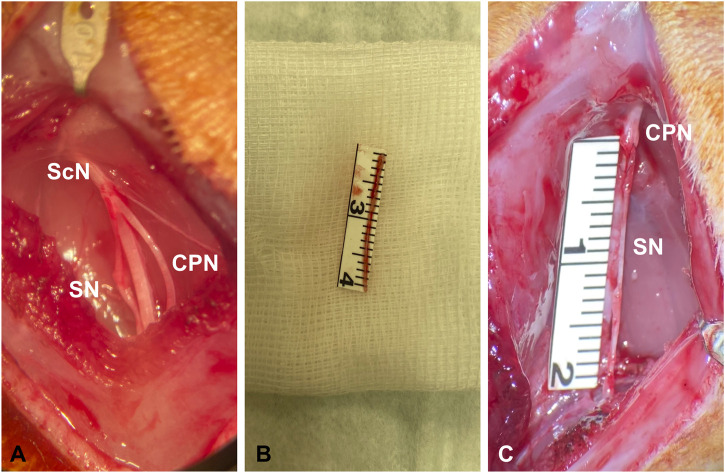 Figure 1
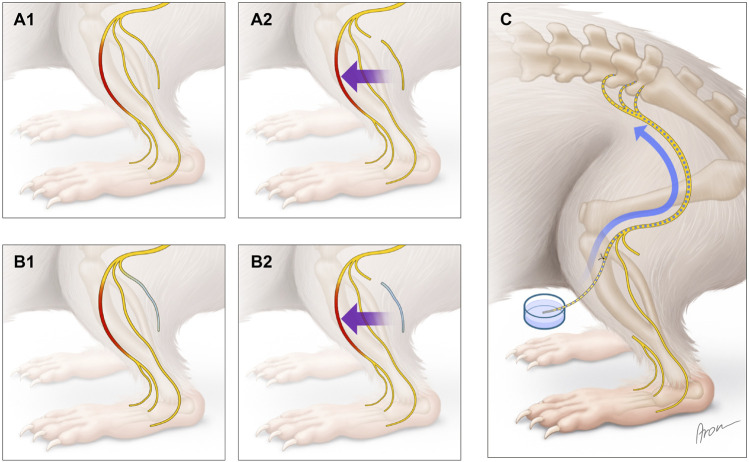 Figure 2
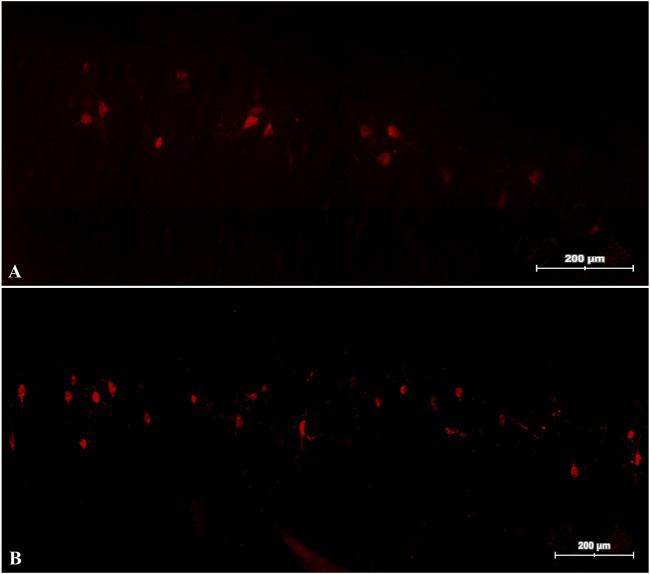 Figure 3
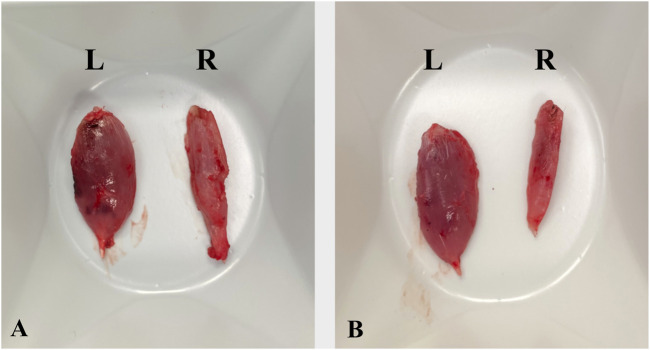 Figure 4
Peer Reviews
No public reviews on file for this paper yet. If you reviewed it on a platform where reviews are public (OpenReview, ICLR, NeurIPS, ICML), you can paste yours below so the community can read it here.
Videos
No videos yet. Explain this paper in a talk, walkthrough, or lecture? Add one.
Taxonomy
TopicsNerve Injury and Rehabilitation · Nerve injury and regeneration · Peripheral Nerve Disorders