An immunostaining-based approach for assessing myocardial viability in the infarcted mouse hearts
Weili Ouyang, Xueqing Liu, Zheheng Ding, Yanan Ji, Jianfeng Zhao, Hongtao Zhu, Weidong Wu, Zhaoping Ding

TL;DR
This paper introduces a new immunostaining method using cardiac troponin I to detect early cell death in mouse hearts after a heart attack.
Contribution
The study introduces a novel immunostaining-based approach using cTnI for early and precise assessment of myocardial viability.
Findings
cTnI staining rapidly depletes in dying cardiomyocytes as early as 6 hours after MI.
cTnI staining showed high consistency with TTC staining and MEMRI measurements (r² = 0.96).
Sarcomeric proteins like troponin T and α-actinin remain detectable longer than cTnI.
Abstract
With the growing need for reliable and precise detection of cell viability in spatial biology, we introduce an antibody-based staining of cardiac troponin I (cTnI) as a simple yet valuable tool for delineating cardiomyocyte viability in the early stages of myocardial infarction (MI). In circulation, cTnI was found to be the most abundantly released biomarker within the first 24 h after MI. In heart sections, partial depletion of cTnI staining was observed within dying cardiomyocytes as early as 6 h, with almost absence by 24 h despite of preserved membrane integrity. In contrast, staining for other sarcomeric proteins, such as troponin T and α-actinin, remained detectable for several days until immune cells infiltration occurred. We further validated the rapid loss of cTnI staining by cross-verifying in-vivo and ex-vivo measurements. Notably, cTnI-stained sections showed precise…
Genes, proteins, chemicals, diseases, species, mutations and cell lines named across the full text — each resolved to its canonical identifier and authoritative record.
Click any figure to enlarge with its caption.
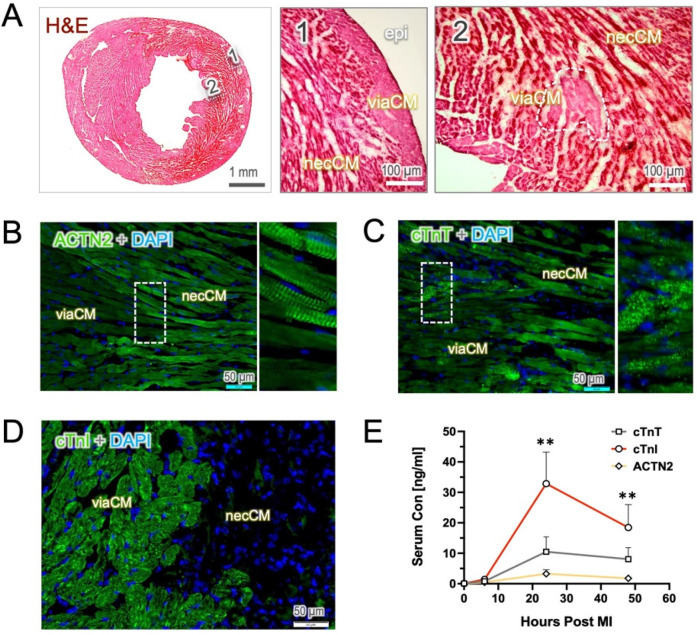 Figure 1
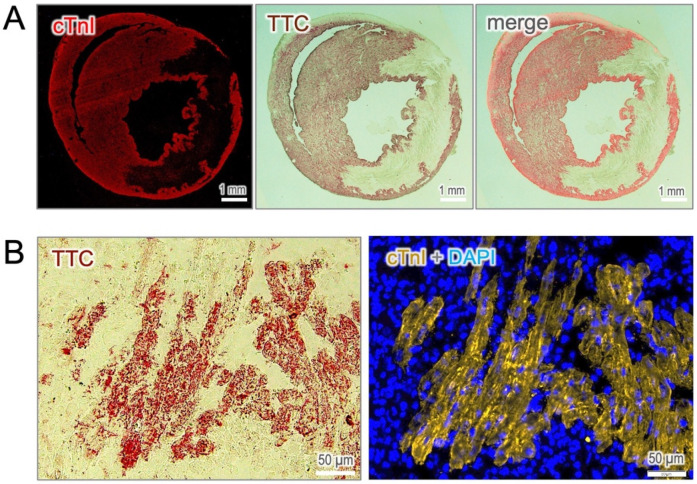 Figure 2
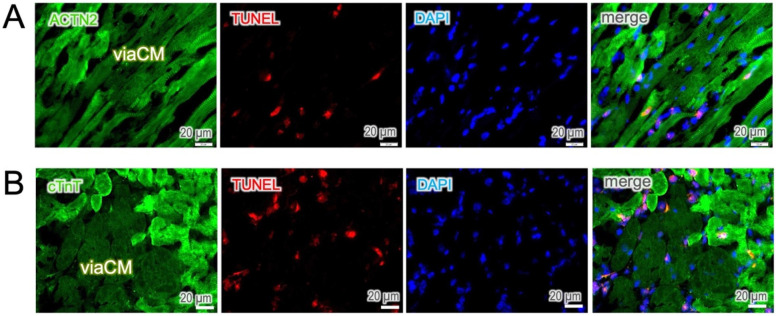 Figure 3
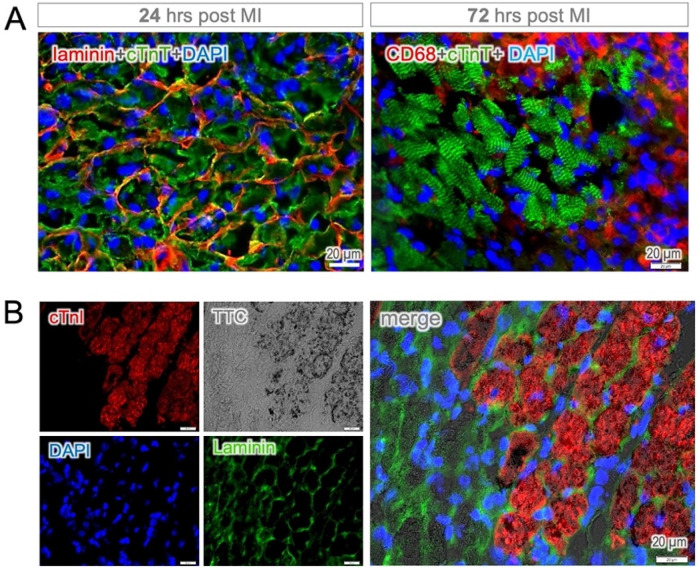 Figure 4
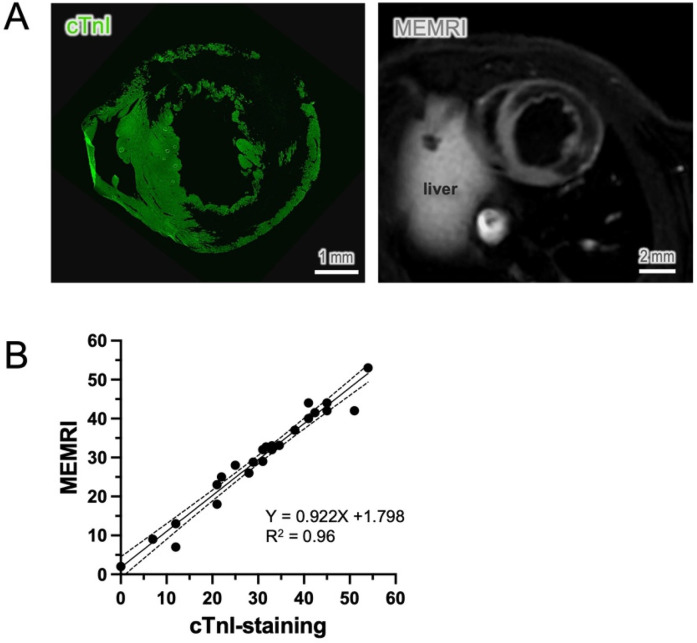 Figure 5
Peer Reviews
No public reviews on file for this paper yet. If you reviewed it on a platform where reviews are public (OpenReview, ICLR, NeurIPS, ICML), you can paste yours below so the community can read it here.
Videos
No videos yet. Explain this paper in a talk, walkthrough, or lecture? Add one.
Taxonomy
TopicsCardiac Fibrosis and Remodeling · Signaling Pathways in Disease · Cardiac electrophysiology and arrhythmias