Development and validation of novel machine learning-based prognostic models and propensity score matching for comparison of surgical approaches in mucinous breast cancer
Chunmei Chen, Jundong Wu, Yutong Fang, Yong Li, Qunchen Zhang

TL;DR
This study creates accurate machine learning models to predict survival in mucinous breast cancer patients and finds breast-conserving surgery improves overall survival.
Contribution
Developed and validated XGBoost-based prognostic models for mucinous breast cancer and compared surgical approaches using propensity score matching.
Findings
XGBoost models achieved high accuracy (AUC=0.833-0.948) in predicting survival for mucinous breast cancer patients.
Breast-conserving surgery was associated with better overall survival compared to mastectomy (p < 0.001).
A web application was developed to help clinicians and researchers use the prognostic models.
Abstract
Mucinous breast cancer (MBC) is a rare subtype of breast cancer with specific clinicopathologic and molecular features. Despite MBC patients generally having a favorable survival prognosis, there is a notable absence of clinically accurate predictive models. Patients diagnosed with MBC from the SEER database spanning 2010 to 2020 were included for analysis. Cox regression analysis was conducted to identify independent prognostic factors. Ten machine learning algorithms were utilized to develop prognostic models, which were further validated using MBC patients from two Chinese hospitals. Cox analysis and propensity score matching were applied to evaluate survival differences between MBC patients undergoing mastectomy and breast-conserving surgery (BCS). We determined that the XGBoost models were the optimal models for predicting overall survival (OS) and breast cancer-specific survival…
Genes, proteins, chemicals, diseases, species, mutations and cell lines named across the full text — each resolved to its canonical identifier and authoritative record.
Click any figure to enlarge with its caption.
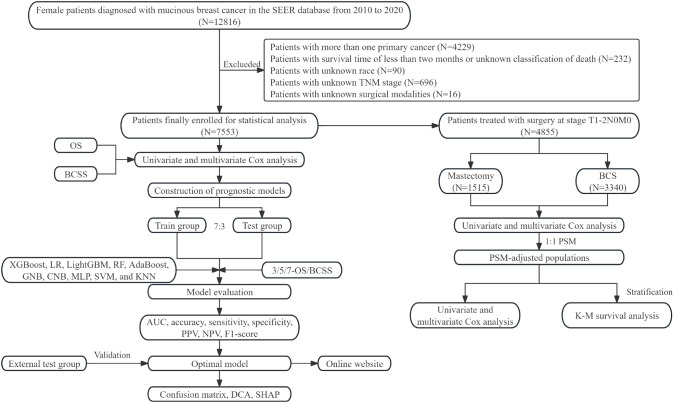 Figure 1
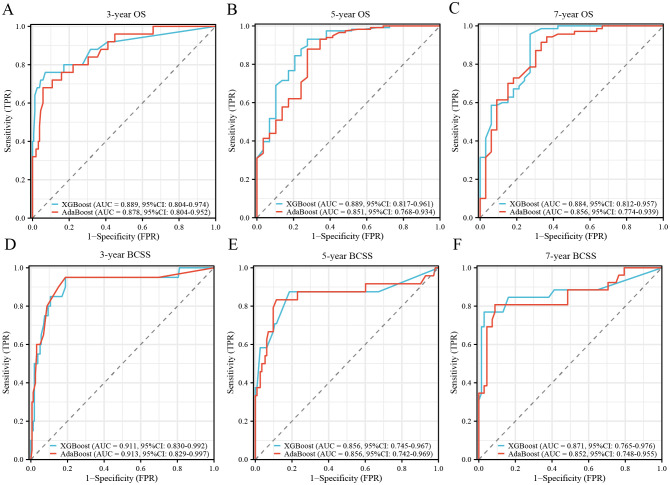 Figure 2
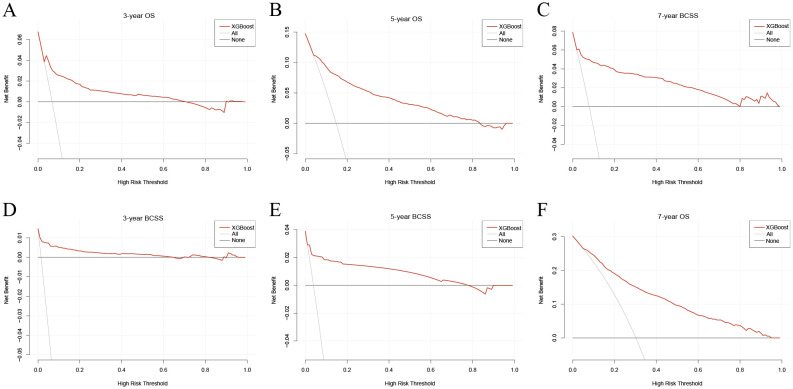 Figure 3
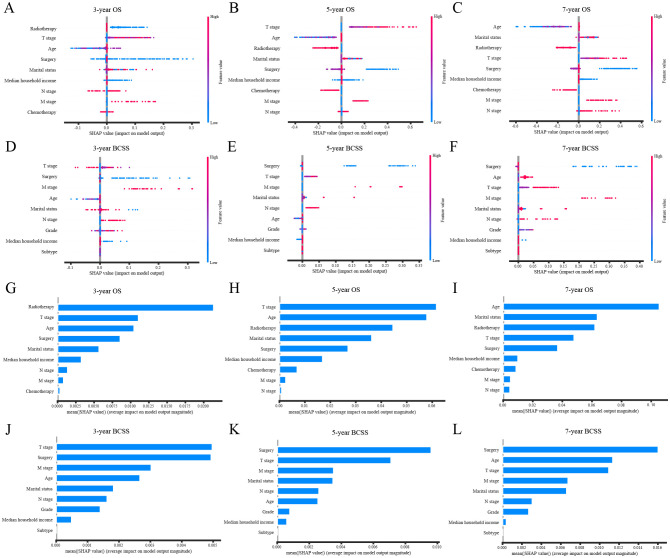 Figure 4
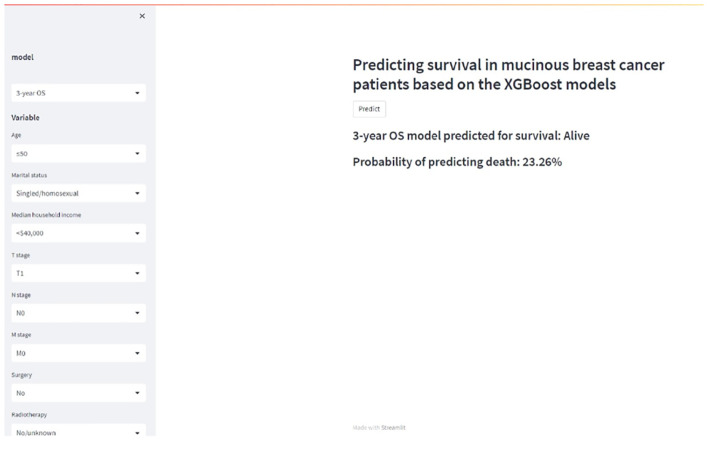 Figure 5
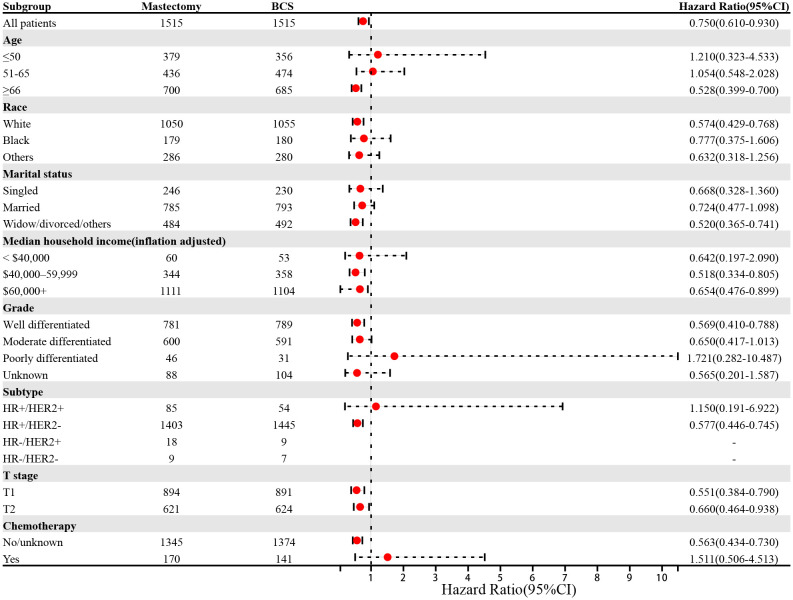 Figure 6
Peer Reviews
No public reviews on file for this paper yet. If you reviewed it on a platform where reviews are public (OpenReview, ICLR, NeurIPS, ICML), you can paste yours below so the community can read it here.
Videos
No videos yet. Explain this paper in a talk, walkthrough, or lecture? Add one.
Taxonomy
TopicsAI in cancer detection · Radiomics and Machine Learning in Medical Imaging · Breast Cancer Treatment Studies