Japanese Multi‐Institution Study of Success Rates of Wire‐Guided Biliary Cannulation During Endoscopic Retrograde Cholangiopancreatography in Relation to Guidewire tip Length (With Video)
Takeshi Ogura, Yuki Tanisaka, Masanari Sekine, Katsumasa Kobayashi, Hirotsugu Maruyama, Shinji Hirai, Hideyuki Shiomi, Minoru Shigekawa, Masaki Kuwatani, Kenji Ikezawa, Masahiro Itonaga, Mamoru Takenaka, Susumu Hijioka, Tsukasa Ikeura, Shinpei Doi, Nao Fujimori, Kazuya Koizumi

TL;DR
This study compares long and short tapered guidewire tips for biliary cannulation during endoscopic procedures, finding no significant difference in success rates but fewer pancreatic duct misinsertions with long tips.
Contribution
The study provides new evidence on the impact of guidewire tip length on biliary cannulation outcomes in endoscopic retrograde cholangiopancreatography.
Findings
No significant difference in technical success rates between long and short tapered guidewire tips.
Long-tapered guidewires significantly reduced guidewire misinsertion into the main pancreatic duct.
Adverse event rates, including post-procedure pancreatitis, were not significantly different between groups.
Abstract
Wire‐guided cannulation (WGC) reportedly increases the successful biliary cannulation rate and reduces the risk of post‐endoscopic retrograde cholangiopancreatography pancreatitis. Currently, various types of guidewires are available. However, the effect of the length of flexible‐tip guidewires on the success rate of biliary cannulation under WGC and the rate of adverse events, especially post‐endoscopic retrograde cholangiopancreatography pancreatitis, is unclear. The aim of this study was to compare the influence of long‐tapered and short‐tapered tips of a 0.025‐inch guidewire on outcomes in primary selective biliary cannulation. Consecutive patients who underwent biliary access under endoscopic retrograde cholangiopancreatography guidance using WGC at 27 high‐volume centers in Japan were enrolled in this prospective registration study. The primary outcome was the technical success…
Genes, proteins, chemicals, diseases, species, mutations and cell lines named across the full text — each resolved to its canonical identifier and authoritative record.
Click any figure to enlarge with its caption.
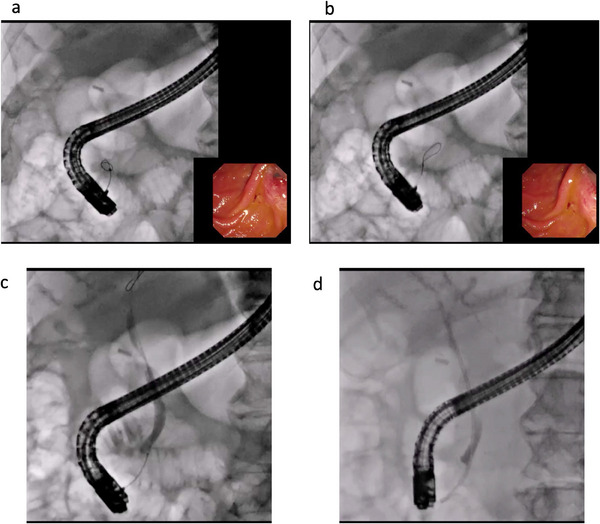 Figure 1
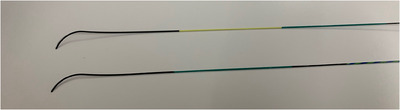 Figure 2
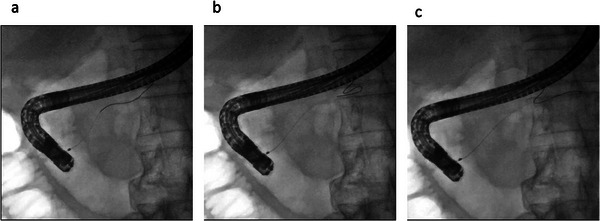 Figure 3
Peer Reviews
No public reviews on file for this paper yet. If you reviewed it on a platform where reviews are public (OpenReview, ICLR, NeurIPS, ICML), you can paste yours below so the community can read it here.
Videos
No videos yet. Explain this paper in a talk, walkthrough, or lecture? Add one.
Taxonomy
TopicsGallbladder and Bile Duct Disorders · Pediatric Hepatobiliary Diseases and Treatments · Pancreatic and Hepatic Oncology Research