Temporary Transvenous Pacemaker Lead-Induced Cardiac Perforation Incidentally Detected by Right Ventriculography Prior to Leadless Pacemaker Implantation
Kazunori Omote, Tadao Aikawa, Yuki Ishidoya, Daisuke Sunaga, Naohiro Funayama

TL;DR
A temporary pacemaker lead caused a heart wall perforation, which was found during a heart imaging test before implanting a leadless pacemaker.
Contribution
Demonstrates the importance of right ventriculography in detecting lead-induced cardiac perforation before lead removal.
Findings
Right ventriculography revealed a perforation caused by a temporary pacemaker lead.
The lead was safely removed after preparing for pericardiocentesis.
RVG proved useful in identifying complications before leadless pacemaker implantation.
Abstract
Temporary transvenous pacemakers (TTPs) are lifesaving device in patients with hemodynamically unstable bradycardia, but are associated with serious complications, including right ventricular (RV) perforation. We present a case of a 91-year-old woman with complete atrioventricular block and bradycardia who received a TTP. After that, she underwent leadless pacemaker implantation. Preprocedural right ventriculography (RVG) revealed an incidental RV wall perforation by the TTP lead. After preparing for pericardiocentesis, the lead was safely extracted without complications. This case highlights the utility of RVG in detecting lead-related complications, where it is necessary to prepare pericardiocentesis prior to lead removal.
Genes, proteins, chemicals, diseases, species, mutations and cell lines named across the full text — each resolved to its canonical identifier and authoritative record.
Click any figure to enlarge with its caption.
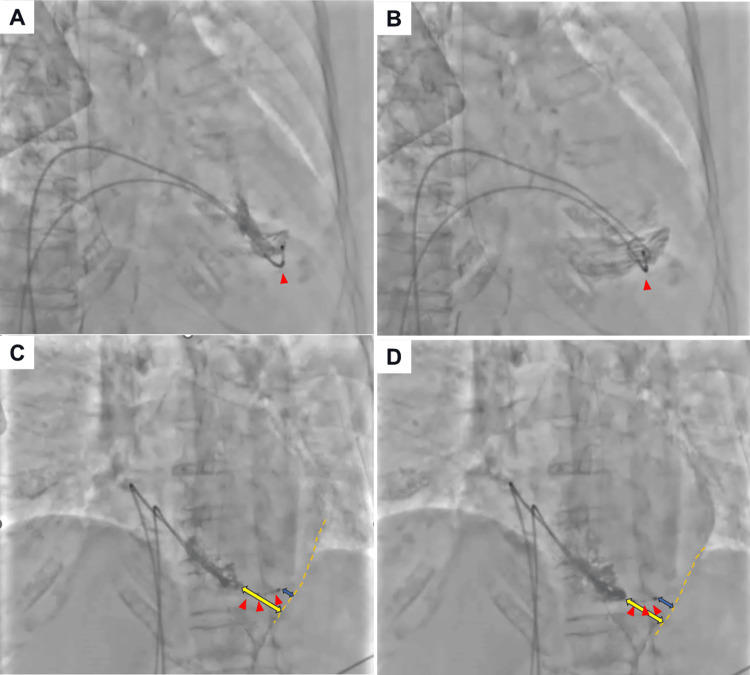 Figure 1
Peer Reviews
No public reviews on file for this paper yet. If you reviewed it on a platform where reviews are public (OpenReview, ICLR, NeurIPS, ICML), you can paste yours below so the community can read it here.
Videos
No videos yet. Explain this paper in a talk, walkthrough, or lecture? Add one.
Taxonomy
TopicsCardiac pacing and defibrillation studies · Cardiac Structural Anomalies and Repair · Orthopaedic implants and arthroplasty