Silent Fungal Invasion: A Case of Aspergillus Brain Abscesses in an Immunocompetent Older Adult Patient
Jamie Therese Abad, Amanda Darzi, Kashmira Wani, Jasmine Omar

TL;DR
An 84-year-old man with no immune issues developed rare fungal brain abscesses caused by Aspergillus, showing the need to consider such infections in older adults with brain lesions.
Contribution
This case report highlights the rare occurrence of Aspergillus brain abscesses in an immunocompetent elderly patient.
Findings
An 84-year-old immunocompetent man developed multiple Aspergillus brain abscesses.
Fungal infection was confirmed through cultures from surgical samples.
The patient's neurological condition worsened despite antifungal treatment.
Abstract
Brain abscesses caused by fungal pathogens are uncommon in immunocompetent individuals. An 84-year-old man presented with fever and headache. Brain imaging identified a nonspecific right frontal lesion. He returned with worsening symptoms and confusion after two weeks, with magnetic resonance imaging (MRI) revealing multiple abscesses with ring enhancement. Cultures from surgical resection and drainage samples grew Aspergillus. Despite antifungal therapy, his neurological condition declined. This case highlights the importance of considering fungal pathogens in older patients with nonspecific brain lesions, even without focal neurological symptoms or evidence of a primary infection.
Genes, proteins, chemicals, diseases, species, mutations and cell lines named across the full text — each resolved to its canonical identifier and authoritative record.
Click any figure to enlarge with its caption.
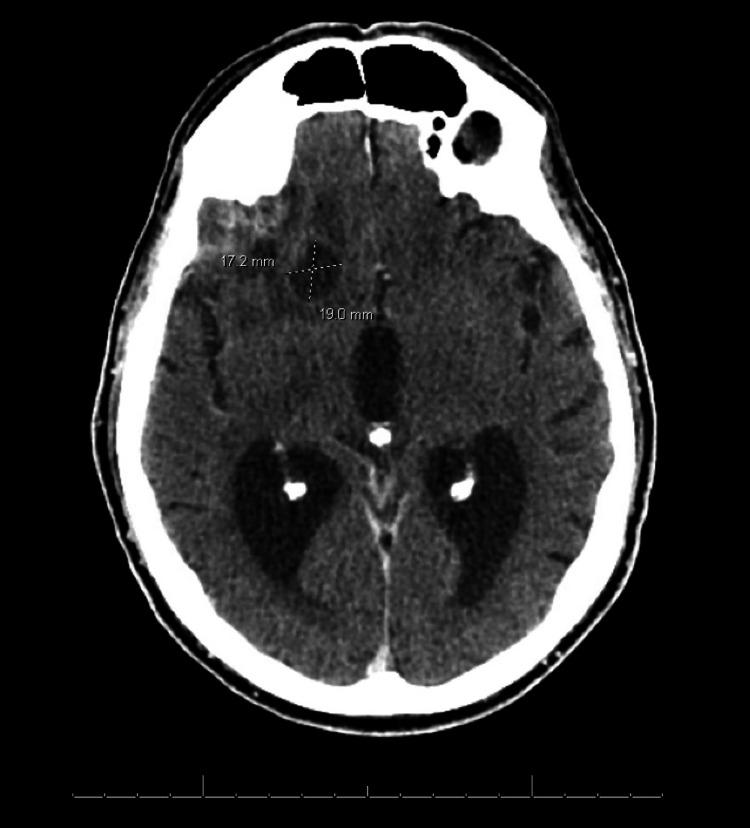 Figure 1
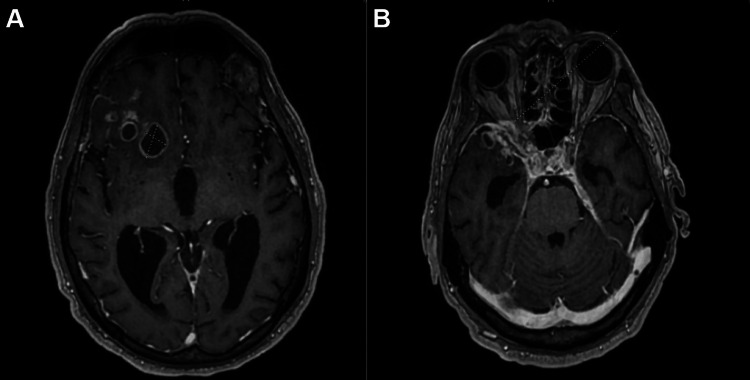 Figure 2
Peer Reviews
No public reviews on file for this paper yet. If you reviewed it on a platform where reviews are public (OpenReview, ICLR, NeurIPS, ICML), you can paste yours below so the community can read it here.
Videos
No videos yet. Explain this paper in a talk, walkthrough, or lecture? Add one.
Taxonomy
TopicsAntifungal resistance and susceptibility · Fungal Infections and Studies · Pneumocystis jirovecii pneumonia detection and treatment