Ceiling-mounted far-UVC fixtures reduce the surface bioburden in occupied clinical areas
Emilie Hage Mogensen, Jacob Thyrsted Jensen, Søren Helbo Skaarup, Andreas Fløe Hvass, Cecilie Lynggaard Jeppesen, Maja Holst Rasmussen, Birgit Thorup Røge, Sara Moeslund Joensen, Stine Yde Nielsen, Elisabeth Bendstrup, Pernille Hauschildt, Anne Friesgaard Christensen

TL;DR
Ceiling-mounted far-UVC fixtures can reduce surface contamination in clinics while being safe for people nearby.
Contribution
The study shows real-world effectiveness of far-UVC in reducing bioburden in occupied clinical areas.
Findings
Far-UVC fixtures reduced surface bioburden in clinical areas.
The reduction occurred despite frequent contamination from routine use.
Far-UVC is safe for continuous use in occupied spaces.
Abstract
Contaminated surfaces in clinics pose a pathogen transmission risk. Far ultraviolet-C light (UVC), with a favorable safety profile for human exposure, has the potential for continuous pathogen inactivation in occupied clinical areas. This study demonstrated real-world bioburden reduction on surfaces, despite frequent contamination from routine use by staff and patients in clinics.
Genes, proteins, chemicals, diseases, species, mutations and cell lines named across the full text — each resolved to its canonical identifier and authoritative record.
Click any figure to enlarge with its caption.
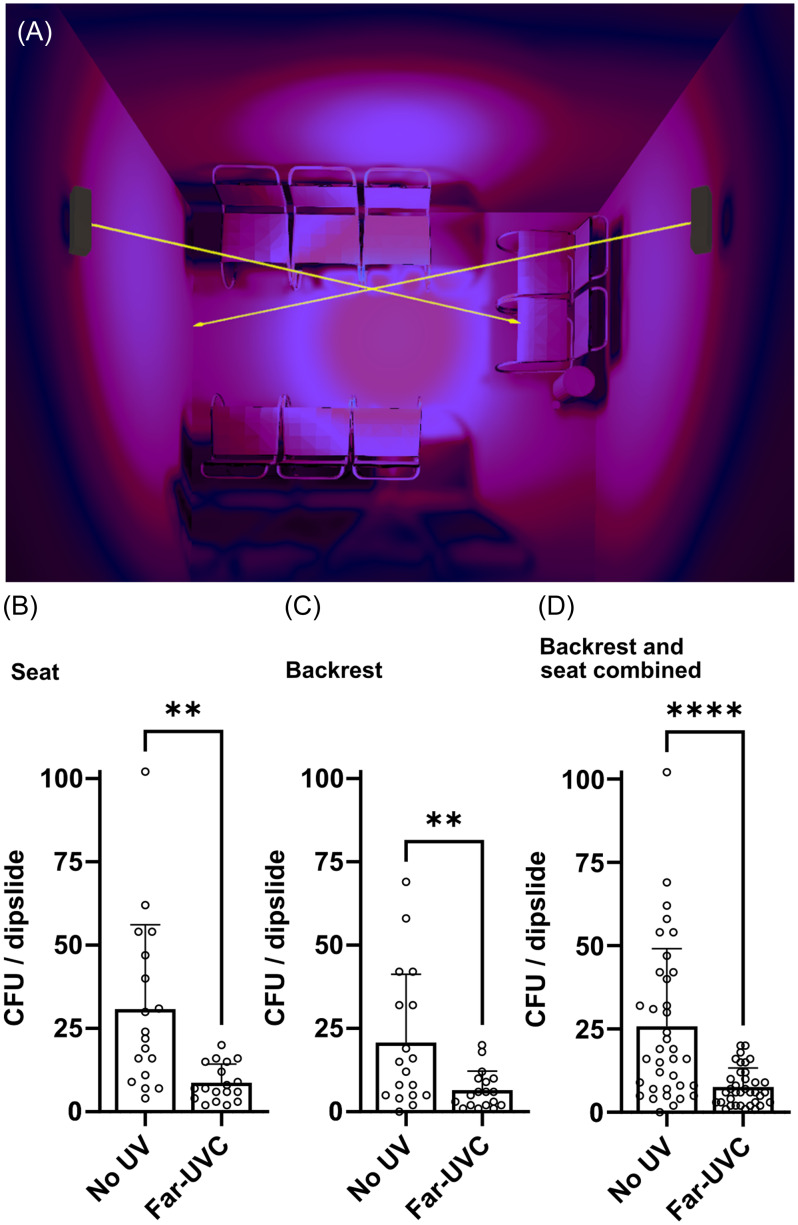 Figure 1
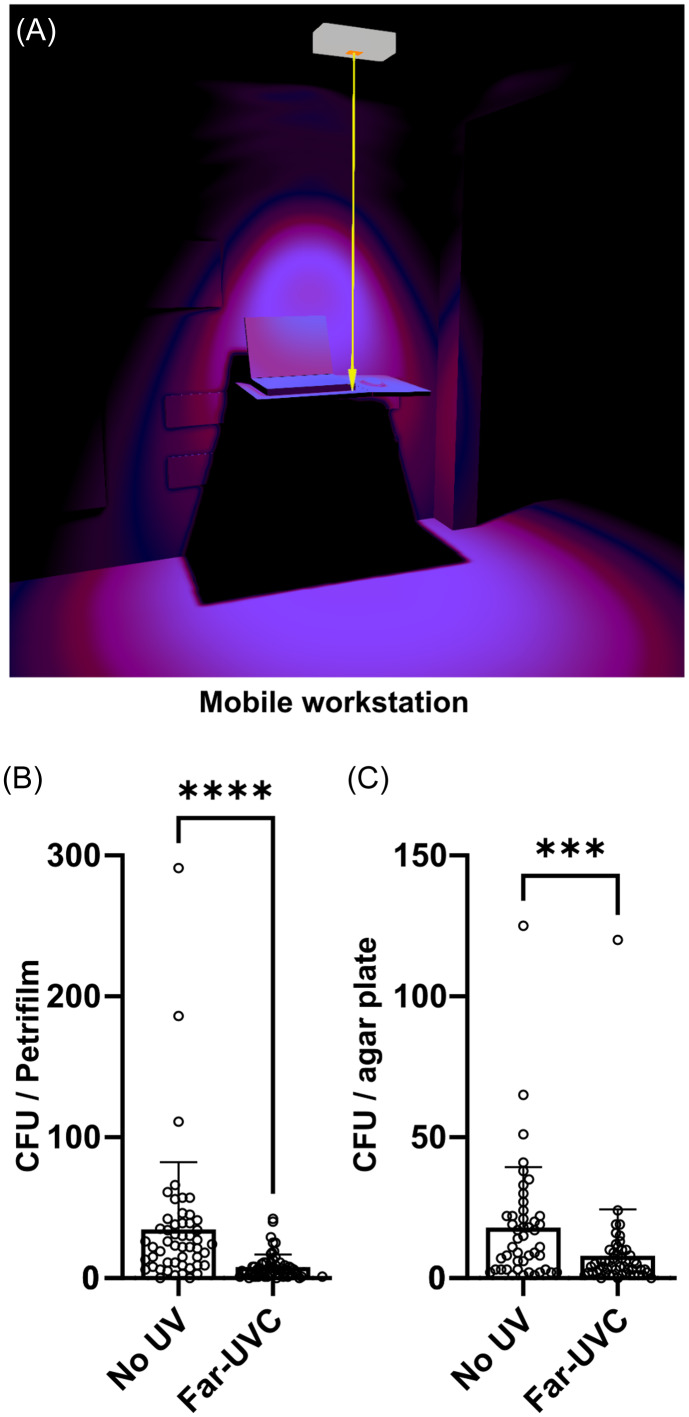 Figure 2
Peer Reviews
No public reviews on file for this paper yet. If you reviewed it on a platform where reviews are public (OpenReview, ICLR, NeurIPS, ICML), you can paste yours below so the community can read it here.
Videos
No videos yet. Explain this paper in a talk, walkthrough, or lecture? Add one.
Taxonomy
TopicsInfection Control in Healthcare · Infection Control and Ventilation · Dental Research and COVID-19