Immune Checkpoint Inhibitors for Microsatellite Instability High Unresectable Obstructive Colon Cancer: A Report of Two Cases
Goro Takahashi, Akihisa Matsuda, Takeshi Yamada, Kay Uehara, Seiichi Shinji, Yasuyuki Yokoyama, Takuma Iwai, Toshimitsu Miyasaka, Shintaro Kanaka, Daigo Yoshimori, Takanori Matsui, Koki Hayashi, Hiroshi Yoshida

TL;DR
This paper reports two successful cases where immune checkpoint inhibitors helped treat advanced colon cancer, avoiding traditional surgery and leading to full recovery.
Contribution
The study demonstrates that immune checkpoint inhibitors can safely and effectively treat obstructive MSI-H colon cancer, avoiding decompressive procedures.
Findings
Pembrolizumab monotherapy rapidly improved symptoms and allowed for curative resection in two patients with MSI-H obstructive colon cancer.
Both patients achieved complete or near-complete pathological responses without needing adjuvant chemotherapy.
ICI treatment facilitated oncologically safe R0 resection, avoiding colostomy and other decompressive procedures.
Abstract
Patients with obstructive colon cancer (OCC) with distant metastases often present with a poor general condition, including malnutrition, anemia, and systemic inflammation. Traditionally, these patients undergo stoma creation and/or primary tumor resection followed by systemic chemotherapy. However, for patients with DNA mismatch repair-deficient/microsatellite instability high (dMMR/MSI-H) colorectal cancer, the emergence of immune checkpoint inhibitors (ICIs) has revolutionized treatment strategies, with remarkable antitumor effects. We report two cases of successful management of MSI-H OCC, achieving curative resection while avoiding decompressive procedures, including colostomy creation. Case 1: A 29-year-old man diagnosed with MSI-H obstructive transverse colon cancer (cT4b stomach, N1b, M1c1) was treated with pembrolizumab monotherapy (200 mg/body, every 3 weeks). The colorectal…
Genes, proteins, chemicals, diseases, species, mutations and cell lines named across the full text — each resolved to its canonical identifier and authoritative record.
Click any figure to enlarge with its caption.
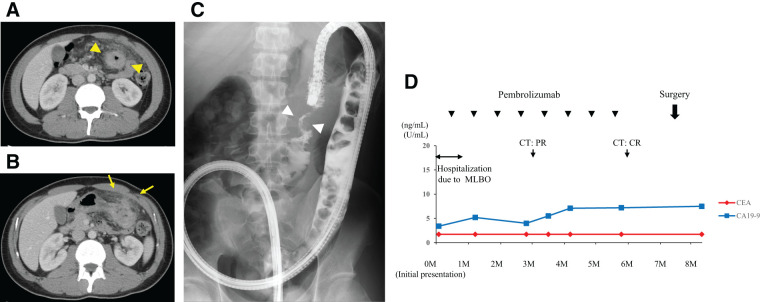 Figure 1
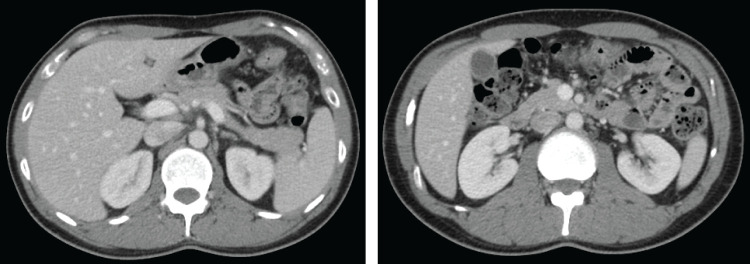 Figure 2
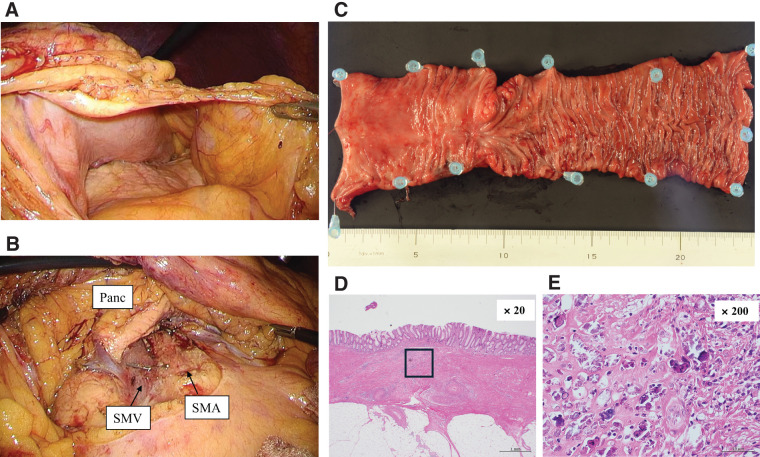 Figure 3
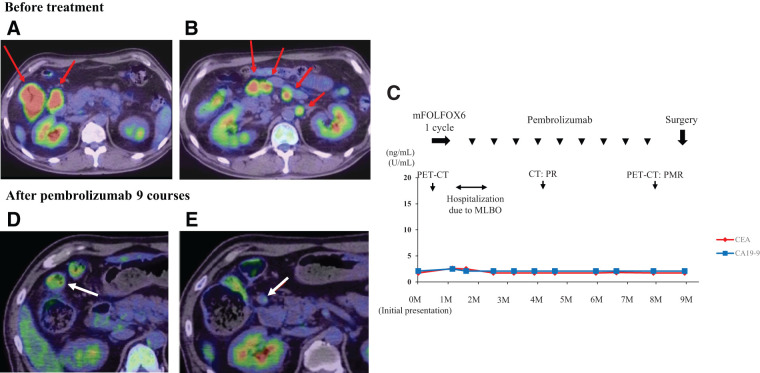 Figure 4
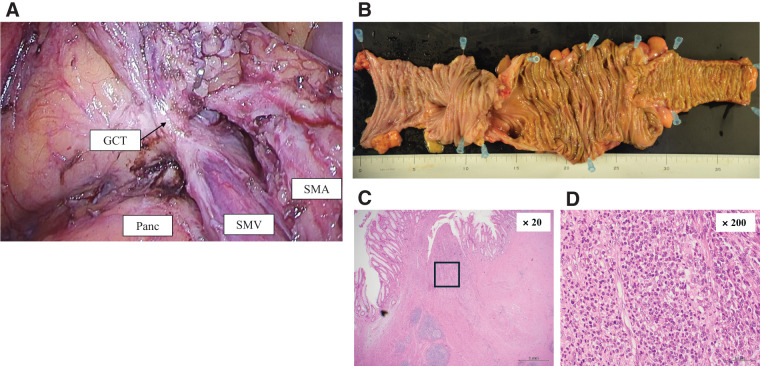 Figure 5
Peer Reviews
No public reviews on file for this paper yet. If you reviewed it on a platform where reviews are public (OpenReview, ICLR, NeurIPS, ICML), you can paste yours below so the community can read it here.
Videos
No videos yet. Explain this paper in a talk, walkthrough, or lecture? Add one.
Taxonomy
TopicsColorectal Cancer Treatments and Studies · Genetic factors in colorectal cancer · Colorectal and Anal Carcinomas