Different age, different blood parasites - Acrocephalus species and their haemosporidian parasites during autumn migration in Central Europe
Nóra Ágh, Szilvia Pásztory-Kovács, Viola Prohászka, Tibor Csörgő, Eszter Szöllősi

TL;DR
This study found that adult and juvenile Acrocephalus birds carry different blood parasites during migration, with no effect on body mass.
Contribution
The study reveals age-related differences in blood parasite prevalence and species distribution in migratory Acrocephalus birds.
Findings
Adult reed and sedge warblers had higher overall parasite prevalence than juveniles.
Haemoproteus infections were more common in adults, while Plasmodium dominated in juveniles.
Parasite prevalence in juveniles increased during autumn migration, but had no impact on body mass.
Abstract
In migratory passerines, the timing of the different phases of the migratory journey is of great importance for the survival prospect of the individuals. Haemosporidian infections could weaken the immune system, decelerate the ability of fat accumulation and potentially influence the migratory behaviour. As a large number of blood parasites is host-generalist there is a potential for cross-species and cross-population transmission with different parasite species during the migratory route of the passerines. In addition, resident birds also interact with different parasite fauna when migratory birds arrive back from their migratory route, therefore, it is important to study what kind of blood parasites migratory birds carry. We screened three long-distant migratory Acrocephalus species during autumn migration in two years. We found that in reed and sedge warblers the overall prevalence…
Genes, proteins, chemicals, diseases, species, mutations and cell lines named across the full text — each resolved to its canonical identifier and authoritative record.
Click any figure to enlarge with its caption.
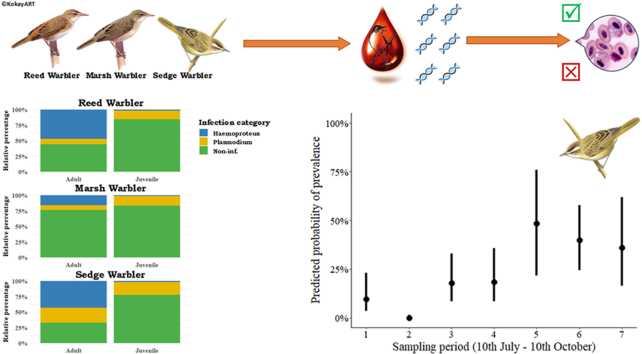 Figure 1
 Figure 2
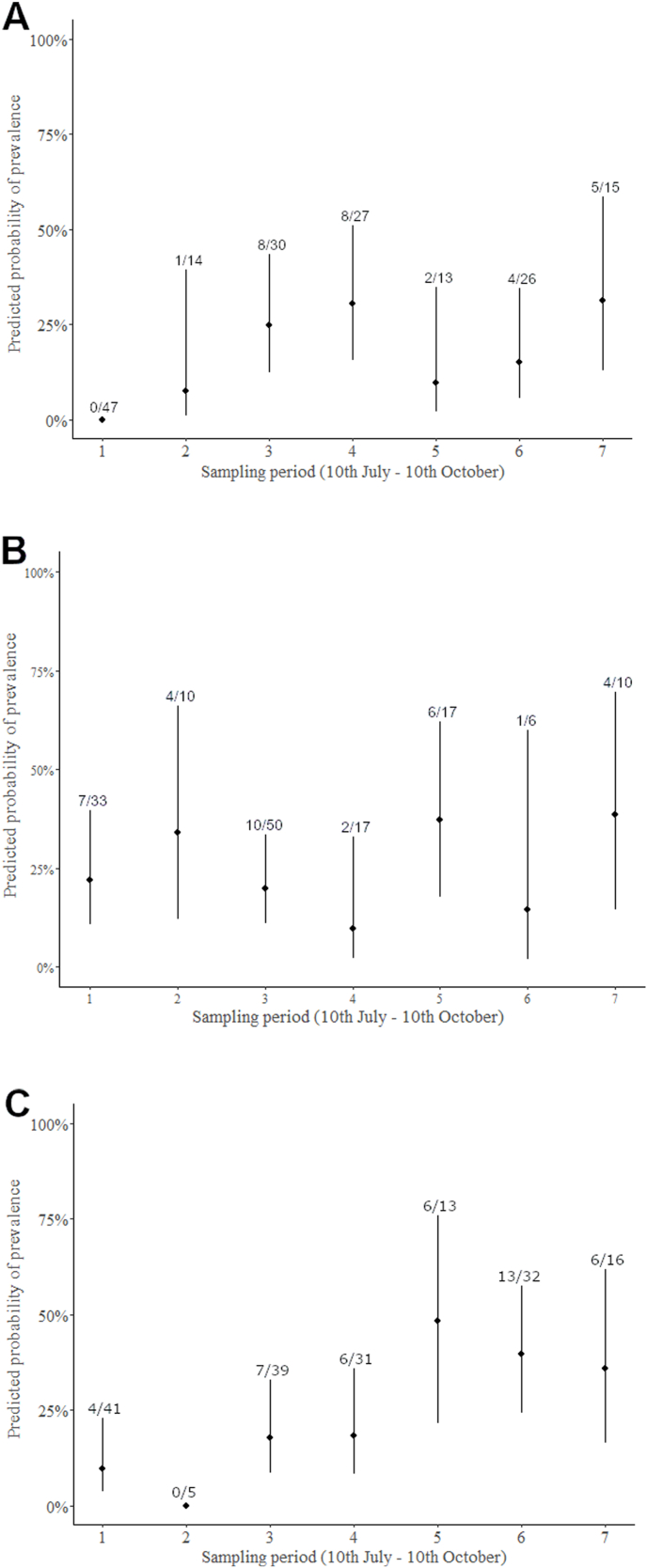 Figure 3
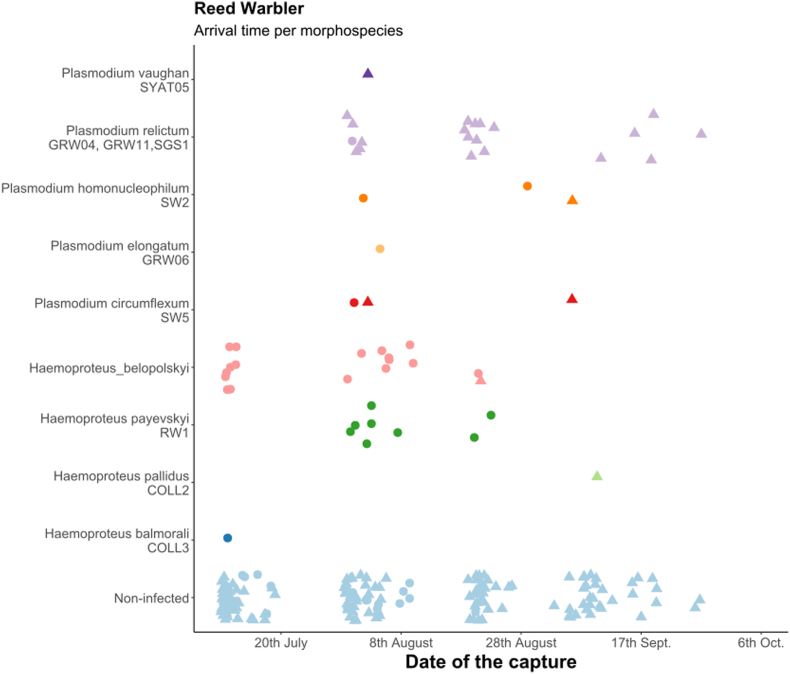 Figure 4
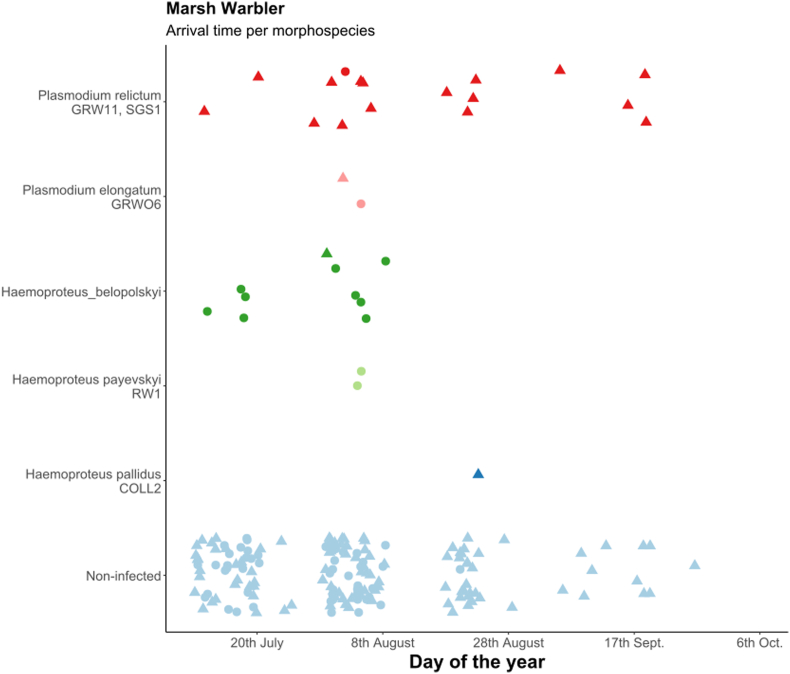 Figure 5
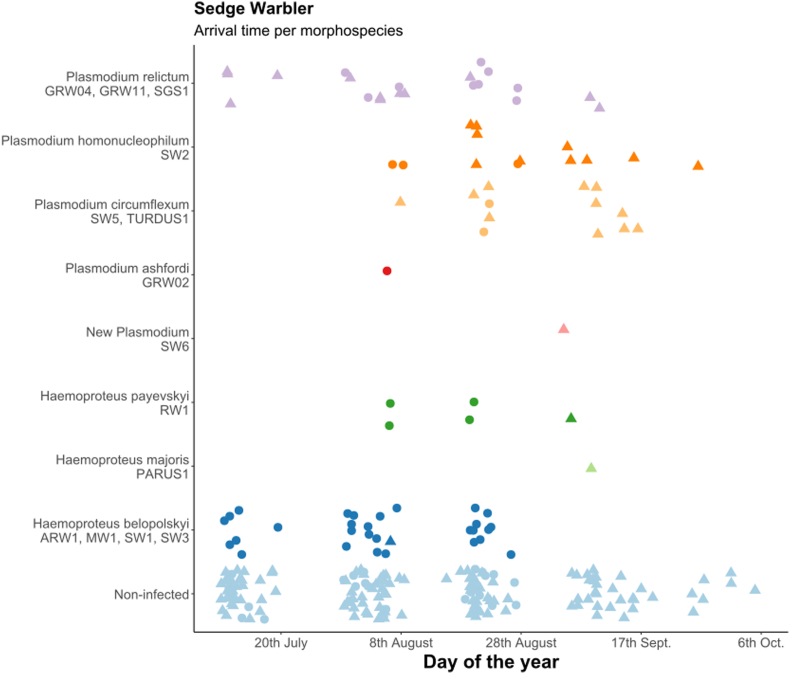 Figure 6
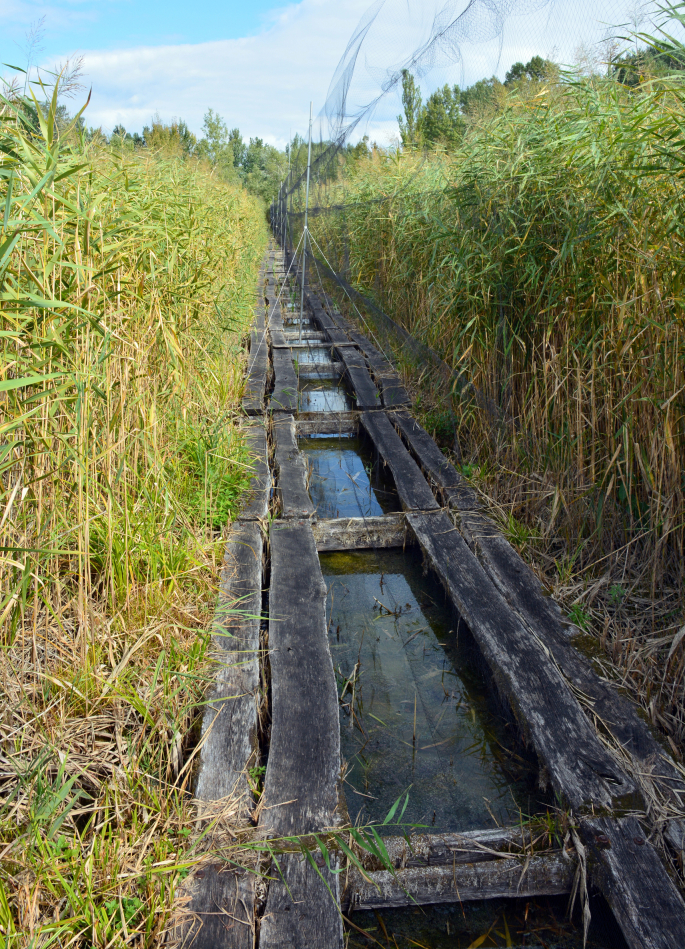 Figure 7
 Figure 8
 Figure 9
 Figure 10
Peer Reviews
No public reviews on file for this paper yet. If you reviewed it on a platform where reviews are public (OpenReview, ICLR, NeurIPS, ICML), you can paste yours below so the community can read it here.
Videos
No videos yet. Explain this paper in a talk, walkthrough, or lecture? Add one.
Taxonomy
TopicsBird parasitology and diseases · Vector-borne infectious diseases · Study of Mite Species