Myriapods (Diplopoda and Chilopoda): medical aspects of envenomations
Vidal Haddad, Ariadne Mendes Vidal Haddad, João Pedro Barreiros

TL;DR
This paper discusses the medical effects of myriapods, such as millipedes and centipedes, and their impact on human health through contact or venom.
Contribution
The paper highlights the medical importance of Diplopoda and Chilopoda classes in human health and their clinical manifestations.
Findings
Millipedes (Diplopoda) cause poisoning through skin and mucous membrane contact.
Centipedes (Chilopoda) cause painful envenomation through stings.
Clinical manifestations of myriapod injuries are typical and relevant in domestic settings.
Abstract
The Subphylum Myriapoda is part of the Phylum Arthropoda, and has two Classes related to human medicine. The Diplopoda Class comprises the Millipedes that poison through contact of their toxins with the skin and mucous membranes. The Chilopoda Class, the Centipedes are venomous animals that cause painful envenomation through stings. The clinical manifestations of human injuries caused by myriapods are typical. Because of the frequency with which these animals are found in domestic environments, it is important that this information be transmitted to medical teams and the general population.
Genes, proteins, chemicals, diseases, species, mutations and cell lines named across the full text — each resolved to its canonical identifier and authoritative record.
Click any figure to enlarge with its caption.
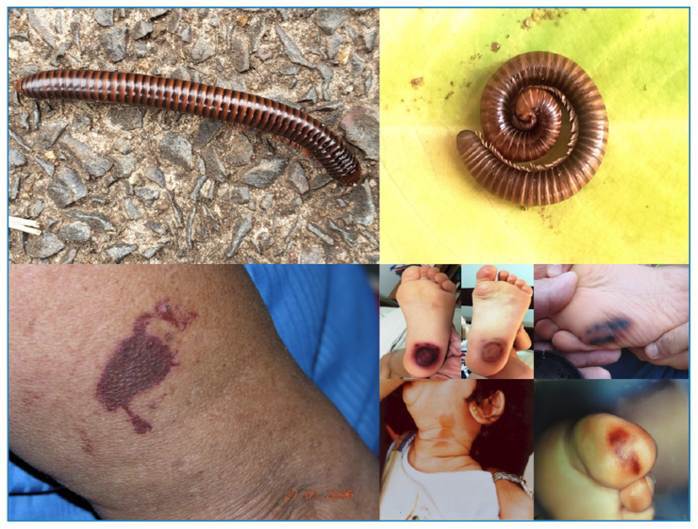 Figure 1
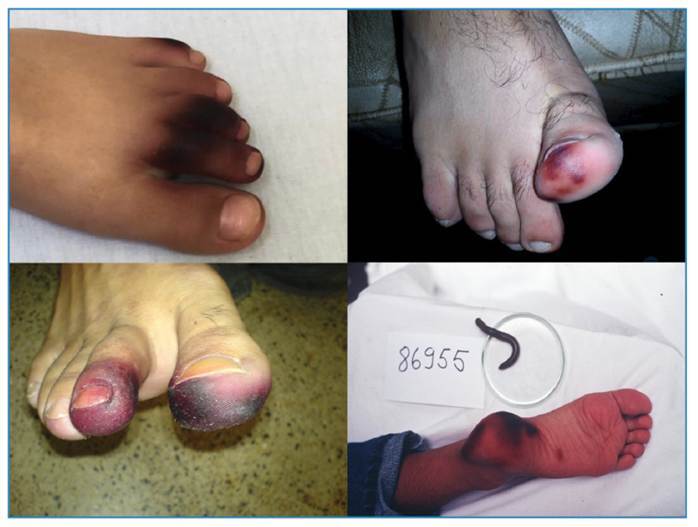 Figure 2
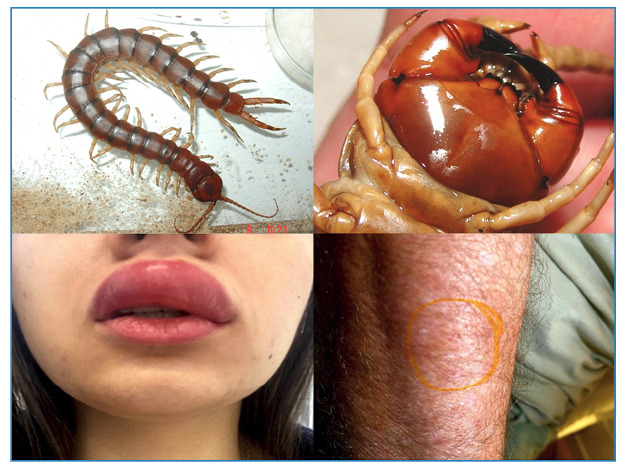 Figure 3
Peer Reviews
No public reviews on file for this paper yet. If you reviewed it on a platform where reviews are public (OpenReview, ICLR, NeurIPS, ICML), you can paste yours below so the community can read it here.
Videos
No videos yet. Explain this paper in a talk, walkthrough, or lecture? Add one.
Taxonomy
TopicsVenomous Animal Envenomation and Studies · Insect and Pesticide Research · Beetle Biology and Toxicology Studies