De Novo-Designed APC/C Inhibitors Provide a Rationale for Targeting RING-Type E3 Ubiquitin Ligases
Gloria Ruiz-Gómez, Alena Uvizl, Gabor Bakos, Jacky K. Leung, M. Teresa Pisabarro, Jörg Mansfeld

TL;DR
Scientists designed new inhibitors for a type of enzyme involved in disease, showing they can be targeted effectively.
Contribution
A pharmacophore-based strategy for designing RING domain inhibitors, validated with APC/C inhibition.
Findings
Designed peptidomimetics that bind and inhibit APC/C RING domains in vitro.
Optimized molecules show chemical stability, permeability, and specificity for APC/C inhibition in cancer cells.
Results support targeting RING-type E3 ubiquitin ligases as a viable therapeutic strategy.
Abstract
The ubiquitin system represents an attractive pharmacological target for numerous pathological processes, including cancer and neurodegeneration. RING domain-containing E3 ubiquitin ligases constitute the largest class of ubiquitin enzymes, providing a scaffold for substrate recognition and catalysis. Their shallow groove recognition interfaces involving discontinuous epitopes and a lack of defined binding pockets have largely rendered them undruggable. Inspired by natural RING inhibitors, we have developed a pharmacophore-based strategy for the rational design of peptidomimetics targeting RING domains, and we demonstrate its feasibility by using the macromolecular APC/C complex (anaphase-promoting complex/cyclosome). We designed scaffolds binding to the APC/C RING domain and efficiently inhibiting its activity in vitro. Iterative structure-based design and experimental studies to…
Genes, proteins, chemicals, diseases, species, mutations and cell lines named across the full text — each resolved to its canonical identifier and authoritative record.
Click any figure to enlarge with its caption.
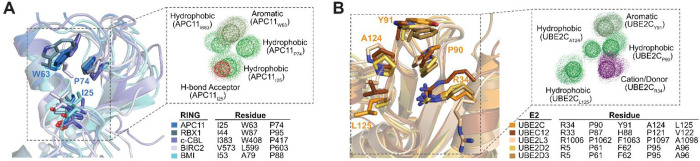 Figure 1
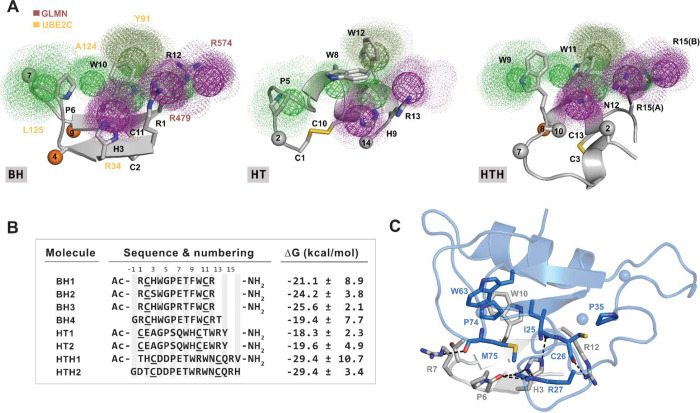 Figure 2
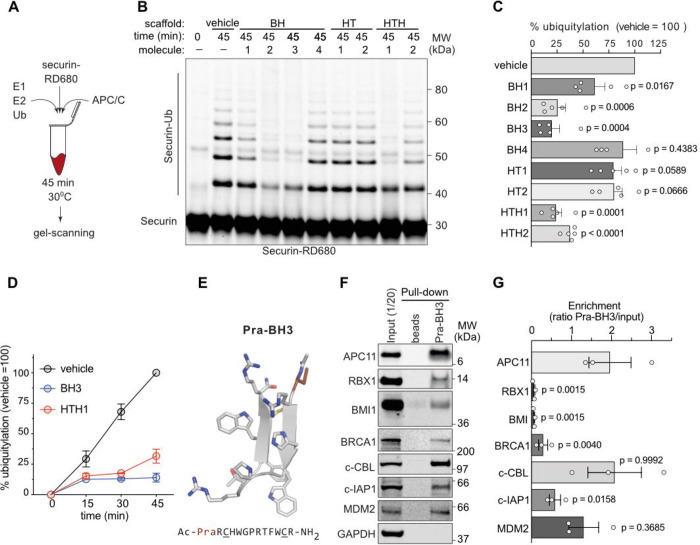 Figure 3
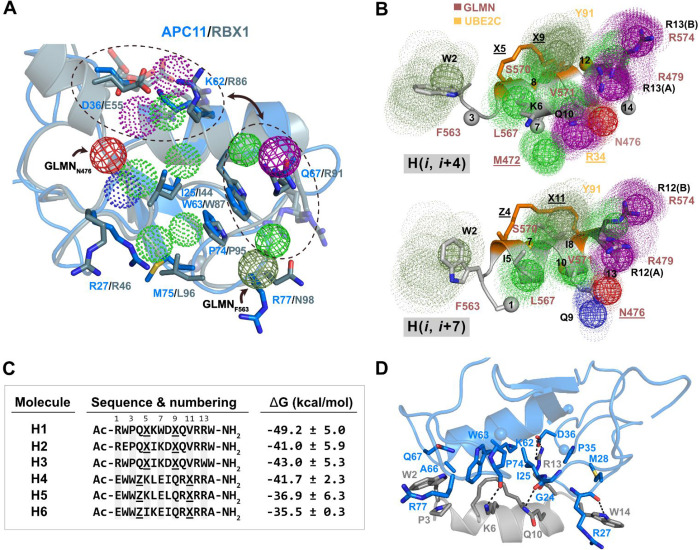 Figure 4
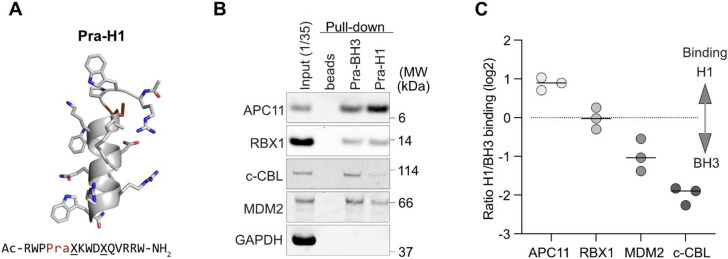 Figure 5
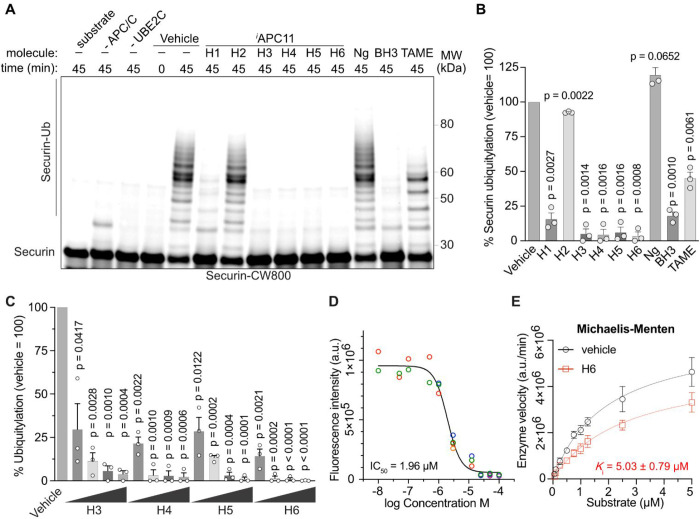 Figure 6
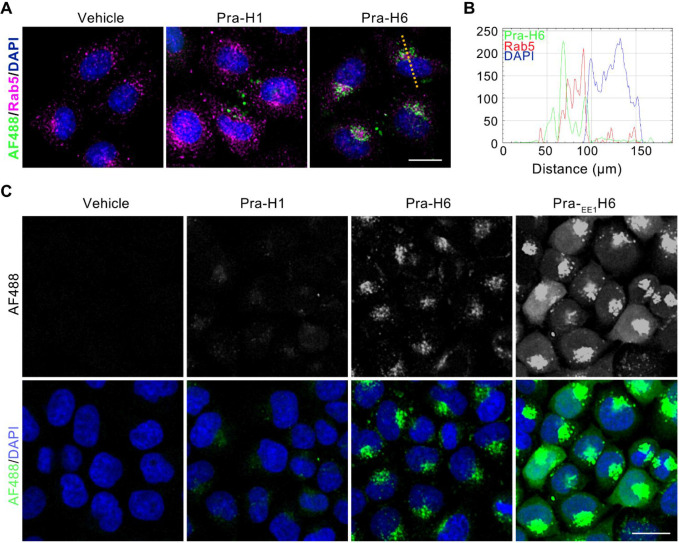 Figure 7
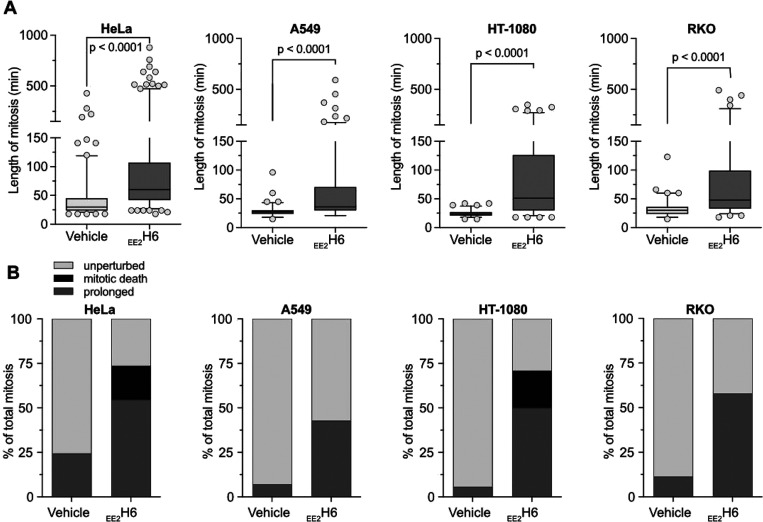 Figure 8
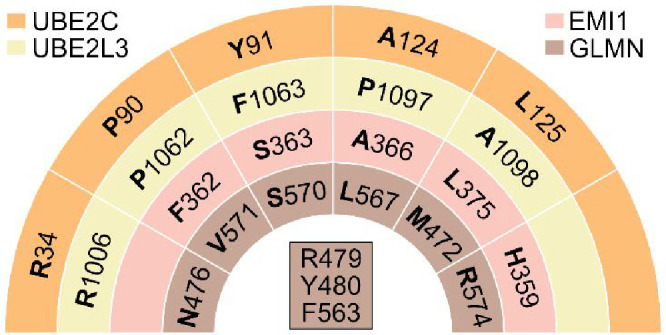 Figure 9
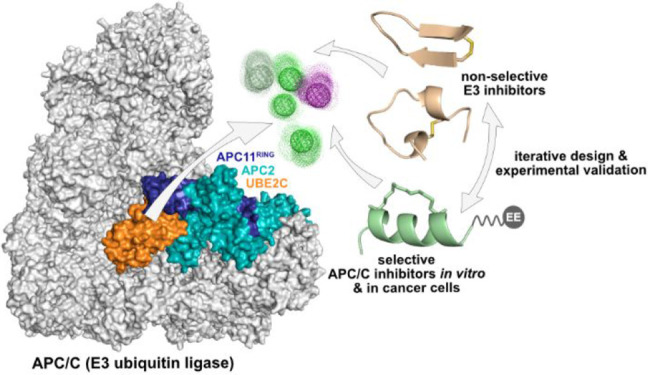 Figure 10
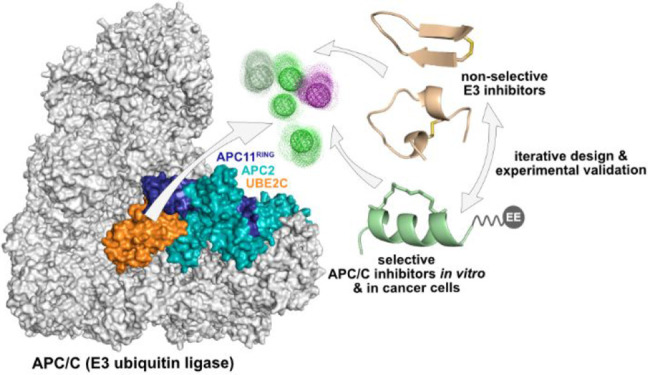 Figure 11
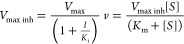 Figure 12
Peer Reviews
No public reviews on file for this paper yet. If you reviewed it on a platform where reviews are public (OpenReview, ICLR, NeurIPS, ICML), you can paste yours below so the community can read it here.
Videos
No videos yet. Explain this paper in a talk, walkthrough, or lecture? Add one.
Taxonomy
TopicsUbiquitin and proteasome pathways · Protein Degradation and Inhibitors · Cancer-related Molecular Pathways