Investigation of Methionine Metabolism in Coccolithophore by In Situ Light-Coupled Nuclear Magnetic Resonance Spectroscopy
Yi-Shan Wu, Li-Kang Chu, Tsyr-Yan Yu

TL;DR
This study uses a new NMR method to track methionine metabolism in coccolithophores under different environmental conditions, revealing how stress affects sulfur-related processes.
Contribution
A novel in situ light-coupled NMR setup is introduced to directly monitor methionine metabolism in coccolithophores under varying environmental conditions.
Findings
Coccolithophores convert methionine into MTOB, which is secreted, while DMSP remains intracellular.
Elevated temperatures and darkness increase methionine consumption but reduce its conversion into MTOB and protein incorporation.
Seawater acidification has minimal impact on methionine metabolism in coccolithophores.
Abstract
Coccolithophores play critical roles in global carbon and sulfur cycles. They contribute to the carbon cycle through photosynthesis and calcification and the sulfur cycle by producing dimethylsulfoniopropionate (DMSP). Despite their ecological importance, the details and dynamics of methionine metabolism in coccolithophores are poorly understood. Here, we introduce an in situ light-coupled nuclear magnetic resonance (NMR) spectroscopy setup to monitor methionine metabolism directly in coccolithophore cultures under varying environmental conditions. Combining in situ light-coupled NMR spectroscopy and 13C magic angle spinning (MAS) spectroscopy, we observed that coccolithophores can take up methionine and convert it into 4-methylthio-2-oxobutyrate (MTOB), which is subsequently secreted into the culture medium, while DMSP was detected only intracellularly. Furthermore, environmental…
Genes, proteins, chemicals, diseases, species, mutations and cell lines named across the full text — each resolved to its canonical identifier and authoritative record.
Click any figure to enlarge with its caption.
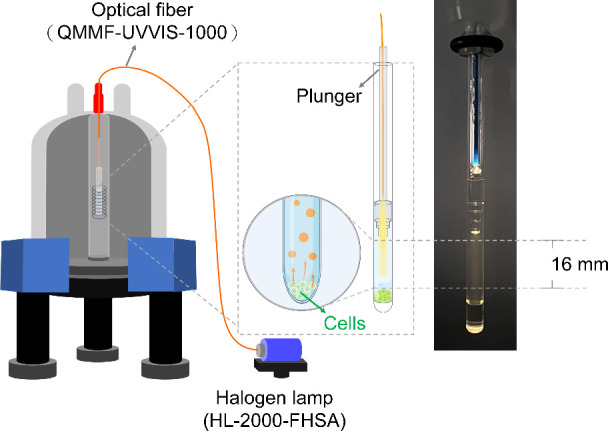 Figure 1
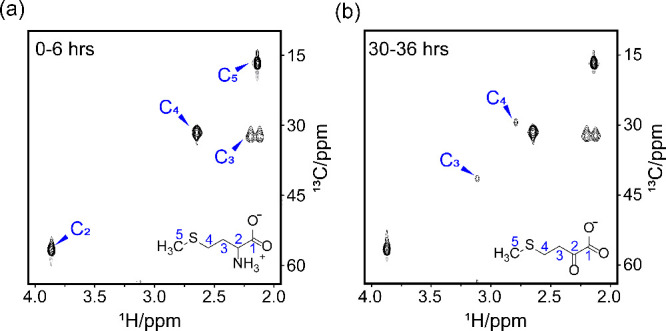 Figure 2
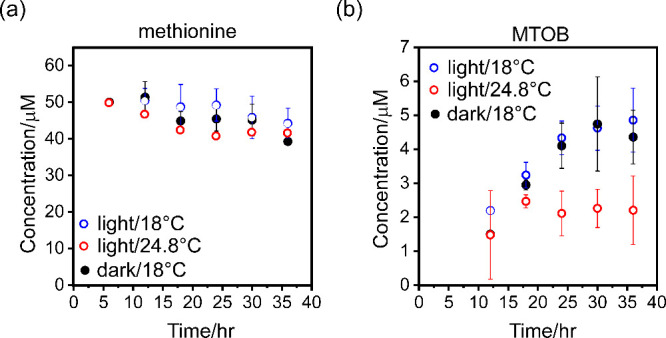 Figure 3
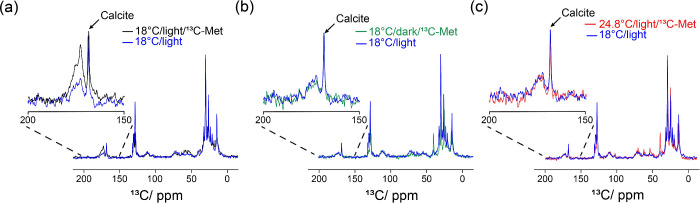 Figure 4
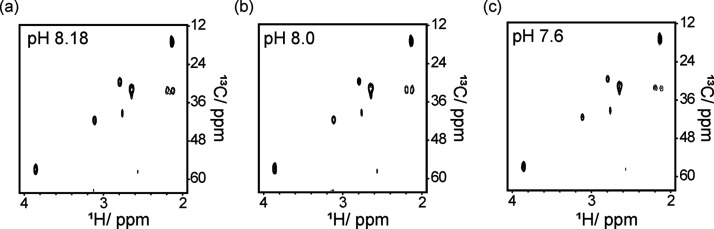 Figure 5
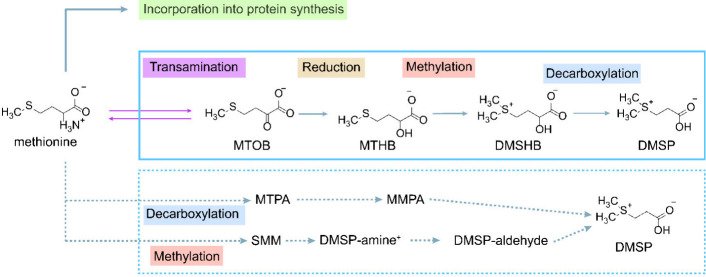 Figure 6
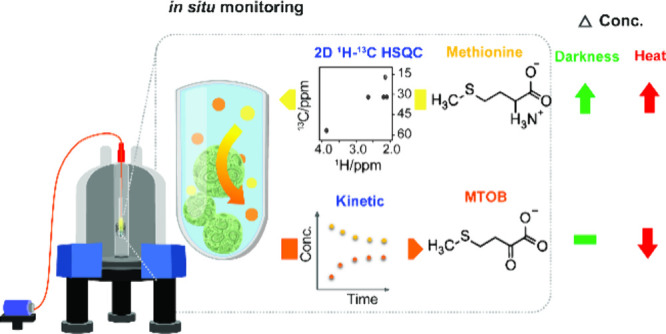 Figure 7
 Figure 8
Peer Reviews
No public reviews on file for this paper yet. If you reviewed it on a platform where reviews are public (OpenReview, ICLR, NeurIPS, ICML), you can paste yours below so the community can read it here.
Videos
No videos yet. Explain this paper in a talk, walkthrough, or lecture? Add one.
Taxonomy
TopicsSulfur Compounds in Biology · Advanced NMR Techniques and Applications · Isotope Analysis in Ecology