Lumbar Disc Degeneration and Vertebral Fracture at the Thoracolumbar Junction Are Risk Factors for Chronic Low Back Pain With Disability: Seven Years’ Follow-Up of the Wakayama Spine Study
Naomi Iwane, Hiroshi Hashizume, Shizumasa Murata, Kanae Mure, Hiroyuki Oka, Toshiko Iidaka, Masatoshi Teraguchi, Keiji Nagata, Yuyu Ishimoto, Masanari Takami, Shunji Tsutsui, Hiroshi Iwasaki, Sakae Tanaka, Hiroshi Yamada, Noriko Yoshimura

TL;DR
This study found that certain spinal changes, like disc degeneration and vertebral fractures, increase the risk of chronic low back pain with disability over seven years in older Japanese adults.
Contribution
The study identifies specific MRI-detected spinal changes as independent predictors of disabling chronic low back pain in a general Japanese population.
Findings
Lumbar disc degeneration and vertebral fractures at the thoracolumbar junction are significant risk factors for chronic low back pain with disability.
Older age, female sex, and higher BMI are also independently associated with disabling chronic low back pain.
Comprehensive MRI-based spinal assessment is important for identifying high-risk individuals for early intervention.
Abstract
Introduction Low back pain (LBP) is the leading cause of disability worldwide, with its burden increasing in aging societies such as Japan. Although degenerative spinal changes like lumbar disc degeneration (DD), vertebral fractures, and lumbar spinal stenosis (LSS) are frequently identified on MRI, their combined longitudinal impact on disabling chronic low back pain (DCLBP) remains unclear. The aim of this study was to identify baseline MRI-detected lumbar spinal changes that independently predict disabling chronic low back pain in a general Japanese population. Methods This population-based longitudinal study included 663 community-dwelling Japanese adults from the Wakayama Spine Study, a sub-cohort of the nationwide Research on Osteoarthritis/Osteoporosis Against Disability (ROAD) study. Baseline whole-spine MRI and clinical assessments were conducted between 2008 and 2009, with…
Genes, proteins, chemicals, diseases, species, mutations and cell lines named across the full text — each resolved to its canonical identifier and authoritative record.
Click any figure to enlarge with its caption.
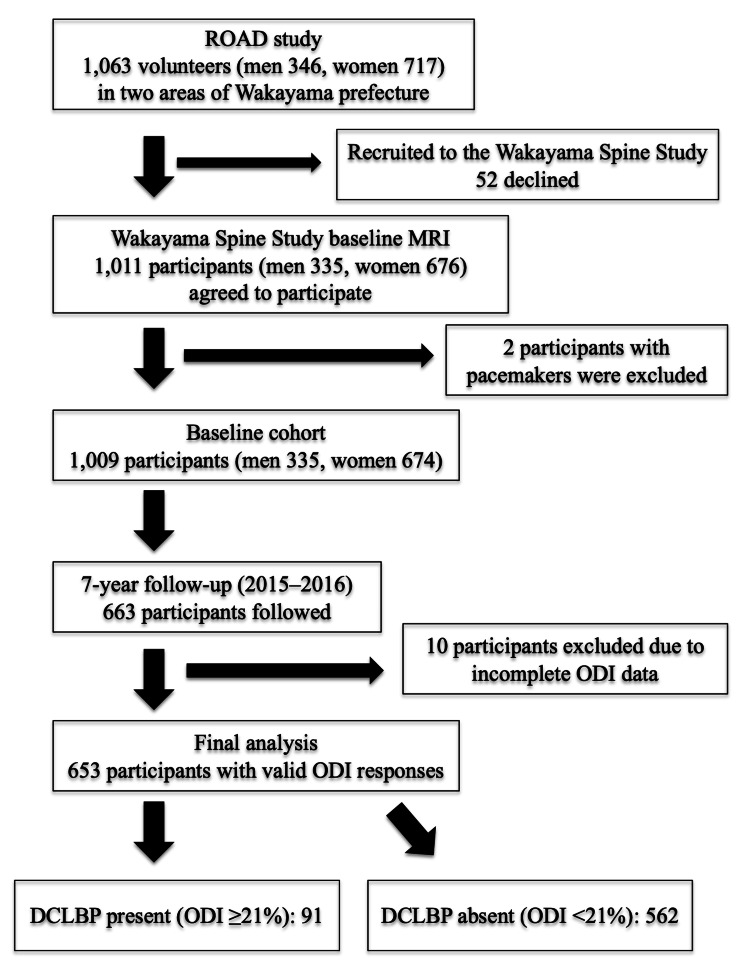 Figure 1
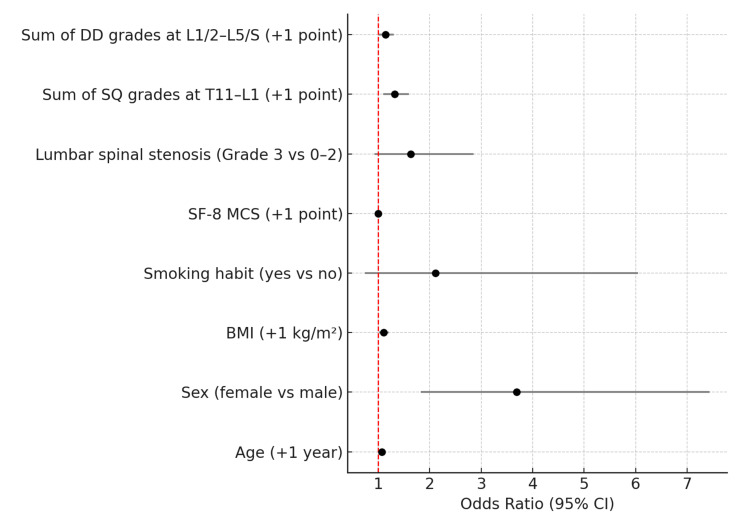 Figure 2
Peer Reviews
No public reviews on file for this paper yet. If you reviewed it on a platform where reviews are public (OpenReview, ICLR, NeurIPS, ICML), you can paste yours below so the community can read it here.
Videos
No videos yet. Explain this paper in a talk, walkthrough, or lecture? Add one.
Taxonomy
TopicsMusculoskeletal pain and rehabilitation · Spine and Intervertebral Disc Pathology · Medical Imaging and Analysis