Graph attention networks based multi-agent path finding via temporal-spatial information aggregation
Qingling Zhang, Peng Wang, Cui Ni, Xianchang Liu

TL;DR
This paper introduces a new method for multi-agent path finding using graph attention networks to improve performance and scalability in complex environments.
Contribution
A novel temporal-spatial information aggregation approach using GAT and GRU-CNN for multi-agent path finding is proposed.
Findings
The proposed method improves accuracy and time efficiency by 24.5%, 47%, and 37.5%, 73% over GNN and GAT.
Performance enhancements are more significant in larger maps, demonstrating scalability.
GAT-based inter-agent communication effectively addresses partial observability issues.
Abstract
An effective Multi-Agent Path Finding (MAPF) algorithm must efficiently plan paths for multiple agents while adhering to constraints, ensuring safe navigation from start to goal. However, due to partial observability, agents often struggle to determine optimal strategies. Thus, developing a robust information fusion method is crucial for addressing these challenges. Information fusion expands the observation range of each agent, thereby enhancing the overall performance of the MAPF system. This paper explores a fusion approach in both temporal and spatial dimensions based on Graph Attention Networks (GAT). Since MAPF is a long-horizon, continuous task, leveraging historical observation dependencies is key for predicting future actions. Initially, historical observations are fused by incorporating a Gated Recurrent Unit (GRU) with a Convolutional Neural Network (CNN), extracting local…
Genes, proteins, chemicals, diseases, species, mutations and cell lines named across the full text — each resolved to its canonical identifier and authoritative record.
Click any figure to enlarge with its caption.
 Figure 1
 Figure 2
 Figure 3
 Figure 4
 Figure 5
 Figure 6
 Figure 7
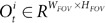 Figure 8
 Figure 9
 Figure 10
 Figure 11
 Figure 12
 Figure 13
 Figure 14
 Figure 15
 Figure 16
 Figure 17
 Figure 18
 Figure 19
 Figure 20
 Figure 21
 Figure 22
 Figure 23
 Figure 24
 Figure 25
 Figure 26
 Figure 27
 Figure 28
 Figure 29
 Figure 30
 Figure 31
 Figure 32
 Figure 33
 Figure 34
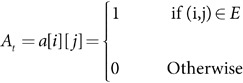 Figure 35
 Figure 36
 Figure 37
 Figure 38
 Figure 39
 Figure 40
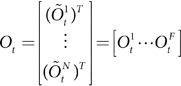 Figure 41
 Figure 42
 Figure 43
 Figure 44
 Figure 45
 Figure 46
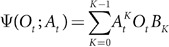 Figure 47
 Figure 48
 Figure 49
 Figure 50
Peer Reviews
No public reviews on file for this paper yet. If you reviewed it on a platform where reviews are public (OpenReview, ICLR, NeurIPS, ICML), you can paste yours below so the community can read it here.
Videos
No videos yet. Explain this paper in a talk, walkthrough, or lecture? Add one.
Taxonomy
TopicsRobotic Path Planning Algorithms · Multimodal Machine Learning Applications · Autonomous Vehicle Technology and Safety