Advances in the Structural Basis of GluN2A-Selective Negative Allosteric Modulators
Yinlong Li, Hongjie Yuan, Steven H. Liang

TL;DR
This paper explores the structural basis of drugs that selectively target GluN2A subunits of NMDA receptors, which are important for brain function and disease.
Contribution
The paper presents new insights into structural modifications that improve the pharmacological properties of GluN2A-selective negative allosteric modulators.
Findings
Structure–activity relationship studies reveal key modifications for enhancing drug selectivity and efficacy.
GluN2A-selective NAMs show promise for treating neuropathological conditions.
GluN1/GluN2A receptors are primarily expressed in the adult brain and are linked to various CNS disorders.
Abstract
N-Methyl-d-aspartate receptors (NMDARs) are ligand-gated ion channels that play a critical role in synaptic plasticity, learning, and memory in the central nervous system (CNS). These receptors assemble into functionally diverse complexes composed of GluN1, GluN2, and GluN3 subunits. Among them, GluN1/GluN2A is expressed predominantly in adult brain, and its dysfunction has been implicated in various neuropathological conditions. Recent advances have identified several GluN2A-targeted agents, including highly selective negative allosteric modulators (NAMs). Structure–activity relationship (SAR) studies of existing agents have provided valuable insights into structural modifications that enhance pharmacological properties, offering promising avenues for therapeutic development.
Genes, proteins, chemicals, diseases, species, mutations and cell lines named across the full text — each resolved to its canonical identifier and authoritative record.
Click any figure to enlarge with its caption.
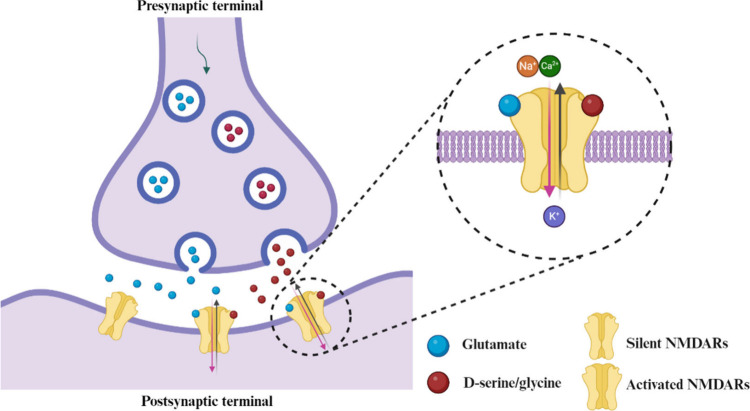 Figure 1
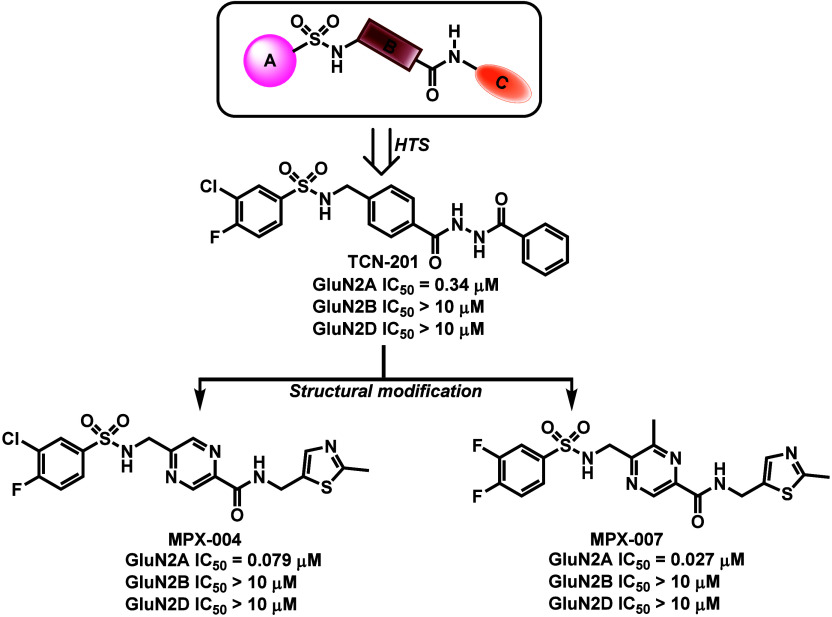 Figure 2
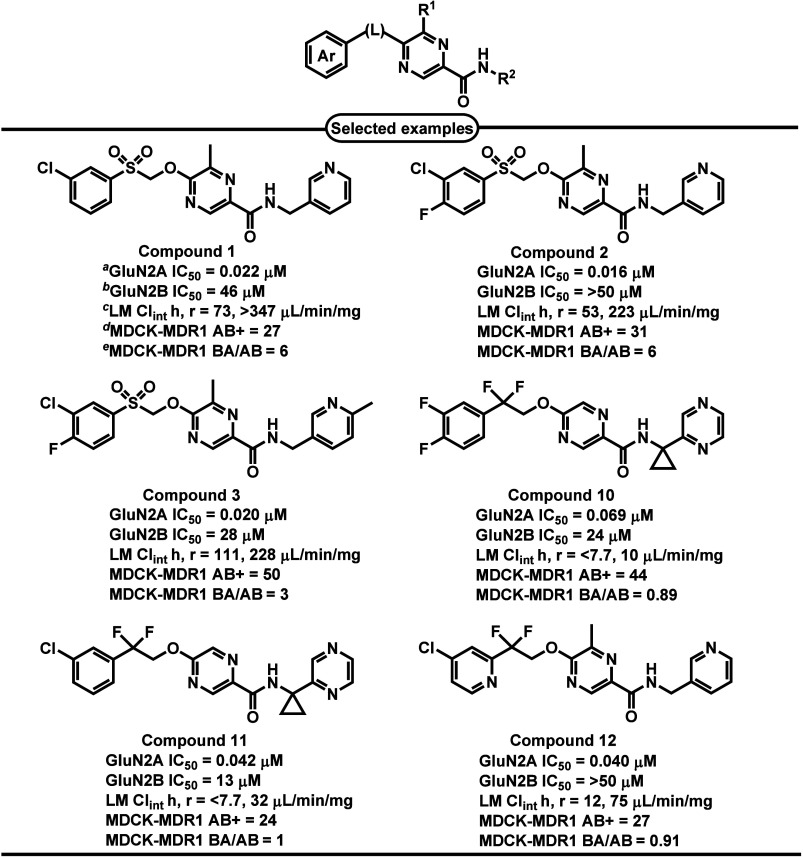 Figure 3
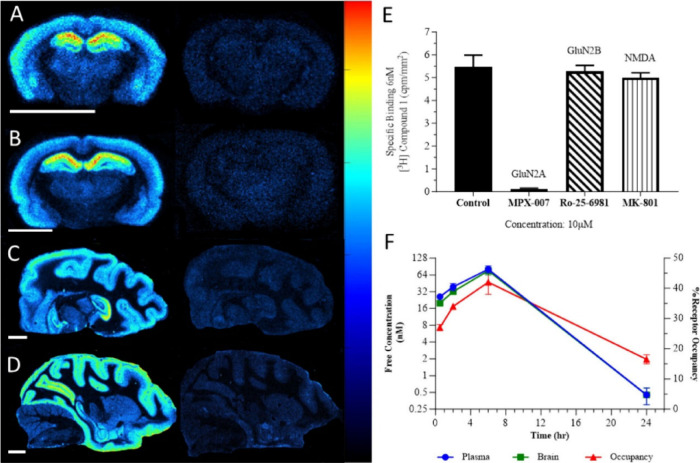 Figure 4
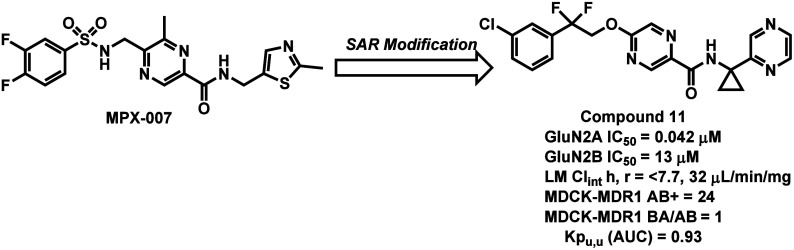 Figure 5
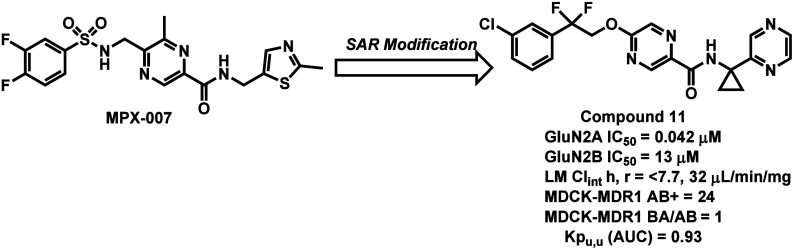 Figure 6
Peer Reviews
No public reviews on file for this paper yet. If you reviewed it on a platform where reviews are public (OpenReview, ICLR, NeurIPS, ICML), you can paste yours below so the community can read it here.
Videos
No videos yet. Explain this paper in a talk, walkthrough, or lecture? Add one.
Taxonomy
TopicsNeuroscience and Neuropharmacology Research · Molecular Sensors and Ion Detection · Chemical Synthesis and Analysis