Probable Cerebral Amyloid Angiopathy-Related Inflammation Presenting as an Incidental MRI Finding in an Elderly Patient: A Case Report
Tatsuya Tanaka, Takashi Muto, Taku Goto, Shiki Nakayama, Akira Matsuno

TL;DR
An elderly woman with no symptoms had MRI findings suggesting CAA-ri, which later led to neurological decline, highlighting the need for early intervention.
Contribution
This case report highlights the risk of progression in asymptomatic CAA-ri and advocates for timely intervention.
Findings
MRI findings consistent with CAA-ri were present in an asymptomatic elderly patient.
Neurological deterioration occurred despite initial lack of symptoms.
Follow-up MRI showed resolution of edema but progression of atrophy.
Abstract
Cerebral amyloid angiopathy-related inflammation (CAA-ri) is a rare but treatable cause of subacute cognitive decline and neurological dysfunction, particularly in the elderly. We report the case of an 88-year-old woman with mild dementia who was independent in her activities of daily living. She presented after minor head trauma, and brain MRI revealed multiple cerebral microbleeds in the bilateral cortices, cerebellum, and thalamus, along with diffuse fluid-attenuated inversion recovery (FLAIR) hyperintensities, suggestive of probable CAA-ri. Given the absence of symptoms, a strategy of close observation was initially adopted. However, two months later, she developed decreased appetite and gait instability, followed by a transient loss of consciousness at three months, necessitating hospitalization. During admission, she subsequently developed disuse syndrome, resulting in discharge…
Genes, proteins, chemicals, diseases, species, mutations and cell lines named across the full text — each resolved to its canonical identifier and authoritative record.
Click any figure to enlarge with its caption.
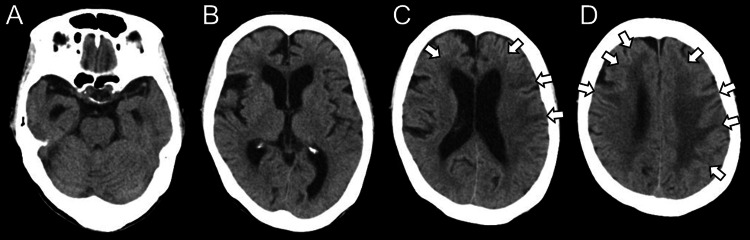 Figure 1
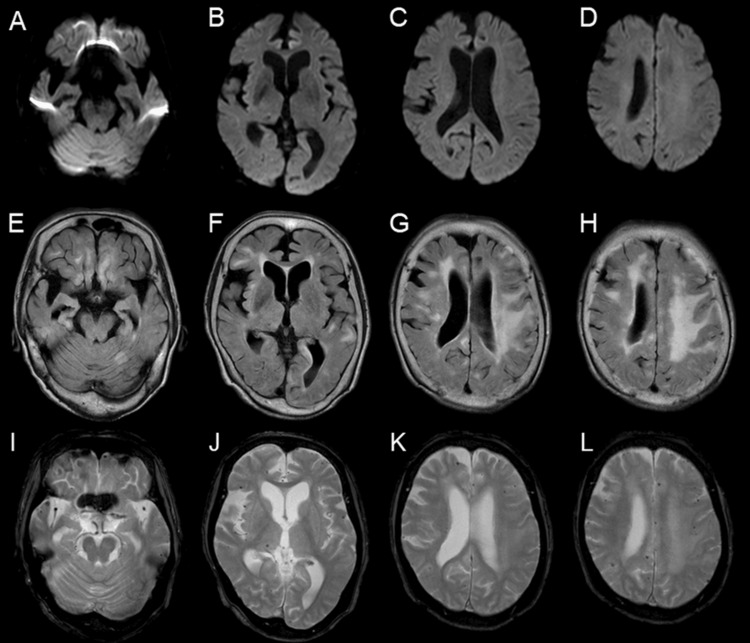 Figure 2
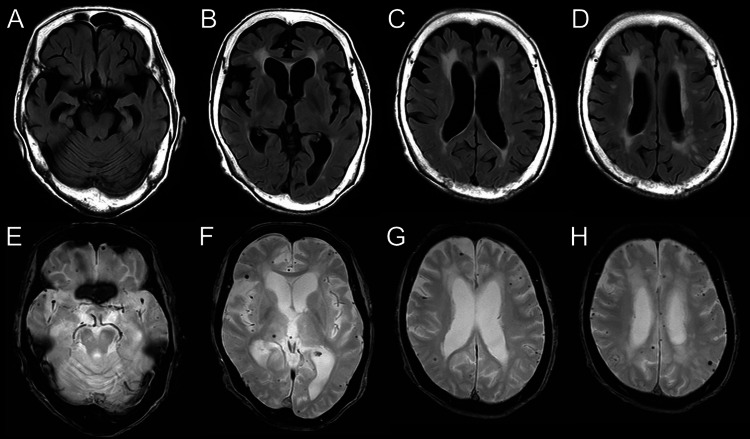 Figure 3
Peer Reviews
No public reviews on file for this paper yet. If you reviewed it on a platform where reviews are public (OpenReview, ICLR, NeurIPS, ICML), you can paste yours below so the community can read it here.
Videos
No videos yet. Explain this paper in a talk, walkthrough, or lecture? Add one.
Taxonomy
TopicsIntracerebral and Subarachnoid Hemorrhage Research · Cerebrovascular and genetic disorders · Alzheimer's disease research and treatments