Low Relative Sit‐to‐Stand Power Is Associated With the Development of Adverse Health Outcomes: A 5‐Year Longitudinal Study
Mikel Garcia‐Aguirre, Ivan Baltasar‐Fernandez, Julian Alcazar, Ana Alfaro‐Acha, F. A. Bareiro‐Quiñonez, Ignacio Ara, Leocadio Rodriguez‐Mañas, Francisco J. Garcia‐Garcia, Luis M. Alegre

TL;DR
Low sit-to-stand power in older adults is linked to worse health outcomes like frailty and disability over five years.
Contribution
This study shows that low relative sit-to-stand power predicts future adverse health outcomes in older adults.
Findings
Low STS power at baseline was associated with higher frailty and disability scores.
Participants with low STS power had a higher risk of developing frailty and disability over five years.
Low STS power also predicted increased medication use during follow-up.
Abstract
Relative sit‐to‐stand (STS) power has emerged as a key biomarker of aging due to its strong association with adverse health outcomes such as frailty or disability. Thus, this study aimed to evaluate the association between low baseline relative STS power with the development of adverse health outcomes. A total of 839 community‐dwelling older adults (65–91 years; 42% men) from the Toledo Study for Healthy Aging were assessed at baseline and after 5 years of follow‐up. Relative STS power was assessed using the 30‐s STS test and Alcazar's equation. Adverse conditions considered encompassed frailty (evaluated using the frailty trait scale 5 [FTS5] or frailty phenotype [FP]), disability in basic (BADL; Barthel index) and instrumental activities of daily living (IADL; Lawton and Brody scale), cognitive impairment (mini‐mental state examination), depression (geriatric depression scale) and…
Genes, proteins, chemicals, diseases, species, mutations and cell lines named across the full text — each resolved to its canonical identifier and authoritative record.
Click any figure to enlarge with its caption.
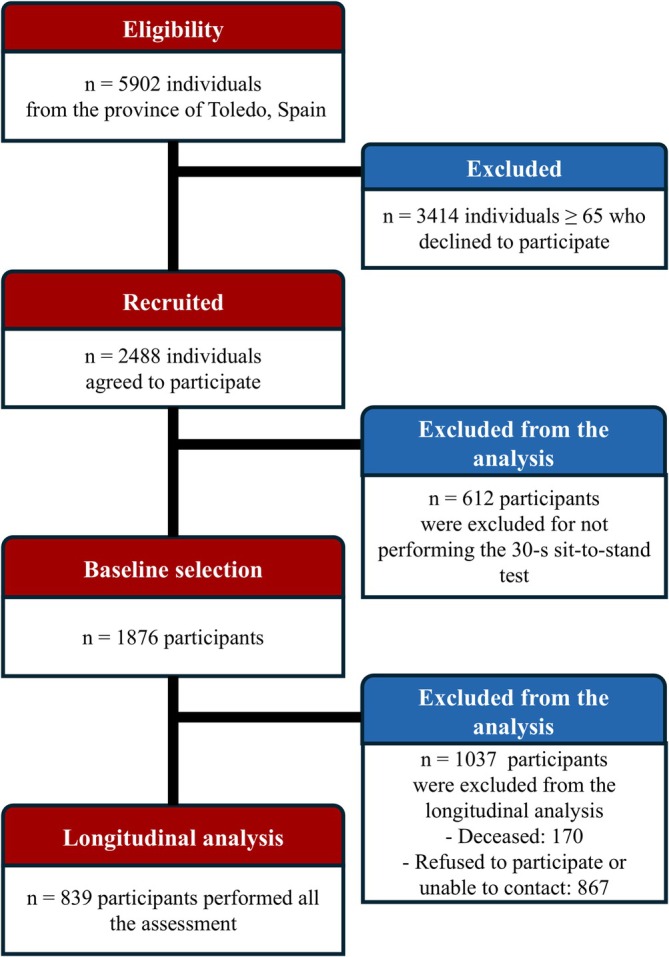 Figure 1
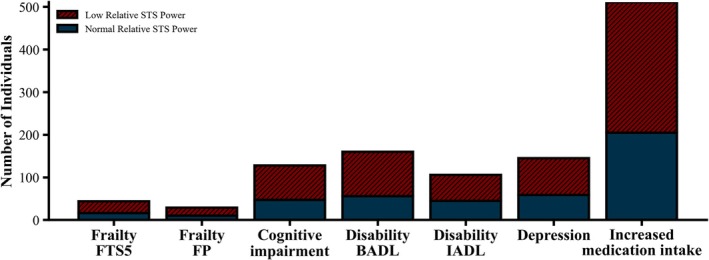 Figure 2
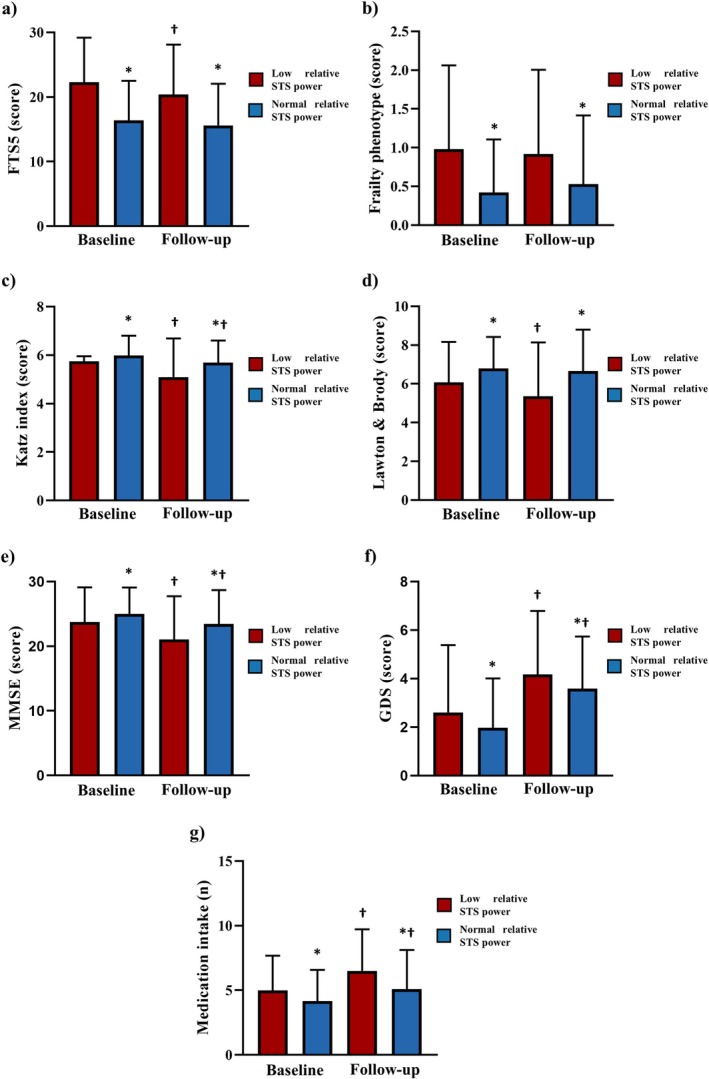 Figure 3
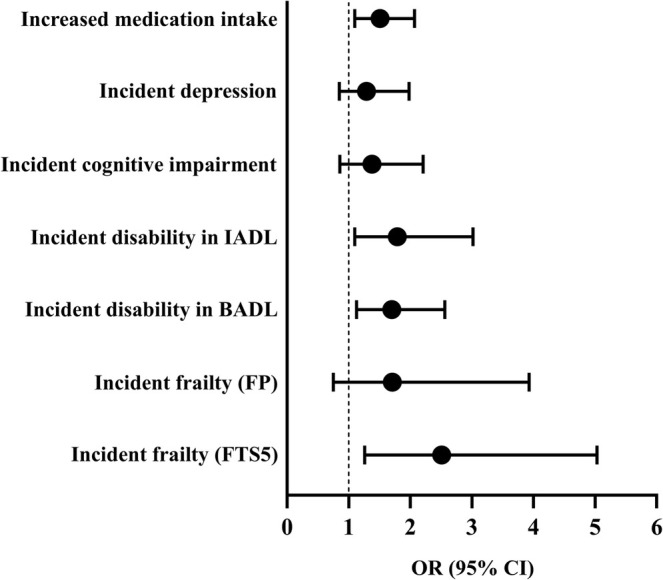 Figure 4
Peer Reviews
No public reviews on file for this paper yet. If you reviewed it on a platform where reviews are public (OpenReview, ICLR, NeurIPS, ICML), you can paste yours below so the community can read it here.
Videos
No videos yet. Explain this paper in a talk, walkthrough, or lecture? Add one.
Taxonomy
TopicsFrailty in Older Adults · Nutrition and Health in Aging · Health disparities and outcomes