Middle East Pain Registry (MEPAIN): Feasibility Study of Chronic Pain Registry and Pilot Phase Results: Middle East Pain Registry (MEPAIN)
Habib Zakeri, Mohammad Radmehr, Aliasghar Karimi, Leala Montazeri, Pegah Pedramfard, Parisa Mahdiyar, Farnaz Hemati, Atiyeh Ebrahimi, Sogand Sadeghi, Saba Moalemi

TL;DR
The MEPAIN registry collects chronic pain data in the Middle East, showing it's feasible and revealing regional differences in pain conditions and treatments.
Contribution
The study introduces a new chronic pain registry tailored for the Middle East, demonstrating its feasibility and initial clinical insights.
Findings
3,903 patients were enrolled in the six-month pilot, with lumbar radiculopathy being the most common diagnosis.
Iranians reported higher pain intensity during exacerbations, while Omanis had a higher prevalence of specific conditions like discogenic pain.
Transforaminal epidural steroid injection was the most frequently performed procedure in the registry.
Abstract
Chronic pain is a significant public health concern due to its long-term disabling effects. To support systematic data collection and improve patient management, the Middle East Pain Registry (MEPAIN) was developed. This study outlines the registry’s design, evaluates its feasibility, and presents initial findings from its pilot phase. MEPAIN was launched on July 21, 2024, with data collected via the Zigorat® software platform through January 22, 2025 for this pilot study. Each patient record included demographic details, pain characteristics (pattern, location, intensity), physical exam findings, imaging results, diagnoses, interventions, and follow-up data. A total of 3,903 patients were registered during the six-month pilot. The cohort was 59.5% female, with a mean age of 53.5 ± 14.8 years; 50.2% were Iranian and 49.5% Omani. Lumbar radiculopathy was the most frequent diagnosis.…
Genes, proteins, chemicals, diseases, species, mutations and cell lines named across the full text — each resolved to its canonical identifier and authoritative record.
Click any figure to enlarge with its caption.
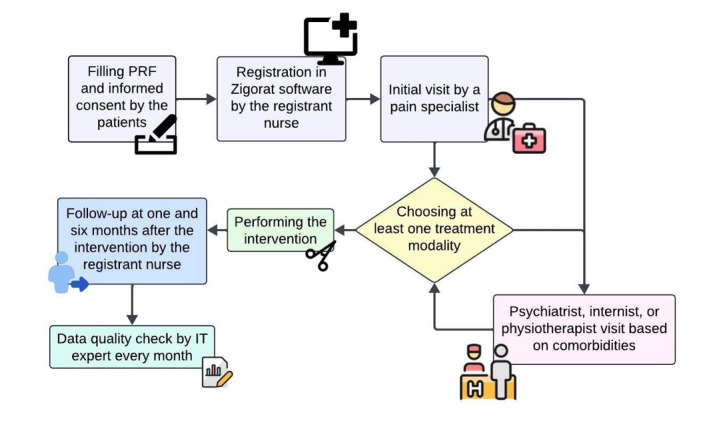 Figure 1
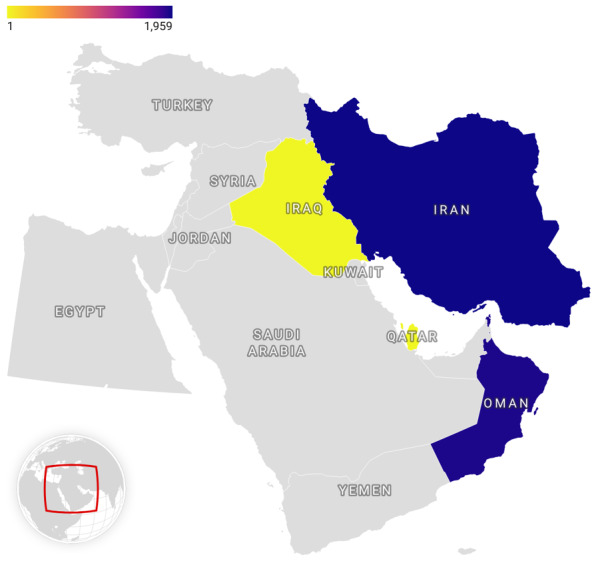 Figure 2
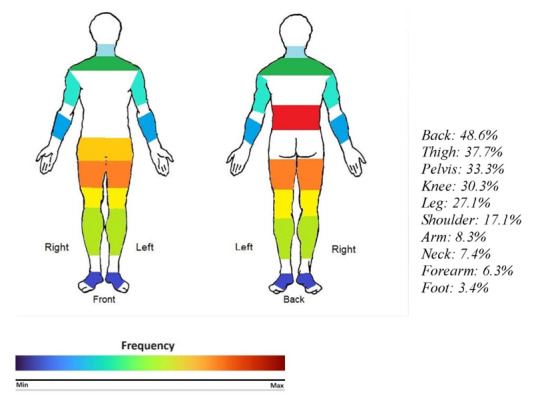 Figure 3
Peer Reviews
No public reviews on file for this paper yet. If you reviewed it on a platform where reviews are public (OpenReview, ICLR, NeurIPS, ICML), you can paste yours below so the community can read it here.
Videos
No videos yet. Explain this paper in a talk, walkthrough, or lecture? Add one.
Taxonomy
TopicsMusculoskeletal pain and rehabilitation · Pain Management and Opioid Use · Diabetic Foot Ulcer Assessment and Management