In Vitro Comparison of Two Python‐Based Programs for the Automated Analysis of Tight‐Junction Phenotype in Brain Endothelium During Bacterial Infection
Henry D. Mauser, Janessa Caroza, Shane Nicole Homez, Alyssa S. Arnett, William D. Cutts, Daryl W. Lam, Justin Thornton, Walter Adams, Brandon J. Kim

TL;DR
This study compares two Python-based programs for analyzing tight junctions in brain endothelial cells during bacterial infection, showing their effectiveness and unique benefits.
Contribution
The study provides a direct comparison of JAnaP and IJOQ for tight junction analysis, highlighting their distinct advantages in different contexts.
Findings
JAnaP and IJOQ both effectively quantify tight junction disruption in brain endothelial cells.
JAnaP provides detailed cellular-level data, while IJOQ reduces user time and bias.
Both programs are suitable for studying blood–brain barrier dysfunction and CNS diseases.
Abstract
Tight junction complexes are crucial features of brain endothelial cells, as they restrict the paracellular route across the blood–brain barrier. Tight junction disruption has been observed in conjunction with numerous diseases of the CNS. In such cases, the organization or integrity of cell–cell junctions may be analyzed with a variety of automated computer programs that quantitatively assess junction images. Here, we directly compare two previously developed python‐based programs—JAnaP and IJOQ— for the semi‐ or fully automated analysis of tight junctions in human stem cell‐derived brain‐like endothelial cells. Cells were infected with S. pneumoniae and S. agalactiae to initiate junction disruption, and occludin and ZO‐1 were analyzed in mock and infected groups via JAnaP and IJOQ. JAnaP and IJOQ both yielded comparable results for the quantification of tight junction disruption in…
Genes, proteins, chemicals, diseases, species, mutations and cell lines named across the full text — each resolved to its canonical identifier and authoritative record.
Click any figure to enlarge with its caption.
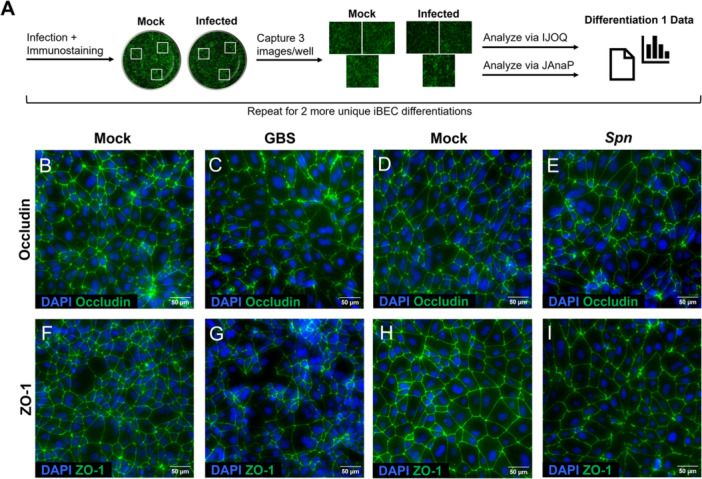 Figure 1
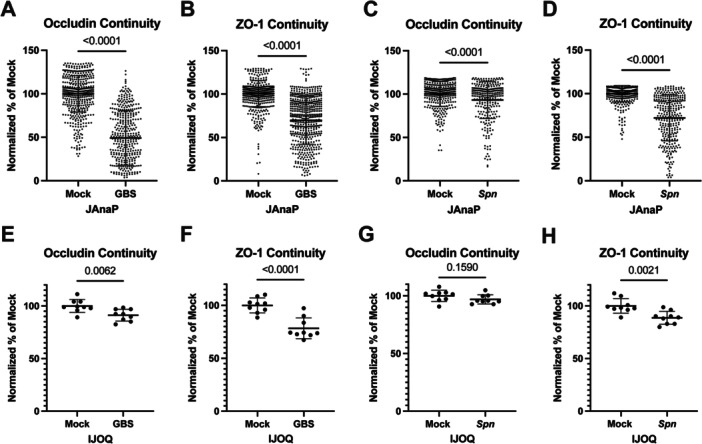 Figure 2
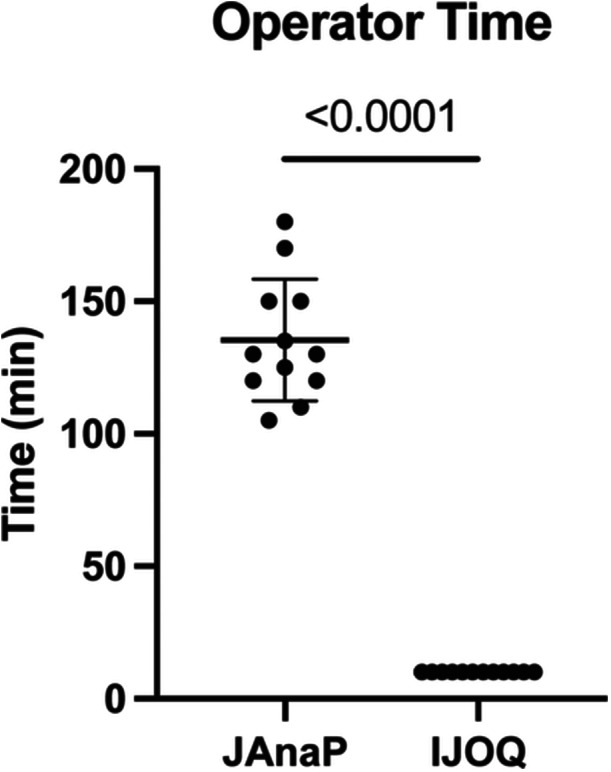 Figure 3
Peer Reviews
No public reviews on file for this paper yet. If you reviewed it on a platform where reviews are public (OpenReview, ICLR, NeurIPS, ICML), you can paste yours below so the community can read it here.
Videos
No videos yet. Explain this paper in a talk, walkthrough, or lecture? Add one.
Taxonomy
TopicsBarrier Structure and Function Studies · Gut microbiota and health · Vibrio bacteria research studies