Comparing Dydrogesterone Versus Medroxyprogesterone in Progestin-Primed Ovarian Stimulation (PPOS) for Patients Undergoing In Vitro Fertilization/Intracytoplasmic Sperm Injection: A Systematic Review
R Muharam, Alisha Nurdya Nurdya, Edward C Yo, Kanadi Sumapraja, Achmad Kemal Harzif, Mila Maidarti, Budi Wiweko, Andon Hestiantoro

TL;DR
This study compares two progestins, Dydrogesterone and Medroxyprogesterone, in fertility treatments and finds both are effective, with Dydrogesterone possibly offering better hormone balance.
Contribution
The study provides a systematic comparison of DYG and MPA in PPOS protocols for IVF/ICSI, highlighting potential hormonal and medication usage differences.
Findings
DYG and MPA both effectively suppress premature LH surges with similar oocyte yield and pregnancy outcomes.
DYG is associated with higher FSH and lower LH levels post-trigger compared to MPA.
DYG may require lower gonadotropin doses than MPA, without compromising pregnancy success.
Abstract
Dydrogesterone (DYG) in the progestin-primed ovarian stimulation (PPOS) protocol is an alternative progestin with weaker pituitary suppression than medroxyprogesterone acetate (MPA) in women with normal ovulation. However, the endocrinological characteristics, oocyte retrieval, and pregnancy outcomes of DYG in PPOS patients undergoing in vitro fertilization (IVF) remain unclear. This systematic review aimed to compare the efficacy of DYG and MPA in PPOS protocols in IVF/intracytoplasmic sperm injection (ICSI) cycles. Studies published between 2018 and 2024 were identified through PubMed and the Cochrane Library. After screening and applying the eligibility criteria, only full-text articles directly comparing DYG and MPA in PPOS protocols for IVF/ICSI were included. A total of three studies involving 1,172 patients were analyzed. Both DYG and MPA effectively suppressed premature…
Genes, proteins, chemicals, diseases, species, mutations and cell lines named across the full text — each resolved to its canonical identifier and authoritative record.
Click any figure to enlarge with its caption.
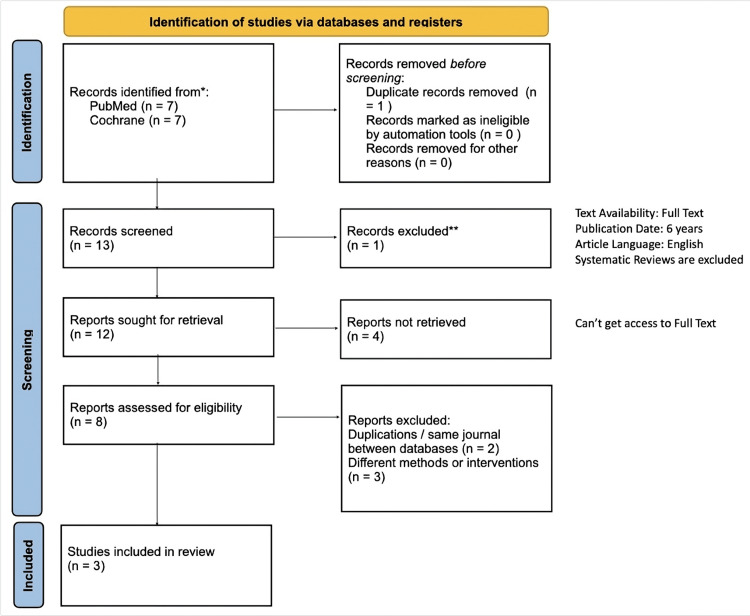 Figure 1
 Figure 2
Peer Reviews
No public reviews on file for this paper yet. If you reviewed it on a platform where reviews are public (OpenReview, ICLR, NeurIPS, ICML), you can paste yours below so the community can read it here.
Videos
No videos yet. Explain this paper in a talk, walkthrough, or lecture? Add one.
Taxonomy
TopicsOvarian function and disorders · Reproductive Biology and Fertility · Gynecological conditions and treatments