Supercooling of Alaskan Beetle Larvae as a Winter Survival Strategy
Chris J. Benmore, Leighanne C. Gallington, Henry Vu, John G. Duman, Brian M. Barnes, Todd L. Sformo

TL;DR
Alaskan beetle larvae survive freezing winters by dehydrating and using glycerol to supercool their bodies, preventing ice formation.
Contribution
The study reveals atomic-level mechanisms of cryopreservation in beetle larvae using synchrotron diffraction.
Findings
Dehydration and glycerol replacement enable supercooling and vitrification in beetle larvae.
Molecular models show 4.2 ± 1.2 hydrogen bonds per glycerol molecule at 275 K.
Water clusters remain small enough to avoid ice crystal formation when body fluid is partially water.
Abstract
Insects are able to survive subfreezing temperatures by either limiting ice crystal formation in their bodies or through freeze avoidance. Beetle larvae are able to avoid freezing in winter by dehydrating in the fall months and replacing their body water content with high concentrations of glycerol. This enables the body fluid of the insect to supercool, and even vitrify, recovering unharmed when the temperature warms in the spring. Using nondestructive, high‐energy X‐ray synchrotron diffraction experiments, direct insight into how cryopreservation occurs at the atomic level within the beetle larvae has been obtained. The results shed light on the molecular‐level interactions associated with the mechanism responsible for surviving freezing temperatures. The molecular models of severely dehydrated Alaskan beetle larvae, based on glycerol‐water mixtures, yield a total of 4.2 ± 1.2…
Genes, proteins, chemicals, diseases, species, mutations and cell lines named across the full text — each resolved to its canonical identifier and authoritative record.
Click any figure to enlarge with its caption.
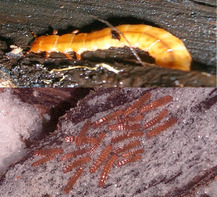 Figure 1
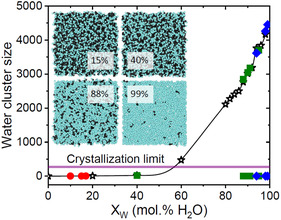 Figure 2
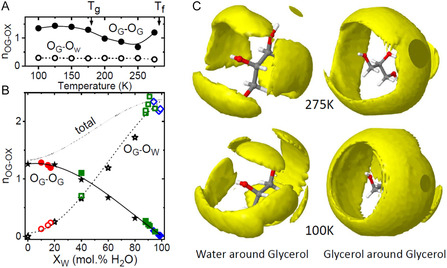 Figure 3
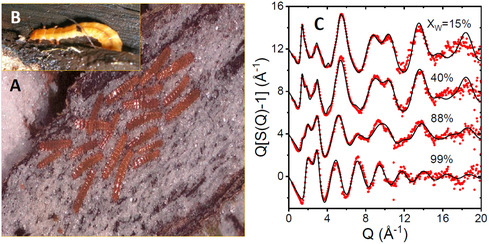 Figure 4
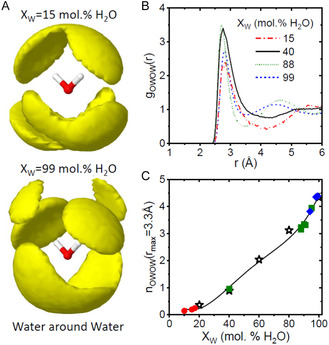 Figure 5
Peer Reviews
No public reviews on file for this paper yet. If you reviewed it on a platform where reviews are public (OpenReview, ICLR, NeurIPS, ICML), you can paste yours below so the community can read it here.
Videos
No videos yet. Explain this paper in a talk, walkthrough, or lecture? Add one.
Taxonomy
Topicsnanoparticles nucleation surface interactions · Physiological and biochemical adaptations · Spectroscopy and Quantum Chemical Studies