Electrosynthesis of Hydrogen Peroxide at Industrial‐Level Current Density in Flow‐Cell System: Interfacial Microenvironment Regulation and Catalyst Design
Abdalazeez Ismail Mohamed Albashir, Yunlong Li, Jing Dou, Ke Qi, Wei Qi

TL;DR
Scientists developed a new method to efficiently produce hydrogen peroxide using electricity, which could replace traditional chemical processes.
Contribution
A surfactant-based microenvironment strategy and a boron-doped carbon catalyst enable industrial-level hydrogen peroxide electrosynthesis.
Findings
Cetyltrimethylammonium bromide surfactant improves H2O2 production rate by 1.58-fold in flow-cell reactors.
Boron-doped mesoporous carbon achieves 100% Faradic efficiency and 1.80-fold higher H2O2 production rate.
Modified interfacial microenvironment enhances 2e− ORR current density by 1.40-fold.
Abstract
Electrosynthesis of hydrogen peroxide via two‐electron oxygen reduction (2e− ORR) provides a green, sustainable, and cost‐effective alternative to anthraquinone processes. However, scaling up from laboratory evaluations to practical applications remains challenging. Herein, an interfacial microenvironment regulation strategy using cetyltrimethylammonium bromide cationic surfactant is reported to boost the hydrogen peroxide (H2O2) production rate of commercial carbon black catalysts in alkaline flow‐cell reactors. The modified interfacial microenvironment creates an ideal environment for H2O2 production, resulting in a 1.40‐fold improvement in 2e− ORR current density (from 227.0 to 320.0 mA cm−2) and a 1.58‐fold improvement in H2O2 production rate (from 137.0 to 217.8 mM L−1 h−1). Additionally, a boron‐doped mesoporous carbon catalyst is developed, demonstrating superior catalytic…
Genes, proteins, chemicals, diseases, species, mutations and cell lines named across the full text — each resolved to its canonical identifier and authoritative record.
Click any figure to enlarge with its caption.
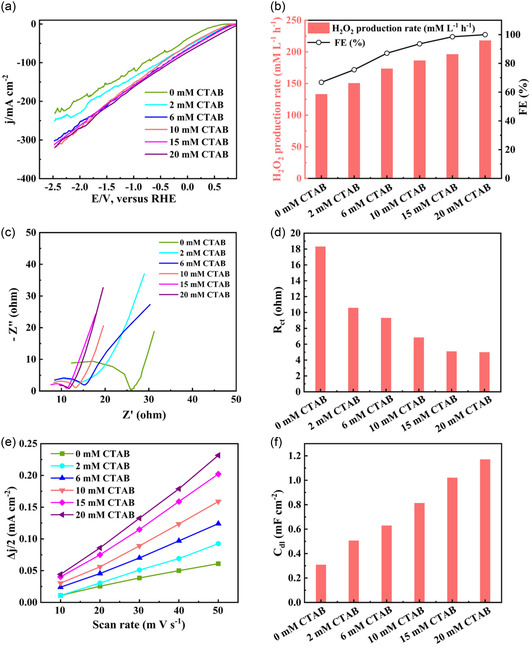 Figure 1
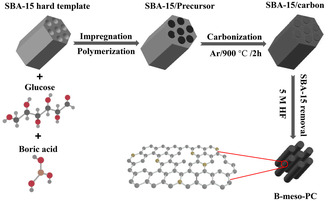 Figure 2
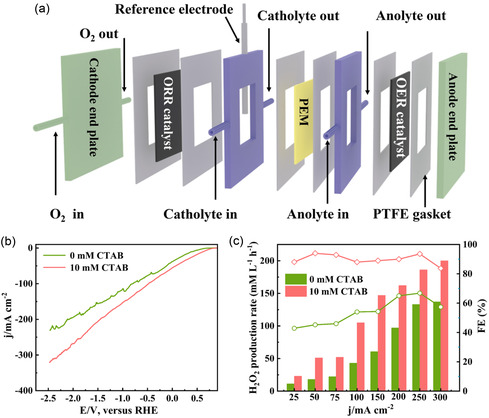 Figure 3
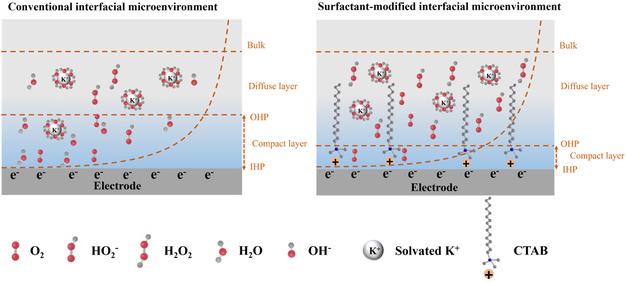 Figure 4
 Figure 5
 Figure 6
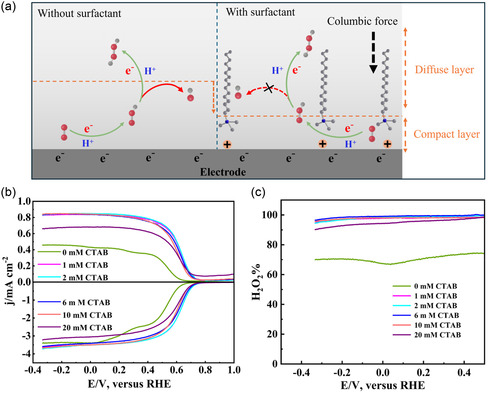 Figure 7
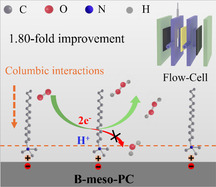 Figure 8
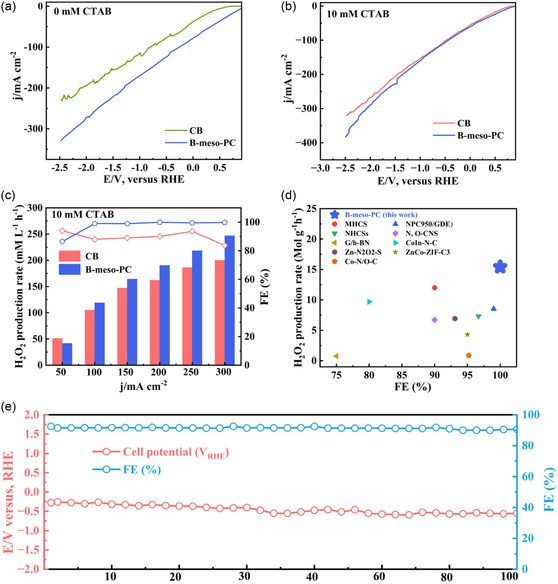 Figure 9
Peer Reviews
No public reviews on file for this paper yet. If you reviewed it on a platform where reviews are public (OpenReview, ICLR, NeurIPS, ICML), you can paste yours below so the community can read it here.
Videos
No videos yet. Explain this paper in a talk, walkthrough, or lecture? Add one.
Taxonomy
TopicsElectrocatalysts for Energy Conversion · Advanced battery technologies research · Electrochemical Analysis and Applications