Rapid Griess assay (RGA): a chairside test for ex vivo semi-quantitative oral nitrite measurement and in vitro assessment of nitrite production by oral bacteria
Simeon K B Mavropoulos, Rabi Zaiton, Amina Basic, Gunnar Dahlén

TL;DR
A new chairside test called the rapid Griess assay (RGA) was developed to measure nitrite levels in the mouth, revealing that certain bacteria produce significant amounts of nitrite.
Contribution
The RGA is a novel semi-quantitative chairside test for measuring oral nitrite and assessing bacterial nitrite production.
Findings
Tongue samples showed the highest and most stable nitrite levels over time.
Actinomyces spp., Veillonella parvula, and Rothia spp. were identified as high nitrite-producing bacteria.
The RGA provided reproducible and reliable results suitable for clinical and research use.
Abstract
Nitrite (NO2−) is produced through enzymatic reduction of dietary nitrate (NO3−) by oral bacteria: a process contributing to cardiovascular – and possibly oral – health. NO2− quantitation in biological samples is a complex exercise, and available methods are not well-adapted for chairside use. Therefore, we aimed to develop and evaluate a semi-quantitative chairside test for NO2− in oral samples. We also evaluated NO2− generation in several bacterial species in vitro. From 12 healthy individuals, tongue, saliva and plaque samples were collected and evaluated chairside across 4 weeks, using the rapid Griess assay (RGA). The RGA was further used to test bacterial species for NO2− production. In saliva, plaque and tongue samples, low, variable and high NO2− levels, respectively, were found. Tongue samples were the most stable over time. High and medium NO2− production capacities were…
Genes, proteins, chemicals, diseases, species, mutations and cell lines named across the full text — each resolved to its canonical identifier and authoritative record.
Click any figure to enlarge with its caption.
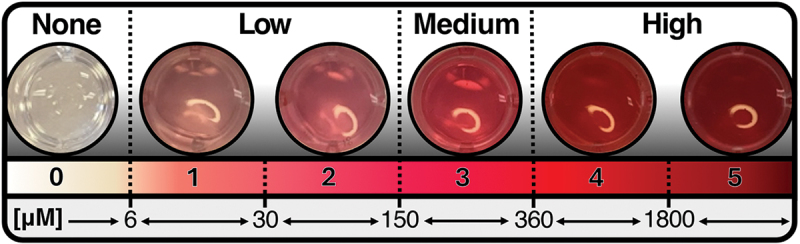 Figure 1
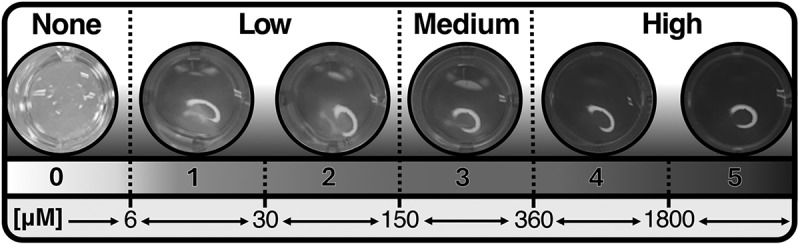 Figure 2
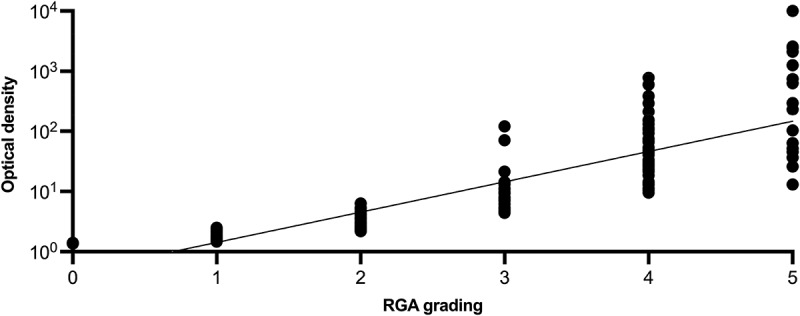 Figure 3
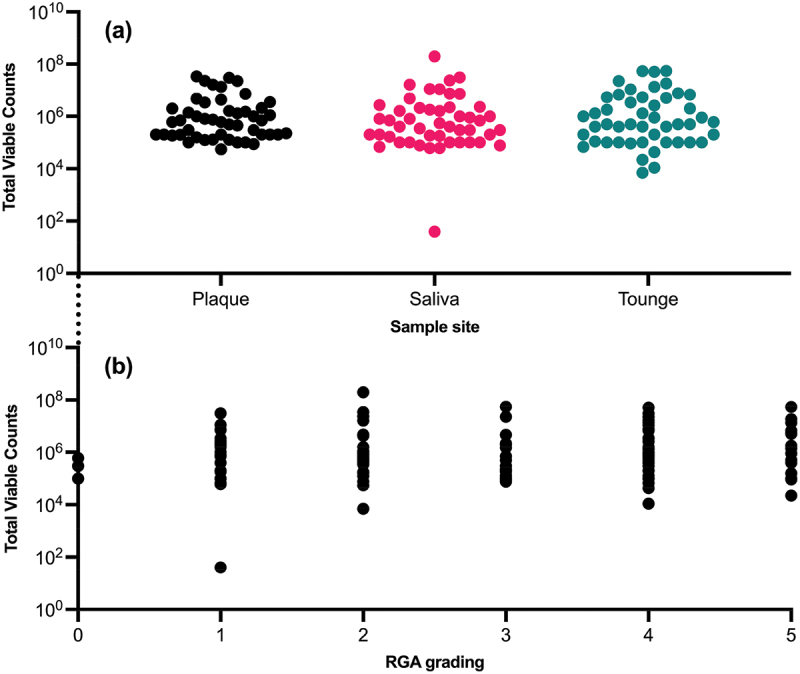 Figure 4
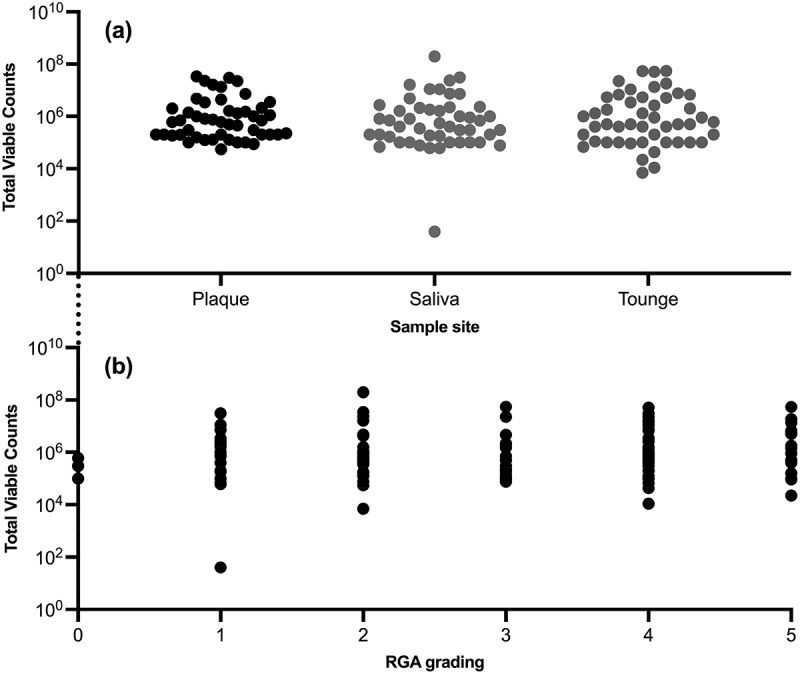 Figure 5
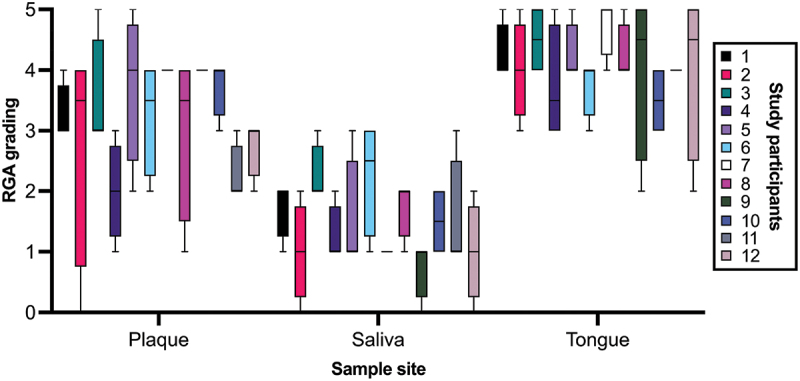 Figure 6
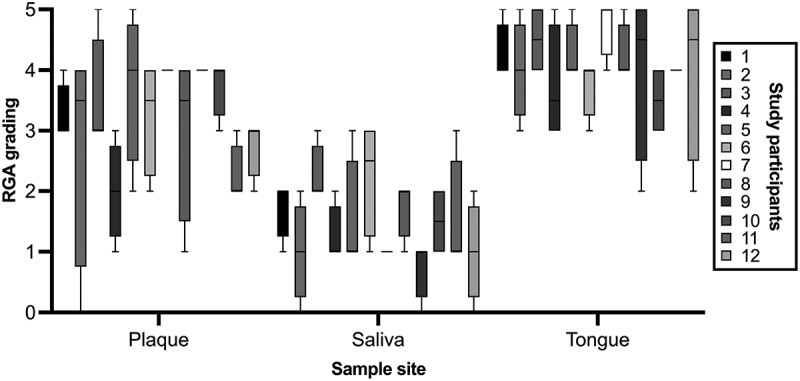 Figure 7
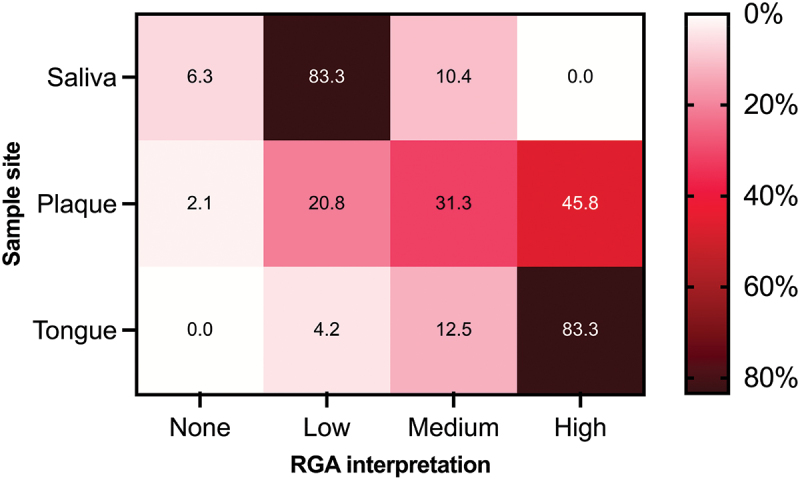 Figure 8
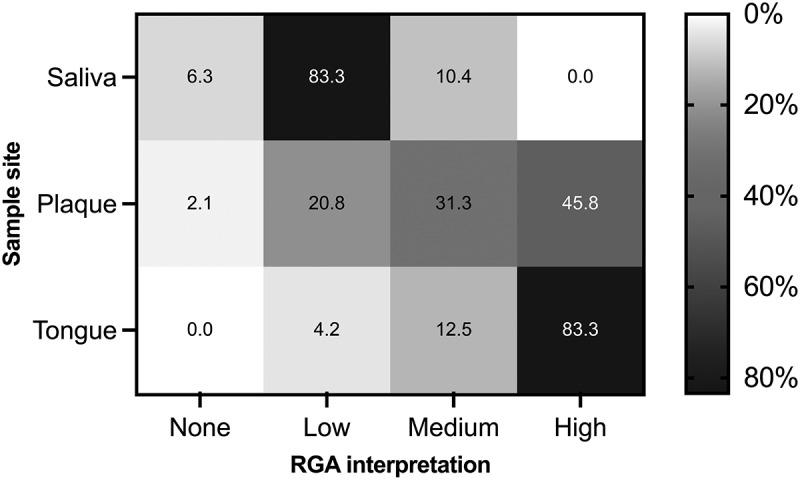 Figure 9
 Figure 10
 Figure 11
 Figure 12
 Figure 13
 Figure 14
 Figure 15
 Figure 16
 Figure 17
 Figure 18
 Figure 19
 Figure 20
 Figure 21
 Figure 22
 Figure 23
 Figure 24
 Figure 25
 Figure 26
 Figure 27
 Figure 28
 Figure 29
 Figure 30
 Figure 31
 Figure 32
 Figure 33
 Figure 34
 Figure 35
 Figure 36
 Figure 37
 Figure 38
 Figure 39
Peer Reviews
No public reviews on file for this paper yet. If you reviewed it on a platform where reviews are public (OpenReview, ICLR, NeurIPS, ICML), you can paste yours below so the community can read it here.
Videos
No videos yet. Explain this paper in a talk, walkthrough, or lecture? Add one.
Taxonomy
TopicsAdvanced Chemical Sensor Technologies · Metabolism and Genetic Disorders · Neuroscience of respiration and sleep