A repeated cross-sectional analysis of SARS-CoV-2 seroprevalence in Manila, the Philippines after implementation of the national COVID-19 vaccination program
Greco Mark B. Malijan, Shuichi Suzuki, Ana Ria Sayo, Annavi Marie Villanueva, Kristal An Agrupis, Abigail Ortal-Cruz, Mary Ann Salazar, Jan Wendzl Evangelista, Rontgene Solante, Grace Devota Go, Naomi Ruth Saludar, Dinarazad Miranda, Alexis Dimapilis, Koya Ariyoshi, Chris Smith

TL;DR
This study tracks SARS-CoV-2 immunity in Manila, showing high seroprevalence and vaccine uptake but potential antibody waning after a year of vaccination.
Contribution
The study provides updated seroprevalence data in the Philippines after a year of national vaccination.
Findings
Seroprevalence remained consistently high (97.8% to 99.5%) across all data collection periods.
Antibody concentrations were highest after the Omicron wave but showed potential waning within 3 months.
Infection rates were generally low, except for a peak of 16.7% during September to October 2022.
Abstract
SARS-CoV-2 seroepidemiological studies, which have been used to describe population-level immunity, are limited in the Philippines, despite the protracted course of the epidemic in the country. We follow-up on our previous work and aimed to estimate SARS-CoV-2 seroprevalence and infection rate among outpatient clinic attendees in Metro Manila, a year after the implementation of the national COVID-19 vaccination program. We conducted four repeated cross-sectional surveys at the outpatient department of San Lazaro Hospital between March 2022 and January 2023. We performed χ2 test and analysis of variance to assess the differences in characteristics across different data collection periods. A total of 765 participants were enrolled, ranging from 170 to 200 per period. Participant demographic, socioeconomic, and medical history were comparable across all data collection periods. Between…
Genes, proteins, chemicals, diseases, species, mutations and cell lines named across the full text — each resolved to its canonical identifier and authoritative record.
Click any figure to enlarge with its caption.
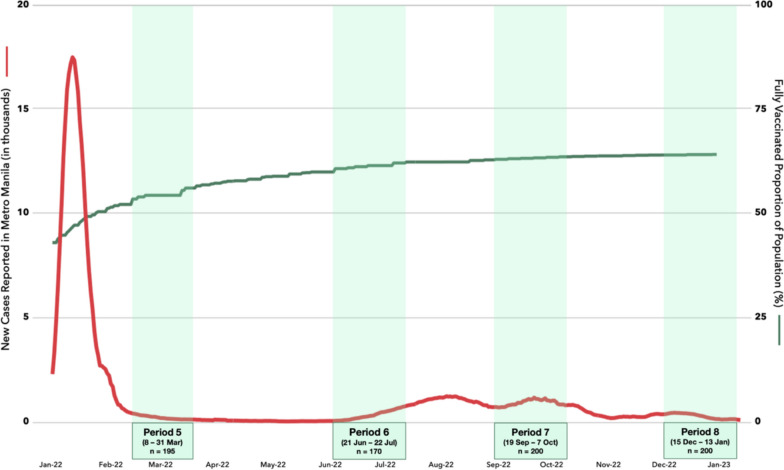 Figure 1
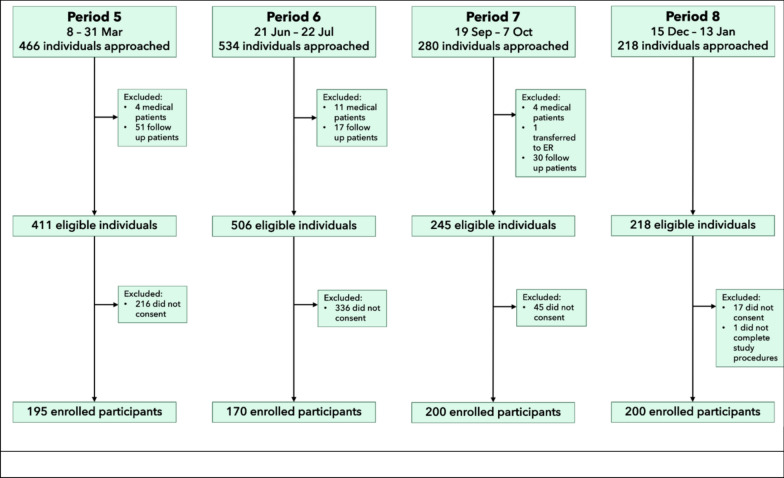 Figure 2
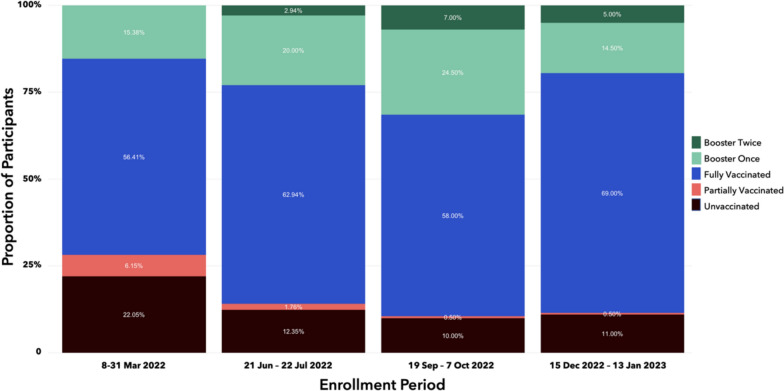 Figure 3
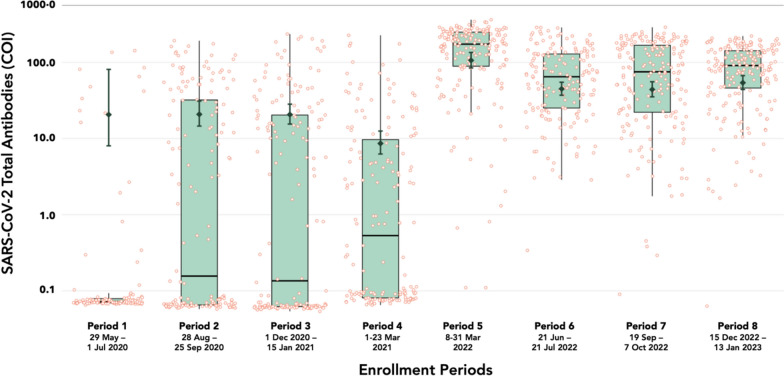 Figure 4
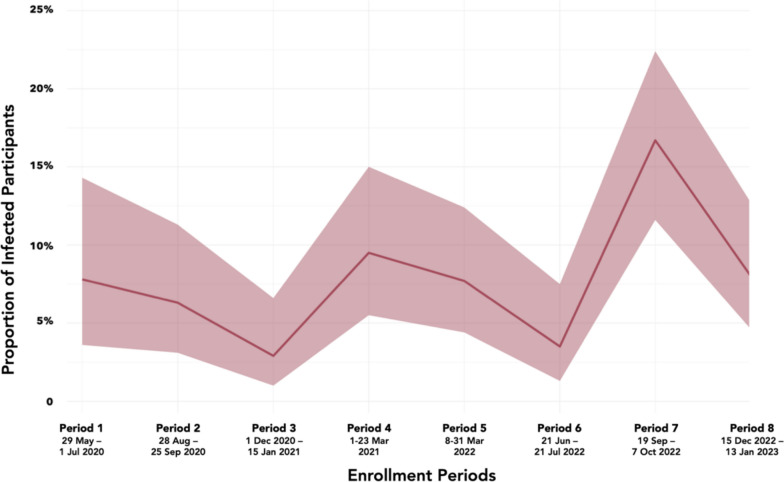 Figure 5
Peer Reviews
No public reviews on file for this paper yet. If you reviewed it on a platform where reviews are public (OpenReview, ICLR, NeurIPS, ICML), you can paste yours below so the community can read it here.
Videos
No videos yet. Explain this paper in a talk, walkthrough, or lecture? Add one.
Taxonomy
TopicsSARS-CoV-2 and COVID-19 Research · COVID-19 Clinical Research Studies · COVID-19 epidemiological studies